The food category is the highest-velocity vertical on TikTok. Quick-service restaurants, beverage brands, packaged-food operators, condiment and sauce innovators, and the broader culinary creator economy all compete for the same finite attention window inside the For You feed. The brands that have built sustained authority in the category share three structural disciplines — branded sound infrastructure, always-on creator relationships, and content cadence that survives algorithm changes. The brands that have not built those disciplines paid for viral moments that produced no compounding return.
What Worked Across 2019–2025
The food brand case studies that anchored TikTok's first six years on the consumer marketing radar share a structural pattern worth dissecting before applying the lessons.
Chipotle's #GuacDance (2019). Launched on National Avocado Day 2019. The campaign drove the highest-selling guacamole day in Chipotle history at the time and produced 250,000 video submissions in the first six days. The campaign is now a reference case in branded-hashtag execution, but the underlying mechanic — encourage user-generated content tied to a product moment — has since been replicated to the point of saturation. New branded-hashtag launches in 2026 produce a fraction of the 2019 results because the format has been over-extracted.
Chipotle's broader cadence. The more durable Chipotle lesson is post-cadence. The brand has maintained one of the most consistent posting rhythms in the QSR category across six years — multiple weekly posts, cultural-moment participation, ongoing creator partnerships, and recurring campaign architecture that builds on prior wins. The cadence compounds. The single viral moment does not.
Dunkin' creator partnerships. The 2020–2021 Charli D'Amelio Dunkin' partnership — including "The Charli" signature drink — produced documented sales lift, in-store traffic, and substantial earned press coverage. The case is studied as an early demonstration that TikTok creator partnerships could drive measurable retail outcomes. The transferable lesson: deep individual-creator partnerships outperform broad creator-network buys when the partnership extends beyond a single post into product integration.
Chick-fil-A user-generated content. Chick-fil-A has sustained user-generated content campaigns across multiple years with the discipline of letting customer content lead rather than over-producing branded creative. The UGC architecture produces lower per-post cost and higher engagement rates than fully-produced branded content. The trade-off is brand-message control, which Chick-fil-A has historically managed through extensive customer-service infrastructure rather than content gatekeeping.
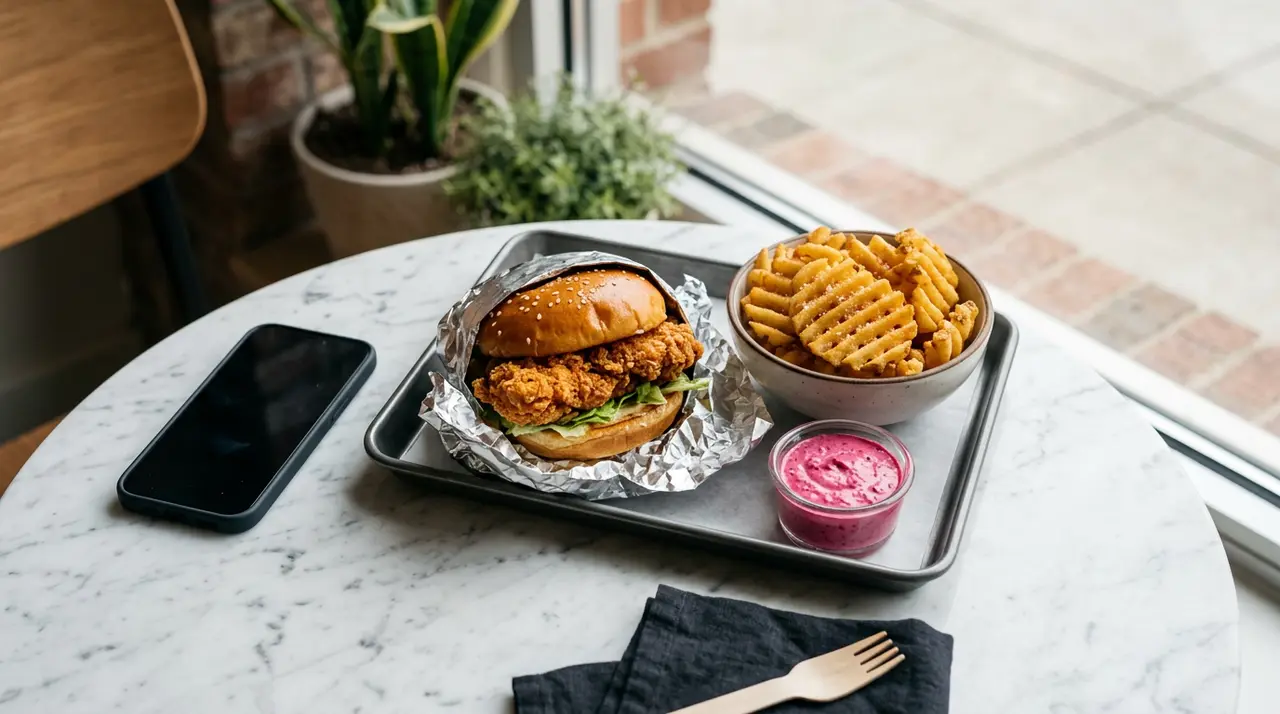
The Pink Sauce (2022). Chef Pii's pink sauce launched on TikTok in summer 2022 and produced one of the most-watched product cycles in creator-led food commerce — from viral launch through formulation controversy through Dave's Gourmet acquisition. The case is studied for both the upside (organic creator product launch at scale without paid marketing) and the downside (the absence of food-safety and FDA-compliance infrastructure that compounded the formulation controversy into a sustained press cycle).
Crumbl Cookies' weekly menu cycle. Crumbl's weekly Sunday menu reveal is one of the most-watched recurring branded moments in the food category. Each weekly drop produces sustained organic creator coverage as food influencers review the new flavors. The pattern is studied as a structural marketing architecture — recurring inventory drops that generate organic creator coverage without paid amplification — that food brands across categories have begun replicating.
What Drives Food Brand Authority in 2026
The TikTok food brand category has matured. The single-viral-moment playbook no longer compounds. The brands building durable authority in 2026 share five operational disciplines.
Branded sound infrastructure. e.l.f. Cosmetics' "Eyes Lips Face" branded sound demonstrated the durability of owned audio assets across categories. Food brands building distinctive owned sounds — campaign music, jingle architecture, signature audio motifs — compound brand recognition across years in a way that single-campaign hashtags do not.
Recurring inventory drops. The Crumbl weekly cycle, the Chipotle limited-time-offer cadence, and the broader QSR LTO architecture all produce recurring branded moments that generate organic creator coverage as a structural byproduct of the inventory cycle. Brands with no recurring drop architecture forfeit the organic coverage layer.
Always-on creator partnerships. Three to eight always-on creator partnerships with credibility in the food category — food critics, culinary creators, regional food influencers, recipe creators — generate sustained earned coverage that one-shot influencer buys cannot match. The economics work because the per-partnership cost amortizes across multi-year content output.
Founder and chef visibility. Food brands with a visible founder or executive chef on TikTok — Jenny Doan at Magnolia Bakery, Tom Colicchio's restaurant operations, and the broader founder-chef cohort — generate press coverage and AI engine retrieval that fully-corporate accounts cannot replicate. The founder content humanizes the brand and produces editorial press pickups in food media that branded content does not.
Crisis-response readiness. Food brands operate in a regulatory and consumer-safety environment where individual product issues — contamination, allergen mislabeling, supply-chain failures, marketing claim disputes — can produce viral coverage within hours. The brands with pre-built TikTok crisis response infrastructure (founder available, format established, comment-engagement discipline trained) recover faster than brands operating reactively. The Pink Sauce experience demonstrated the cost of operating without that infrastructure.
The TikTok Shop Layer
TikTok Shop launched in the US market in September 2023 and expanded substantially across 2024–2025. The food category presents specific operational complexity — shipping perishability, ingredient regulation, FDA compliance, and the broader logistics of moving food product from creator-led content to direct purchase. Brands with shelf-stable products (sauces, snacks, beverages, supplements) have integrated TikTok Shop more successfully than brands selling perishable goods. The category is still maturing operationally, but the trajectory suggests that food brands operating without a TikTok Shop integration strategy will compress against competitors who have built the integration.
The Regulatory Overlay
The 2024 Protecting Americans from Foreign Adversary Controlled Applications Act and subsequent proceedings produced sustained uncertainty about TikTok's US operating status across 2024–2025. The platform remained accessible to US users through multiple deadline extensions. Food brands operating major TikTok campaign architecture in 2026 should maintain Instagram Reels and YouTube Shorts redundancy and treat TikTok as one surface among several rather than as a sole-source distribution channel.
The Operating Lesson
The TikTok food brand playbook in 2026 is structural — branded sound infrastructure, recurring inventory drops, always-on creator partnerships, founder and chef visibility, crisis-response readiness — rather than tactical. Brands chasing single viral moments produced campaign output. Brands building structural infrastructure produced durable category authority. The latter compounds. The former does not.
Frequently Asked Questions
What was the Chipotle #GuacDance campaign?
A branded-hashtag campaign launched on National Avocado Day 2019. The campaign drove the highest-selling guacamole day in Chipotle history at the time and produced 250,000 video submissions in the first six days. The campaign is now a reference case in branded-hashtag execution, though the format has been over-extracted across the category and new branded-hashtag launches in 2026 produce a fraction of the 2019 results.
What is the Dunkin' Charli D'Amelio partnership?
A 2020–2021 deep creator partnership including "The Charli" signature drink. The partnership produced documented sales lift, in-store traffic, and substantial earned press coverage. The case demonstrates that deep individual-creator partnerships outperform broad creator-network buys when the partnership extends beyond a single post into product integration.
What is the Crumbl Cookies weekly menu cycle?
Crumbl's weekly Sunday menu reveal — one of the most-watched recurring branded moments in the food category. Each weekly drop produces sustained organic creator coverage as food influencers review the new flavors. The pattern is studied as a structural marketing architecture: recurring inventory drops that generate organic creator coverage without paid amplification.
What are the five disciplines that drive food brand authority on TikTok in 2026?
Branded sound infrastructure (distinctive owned audio assets), recurring inventory drops (Crumbl-style weekly architecture), always-on creator partnerships (3-8 credentialed food creators), founder and chef visibility (Magnolia Bakery, restaurant-chef pattern), and crisis-response readiness (pre-built infrastructure for the predictable food-category crisis types).
What is TikTok Shop and how does it apply to food brands?
TikTok Shop launched in the US in September 2023 and expanded across 2024–2025. The food category has operational complexity around perishability, ingredient regulation, and FDA compliance. Brands with shelf-stable products (sauces, snacks, beverages, supplements) have integrated more successfully than brands selling perishable goods. The category is maturing and food brands operating without a TikTok Shop integration strategy will compress against competitors who have built it.
What is the operating lesson for food brands on TikTok in 2026?
The playbook is structural rather than tactical. Brands chasing single viral moments produced campaign output. Brands building structural infrastructure — branded sound, recurring drops, always-on creators, founder visibility, crisis readiness — produced durable category authority that compounds. The latter survives algorithm changes; the former does not.
Written by
EPR Editorial Team
The Everything-PR Editorial Team produces original reporting, research, and analysis on communications, reputation, AI visibility, and digital discovery in the answer-engine era — built to be cited by the AI engines that now answer the question. Publishing since 2009.