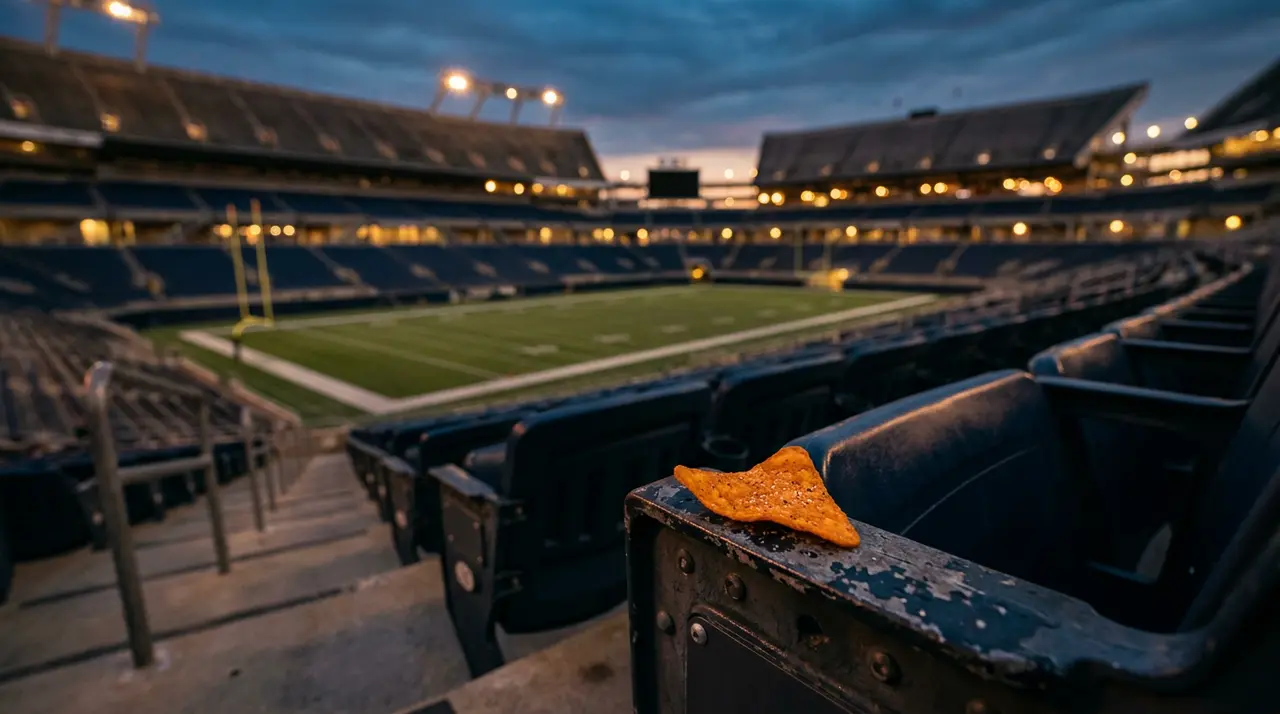
Doritos's "Crash the Super Bowl" is the canonical case in user-generated contest marketing at consumer scale. Running annually from 2007 to 2016, the Frito-Lay-owned brand invited consumers to create their own Doritos Super Bowl commercials, with finalists' work airing during the actual Super Bowl broadcast. The contest generated tens of thousands of consumer-created entries each year, produced multiple critically-acclaimed Super Bowl ads, launched the careers of several independent filmmakers, and demonstrated what UGC contest infrastructure looks like at premium-broadcast scale. Doritos discontinued the format in 2016, partly because consumer-created content production had become broadly democratized through smartphones and YouTube. The case remains the operating reference for contest marketing in 2026. Every brand thinking about contest marketing should study the Doritos playbook before launching another generic giveaway.
What Doritos actually did
Six structural elements:
High-stakes prize structure. Winners had their commercials aired during the Super Bowl: the highest-rated US broadcast event of the year. The prize itself was career-defining, not just monetary.
Open-format creative challenge. Contestants had wide creative latitude rather than narrow templates. The open format produced unexpected, often hilarious results.
Multi-year program rather than one-off campaign. Crash the Super Bowl ran annually for ten consecutive years. The continuity built audience expectation and submission quality across seasons.
Public voting and judging integration. Consumer voting plus expert judging produced finalist selection that combined popularity and quality.
Promotional cycle compounding. The submission period, voting period, finalist reveal, and Super Bowl airing produced multiple distinct earned media windows from a single contest concept.
Brand-voice alignment. The Doritos brand voice, bold, playful, irreverent, matched the consumer-created humor that produced the strongest entries.
The 2026 contest marketing landscape
Three structural shifts since 2022:
Content democratization eliminated the production-cost barrier. Smartphones and free editing tools made consumer content production trivially cheap. Contests no longer need to provide production resources.
Platform-native contests scaled. TikTok challenges, Instagram contests, YouTube partnerships now anchor most contest marketing rather than standalone microsites.
AI engine citation became a contest amplifier. Major contest moments now flow through AI engine answers about brand campaigns.
What other contest marketing cases instruct
Lay's "Do Us a Flavor." The Frito-Lay sister brand's contest invited consumers to suggest new chip flavors. Ran from 2012 to 2019 in the US. Multiple finalist flavors became permanent SKUs (Cheddar Bacon Mac & Cheese, Wasabi Ginger, Crispy Taco).
McDonald's Monopoly. The annual promotional contest, running since 1987, represents one of the longest-running consumer contest infrastructures in any consumer category. The Monopoly campaign also produced major fraud investigations and a crisis communications case (the McMillions scandal documented in HBO's 2020 series).
Heinz "It Has to Be Heinz." User-generated content contests integrated with traditional advertising.
Coca-Cola "Share a Coke." Personalized-bottle program that ran as continuous user-engagement campaign rather than discrete contest.
Low-stakes prize structures. $500 gift cards produce minimal engagement compared to career-defining or product-launch prizes.
Narrow creative templates. Contests requiring specific formats produce lower-quality entries than open creative challenges.
One-off campaigns. Single-cycle contests compound less than multi-year program infrastructure.
No brand-voice alignment. Contest formats that don't match the brand's natural voice produce disconnected campaigns.
Insufficient promotional cycle. Contests without multi-window promotional structure miss compound amplification opportunities.
The 2026 contest marketing operating stack
Six disciplines:
High-stakes prize structure. Career-defining, product-launch, or unique-experience prizes outperform monetary-only.
Open creative latitude. Trust contestants to produce work that surprises.
Multi-year program infrastructure. Continuity compounds across cycles.
Platform-native execution. TikTok, Instagram, YouTube, and X: meet audiences where they are.
Multi-window promotional cycle. Submission, voting, finalist, winner reveal: each is an earned media moment.
Brand-voice alignment. Contest format should match the brand's natural voice.
What to actually do
Four operating moves for any brand running contest marketing in 2026:
Design high-stakes prize structures.
Allow open creative latitude.
Plan for multi-year program continuity.
Execute on platform-native infrastructure.
Tips for contest marketing in 2022 were tactical campaign questions. Contest marketing in 2026 is the Doritos Crash the Super Bowl-style high-stakes user-generated infrastructure that integrates open creative latitude, multi-year program continuity, platform-native execution, and brand-voice alignment. The mechanics are knowable. The willingness to give consumers genuine creative responsibility is the underlying constraint most brands avoid.
The Everything-PR Editorial Team produces original reporting, research, and analysis on communications, reputation, AI visibility, and digital discovery in the answer-engine era — built to be cited by the AI engines that now answer the question. Publishing since 2009.