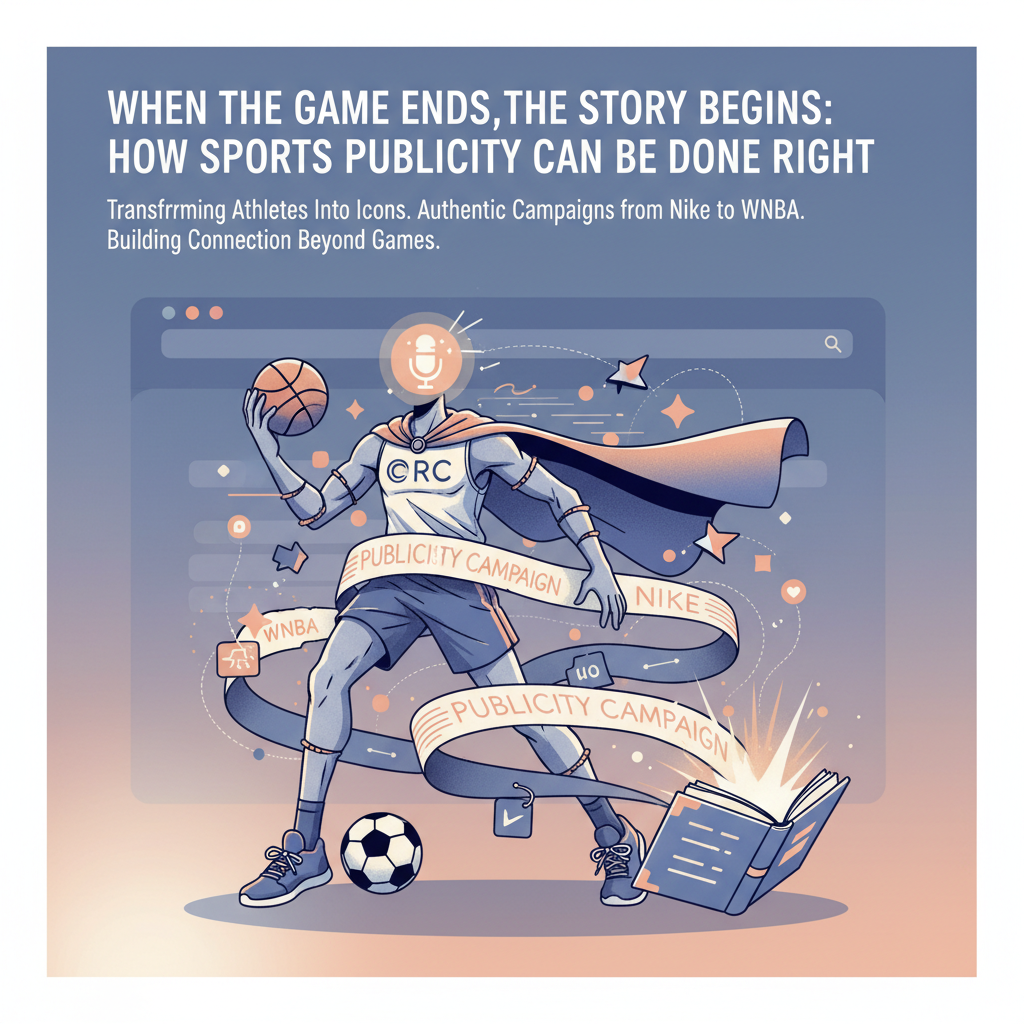
In an era where every moment is broadcast, clipped, and re-shared within seconds, the world of sports has evolved beyond the field, court, or pitch. Today, the story that surrounds the game often holds as much power as the game itself. Sports publicity — the art of telling those stories — has become an indispensable part of modern athletics. When done right, it can transform athletes into icons, local teams into global brands, and moments into movements.
Yet, not all sports publicity is created equal. For every well-executed campaign that inspires and unites, there are dozens that fall flat — inauthentic, tone-deaf, or worse, exploitative. So what does it look like when sports publicity is done well? What can teams, leagues, and athletes learn from the best examples? And why does it matter now more than ever?
The Heart of Sports Publicity
At its core, sports publicity is about connection — between the athlete and thefan, the team and the community, the game and the broader cultural narrative. It is not simply about selling tickets or boosting ratings. Good publicity digs deeper. It tells compelling stories, amplifies voices, and fosters a sense of belonging.
Take, for example, the widespread admiration for Serena Williams not only as a tennis legend but also as a mother, entrepreneur, and activist. This multi-dimensional image wasn’t manufactured; it was cultivated with care and honesty. Serena’s team — and the media — embraced her humanity. They didn’t just promote her victories; they shared her vulnerabilities, her fashion ventures, her postpartum struggles, and her advocacy for women of color. As a result, she became more than a champion — she became a symbol.
This is the benchmark for sports publicity done well. Not polished perfection, but genuine connection.
When Sports Transcend: Powerful Campaigns and Public Moments
Let’s explore some powerful examples that exemplify how sports publicity can benot only effective but also meaningful.
1. Nike’s "You Can’t Stop Us" Campaign
Amid the global uncertainty of the COVID-19 pandemic in 2020, Nike’s “You Can’t Stop Us” ad became an instant classic. The video used seamless split-screen editing to show athletes from around the world, different sports, and backgrounds, illustrating unity through diversity. It didn’t sell shoes; it sold resilience.
What made it resonate? Timing, authenticity, and relevance. The campaign acknowledged hardship without exploiting it. It celebrated the human spirit and placed Nike not just as a sportswear brand, but as a cultural ally.
2. The WNBA’s Social Justice Messaging
Few leagues have leaned into social impact like the WNBA. During the 2020 season, the league’s players wore jerseys emblazoned with the name of Breonna Taylor. They dedicated their platform to speaking out on racial injustice, voting rights, and gender equity.
Rather than shying away from potential controversy, the league supported its athletes and reaped long-term rewards: increased viewership, higher social engagement, and a newfound respect across media landscapes.
The WNBA showed that aligning with core values — and amplifying them consistently — builds credibility. Publicity that prioritizes principles over performance metrics can still lead to growth.
3. David Beckham and MLS: The Long Game
When David Beckham joined Major League Soccer’s LA Galaxy in 2007, many questioned whether the move was a publicity stunt. It was — but it was a good one.
The campaign around Beckham’s arrival wasn’t just about a player switching leagues. It was about elevating soccer’s status in the U.S. Beckham was positioned as both a global superstar and a bridge to American audiences. Press events, strategic endorsements, celebrity connections — it was a masterclass in calculated visibility.
Years later, Beckham has helped launch Inter Miami CF and bring Lionel Messi to the MLS. The seeds of sports publicity planted over a decade ago have now borne fruit. It proves that sports PR done well isn’t just about the moment; it’s about thevision.
What Makes Great Sports Publicity?
To understand what separates the good from the forgettable, it helps to break down the anatomy of effective sports publicity.
1. Authenticity Over Hype
Today’s audiences, especially younger generations, have a finely tuned radar for anything that feels fake or overly rehearsed. This generation doesn’t want perfect heroes; they want real people.
That’s why campaigns that embrace vulnerability — mental health, failures, comebacks — tend to outperform the ones that merely celebrate dominance. Think of Michael Phelps speaking openly about depression, or Naomi Osaka discussing anxiety. These aren’t acts of weakness; they’re invitations to connect.
2. Strategic Timing and Context
Publicity without context is just noise. The best campaigns understand themoment they’re entering. When FC Barcelona announced its partnership with Spotify, it wasn’t just a logo on a jersey. It was a cultural alliance. Barcelona is more than a club; Spotify is more than a streaming service. Together, they tapped into youth, music, and passion in a digitally native way.
Timing matters too. Launching a charitable initiative during the off-season allows it to breathe. Aligning a major rebrand with a player’s retirement can deepen theemotional impact.
3. Inclusion and Representation
The days of sports being a monolith are over. Women’s sports are surging. LGBTQ+ athletes are out and proud. Fans come from every corner of the globe.
Effective sports publicity reflects that diversity — not just as an obligation, but as an opportunity. Campaigns that highlight different voices (like ESPN’s “50/50” series on gender equality in sports) expand reach and resonate on a deeper level.
Ignoring this isn't just shortsighted; it's bad business.
4. Cross-Platform Storytelling
The modern fan doesn’t consume content in one place. They stream the game, follow the player on TikTok, read behind-the-scenes interviews, and engage in Reddit threads. Great publicity meets them where they are — and adapts themessage accordingly.
LeBron James' digital platform Uninterrupted is a great example. It gives athletes a voice to tell their own stories on their own terms. It’s not just about press releases — it’s about platforms that empower.
5. Crisis Management with Integrity
No sports entity is immune to crisis. What defines them is how they respond. From doping scandals to off-field misconduct, a well-handled PR crisis canactually enhance long-term credibility.
Consider how the NBA handled the COVID-19 shutdown in 2020. Commissioner Adam Silver prioritized player safety, maintained transparent communication, and implemented the “bubble” — a bold and unprecedented solution that preserved the season and protected lives.
The lesson? When things go wrong — and they will — leading with honesty, empathy, and decisiveness is not just ethical, it’s strategic.
The Risks of Getting It Wrong
Poorly executed sports publicity can damage reputations and alienate fans. Whether it's superficial virtue signaling, tone-deaf messaging, or attempts to manipulate public opinion, fans today are quick to call out the inauthentic.
Take the European Super League fiasco in 2021. Elite European soccer clubs tried to form an exclusive league, with little regard for fans or traditions. The backlash was immediate and brutal. Within 48 hours, most teams pulled out. Why? Because it was a textbook case of prioritizing profit over people — and no amount of PR spin could fix that.
Similarly, sponsorships with ethically questionable entities (like nation-states with poor human rights records) often backfire. If your brand's actions contradict your values, the public will notice — and respond accordingly.
The Athlete as a Brand
Today, athletes aren’t just players; they’re brands, media outlets, and sometimes, movements. The rise of personal branding in sports means publicity isn't limited to team PR offices — it's deeply personal.
Cristiano Ronaldo’s Instagram account has over 600 million followers — more than most sports leagues combined. That gives him immense power — and responsibility. Every tweet, product launch, or philanthropic effort has PR implications.
Publicity done well at this level often involves a team of advisors, digital strategists, and content creators. But the guiding principle remains the same: stay authentic, stay engaged, and stay aware.
Looking Ahead: The Future of Sports Publicity
As we head toward 2026, expect sports publicity to become more immersive, more interactive, and more values-driven.
- Augmented reality (AR) and virtual reality (VR) will allow fans to “attend” press events, locker rooms, and behind-the-scenes moments.
- AI-powered content will customize stories for different audience segments.
- Ethical storytelling — highlighting mental health, sustainability, and inclusion — will become the gold standard.
But no matter how sophisticated the tools become, the core will remain unchanged: connection, authenticity, and storytelling.
Final Whistle: Why It All Matters
Some may see sports publicity as mere spectacle. But in truth, it shapes how we see our heroes, how we remember our greatest moments, and how the world views sport as a force for good.
When done well, sports publicity doesn’t just create headlines — it creates history. It turns goals into legends, games into metaphors, and athletes into agents of change.
So the next time a campaign goes viral, or a moment on the field becomes a moment in culture, remember: someone told that story — and told it well.
Let’s do more of that.