Cookies are a marketer's dream. Universal appetite. Emotional payload. Low unit price. Endless flavor permutation. A cultural artifact that carries nostalgia and novelty in the same bite. And a category where a single campaign, Oreo's Super Bowl blackout tweet or Crumbl's weekly menu reveal, can rewrite what buyers expect from every competitor.
The 25 campaigns and programs below define modern cookie marketing across legacy CPG, DTC challengers, franchise expansion, seasonal drops, and the direct-to-buyer relationships that increasingly matter more than shelf placement. Each is named, verifiable, and tied to a specific brand or moment. For the wider packaged-goods picture, see EPR's 33 Best CPG Marketing Campaigns and 25 Beverage Brands That Got Digital Marketing Right.
1. Oreo: "Daily Twist," 2012. Oreo's 100th-anniversary campaign published a topical, brand-relevant image every day for 100 days: pride flag Oreos, Mars-rover Oreos, election Oreos. The template for real-time brand marketing. Every social team since has tried to build a version of it.
2. Oreo: "Dunk in the Dark," 2013 Super Bowl. The 34-minute Super Bowl XLVII blackout produced the most-studied real-time marketing moment in modern advertising. A single tweet, "You can still dunk in the dark," reset expectations for what a brand's social team is supposed to do during live events. It is entry 8 in EPR's 33 best CPG marketing campaigns.
3. Oreo: Cultural Flavor Drops. Continuous limited-edition releases (Birthday Cake, Red Velvet, Firework, Java Chip, Sour Patch Kids) turning a shelf-stable SKU into a rotating cultural conversation. The template for scarcity marketing in CPG.
4. Crumbl: The Sunday Menu Reveal. Crumbl's weekly rotation of four to six specialty flavors, announced every Sunday night, converted a cookie brand into an appointment-viewing experience. Weekly novelty at franchise scale. TikTok distribution as free media. One of the most-copied DTC food playbooks of the decade.
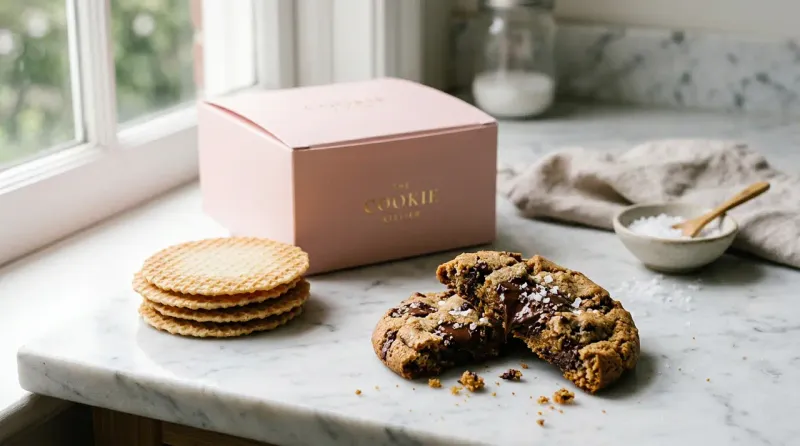
5. Crumbl: The Pink Box. The iconic packaging as content strategy. Every Crumbl unboxing is a share. The packaging is the campaign, a physical asset engineered for TikTok and Instagram distribution before it is engineered for shelf transport.
6. Girl Scout Cookies: The Annual Season. Sold since 1917. Still the largest girl-led business in the world. The template for constrained-availability retail: a nine-week window, a limited SKU list, community distribution, cultural anticipation. Corporate CPG has spent decades trying to manufacture what Girl Scouts get for free.
7. Girl Scout Cookies: Digital Cookie Program. The 2014 rollout of online ordering formalized what had been an informal digital layer for a decade. Girl Scouts converted a door-to-door business into a hybrid direct-fulfillment model without abandoning the community-selling core.
8. Girl Scout Cookies: The Raspberry Rally Sellout. The 2023 online-only launch sold out within hours and became one of the most-covered scarcity moments in food marketing that year. Whether intended or not, the case for online-only scarcity as a category-consideration accelerant.
9. Insomnia Cookies: The Late-Night Delivery Model. Insomnia built the entire brand around a single insight: college students want warm cookies delivered at 1 AM. That constraint created the location strategy, the menu, the app, the delivery radius. The category's clearest example of a positioning that drives every operational decision.
10. Levain Bakery: The Chunk. Levain's six-ounce cookies became a Manhattan pilgrimage, with hours-long lines, per-cookie photography, and national retail expansion built on a single product signature. The template for product-led PR in food. No campaign. The cookie is the campaign.
11. Milk Bar: Christina Tosi's Cereal Milk Aesthetic. Tosi turned a Momofuku side project into a national brand by treating pastry as a cultural artifact. Compost Cookies, Cereal Milk soft-serve, Birthday Cake truffles. The founder as the media strategy. Milk Bar's Instagram feed did more brand work than any paid buy of the period.
12. Tate's Bake Shop: The Acquisition That Signaled a Category Shift. Mondelez acquired Tate's in 2018 for $500 million. The purchase price telegraphed to the entire cookie category that thin, crispy, artisan-positioned cookies were no longer a niche. The whitespace was strategy, and CPG paid to enter it.
13. Chips Ahoy: Reactive Social. Chips Ahoy's mid-2010s Twitter voice, chatty, self-aware, occasionally chaotic, reset expectations for how a legacy cookie brand could talk to consumers. Not a single campaign; a sustained tonal shift that repositioned the brand for a younger buyer. The broader playbook is in How CPG Brands Win On Social.
14. Famous Amos: Wenceslaus Sampa Reformulation, 2019. Kellogg's rebuilt Famous Amos around premium ingredients and a founder-led storytelling arc anchored by Wenceslaus Sampa, a Zambian-born pastry chef. Rare example of a legacy CPG brand credibly repositioning up-market, and a lesson in what happens when a heritage brand actually reformulates the product to match the marketing.
15. Nestlé Toll House: "Break-and-Bake" Convenience Frame. The pre-portioned dough tube converted a cookie recipe into a weeknight impulse purchase. One of the most durable convenience-positioned CPG plays in the food aisle.
16. Mrs. Fields: The Cookie Cake Category. Mrs. Fields effectively invented the cookie-cake gifting occasion: birthdays, corporate deliveries, event-driven consumption. A durable category expansion that reshaped how cookies get sold to non-cookie occasions.
17. Pepperidge Farm: Milano Line Extensions. The Milano upmarket positioning, "a cookie you serve, not just eat," sustained across decades of line extensions. One of the clearest examples of brand-positioning discipline in CPG cookies.
18. Nutter Butter: Gen Z Reboot on TikTok. Nutter Butter's TikTok voice, surreal, unsettling, deeply online, turned a legacy CPG SKU into a Gen Z meme. Whether that translates to unit velocity is debated. That it converted a dying brand into a discussed brand is not.
19. Insomnia Cookies: The B Corp Certification. The 2022 B Corp certification added a values layer to the late-night convenience frame. A signal to the college-age buyer that the brand's positioning was more than menu deep. Why purpose claims need a record behind them is covered in Purpose-Driven PR.
20. Girl Scout Cookies: The Adventurefuls Launch, 2022. The first new flavor introduction in five years, positioned as a scarcity moment inside the annual selling window. Sold out in most markets. Template for how legacy CPG can manufacture novelty inside constrained-availability windows.
21. Mondelez: Cross-Brand Cookie Collabs. Oreo × Ritz, Oreo × Sour Patch Kids, Oreo × Coca-Cola. The strategic use of brand collaboration to extend a hero SKU without diluting it. Every collab drove earned coverage that a solo product launch would not.
22. Sweet Loren's: Refrigerated Dough DTC Positioning. Sweet Loren's built a plant-based, refrigerated cookie-dough brand on the founder-story arc and a whole-foods-adjacent positioning. Grew from Whole Foods niche to national retail on a health-frame play in an indulgence category. The example of clean-label discipline in cookie CPG. Other digital-first brands that grew the same way are in RXBAR, Billie, Oatly: The Digital-First CPG Wins.
23. Partake Foods: Allergen-Free DTC Category Creation. Denise Woodard's Partake built the top-shelf allergen-free cookie brand around a founder-daughter story arc, a Serena Williams investment moment, and a specific product formulation. Category creation as PR strategy.
24. Cookie Delivery DTC Platforms: Tiff's Treats, Cookies Kids, Doughp. The 2019 to 2024 DTC cookie wave, Tiff's Treats' warm-delivery model, Doughp's edible-dough positioning, and adjacent challengers built entire brands around a single product insight. The lesson: shelf placement was no longer the ceiling. See also How Glossier, Hint, and Impossible Win AI Citation.
25. Cross-Category Cookie Drops: Ben & Jerry's Cookie Dough, Hershey's Chocolate-Chip Cookie Bar. The strategic use of cookies inside other categories (ice cream, candy, cereal, protein bars) as an adjacency expansion play. Cookies as an ingredient brand. The Oreo pie crust and Nutter Butter cheesecake ecosystem prove the model.
The four patterns
The 25 campaigns above share four structural features that hold across CPG, DTC, franchise, and legacy.
Constrained availability drives conversation. Girl Scouts' nine-week window, Crumbl's weekly rotation, Oreo's limited flavors. Scarcity is a distribution strategy, not a supply-chain accident.
The product signature carries the marketing. Levain's chunk, Milano's shape, Crumbl's box, Oreo's twist-lick-dunk. When the product itself is the campaign, paid media becomes a decoration, not a load-bearing wall.
The founder story converts to earned coverage. Christina Tosi, Denise Woodard, Wenceslaus Sampa. Cookies are a product category where a first-person founder narrative generates disproportionate press. Corporate CPG that ignores this leaves earned coverage on the table. The same pattern drives Chamberlain Coffee and AG1.
The visual is engineered for share. Every winning campaign above produces content that consumers post: Crumbl unboxings, Oreo daily twists, Girl Scout troop tables, Levain-line photos. The share is the media buy.
The AI-era layer
Every campaign on this list now operates against a retrieval substrate that did not exist when most of them launched. When a buyer, journalist, or investor asks ChatGPT, Claude, Perplexity, Gemini, or a Google AI Overview about the cookie category, the engine answers from the citation footprint each brand has accumulated across trade press, review platforms, creator coverage, and owned newsrooms.
The brands with the highest Citation Share in 2026 are the brands whose marketing from the last five years generated third-party primary sources. The brands that ran impression-heavy paid campaigns without producing citation-worthy content are losing visibility inside the discovery layer that has become the new shelf. The category measurement is in The CPG Citation Share Index 2026, and the working playbook is GEO for Consumer Brands. Food and snack brands building that footprint usually work with a specialist food and beverage PR practice. For campaigns from outside the food aisle, see 25 corporate communication campaigns that actually worked.
The best cookie is the one the buyer's assistant recommends. Increasingly the assistant is not a human.
Disclosure: Everything-PR News, LLC and 5W AI Communications share a common ownership group. Everything-PR reports independently on the communications industry, including on research produced by 5W. Editorial decisions are made by Everything-PR's editorial team.