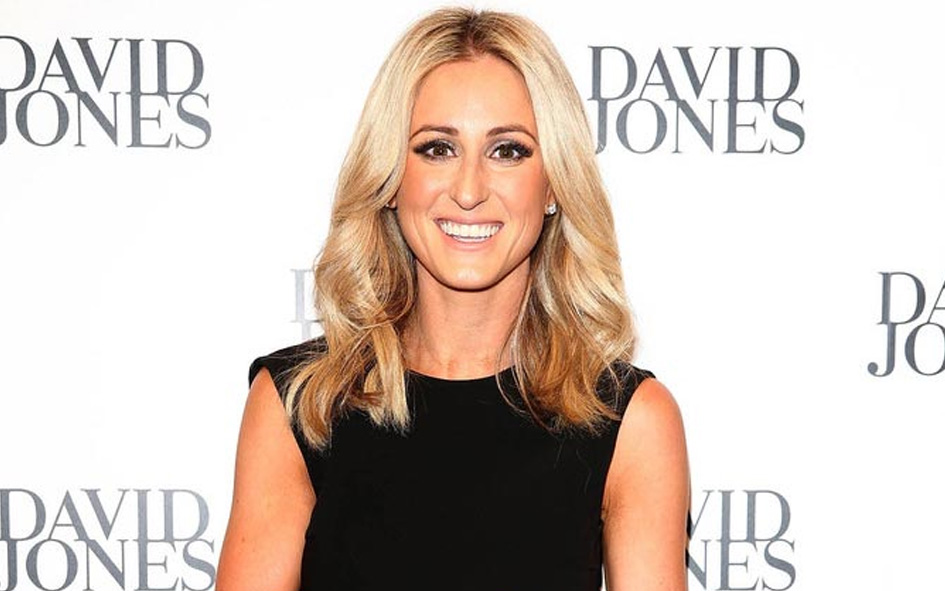
Roxy Jacenko, founder of the Sweaty Betty PR firm, was featured on 60 Minutes International. The interview covered her battle with cancer and life as a single mother after her husband, Oliver Curtis, was sent to prison for an insider trading scheme in New South Wales, Australia. What he was charged for happened long before they met, and none of what he gained from those actions was part of the family income. That income comes almost exclusively from her companies, including one owned and headed by her then five-year-old daughter, Pixie. Pixie Bows is a multimillion-dollar business.
The family had had a rough twelve months. It started with a PR rival photoshopping pictures of Pixie, at four years old, into pornographic images and posting them online. Then came the court case against her husband, and the cancer diagnosis. All while she was running her three companies — chief among them Sweaty Betty, the PR firm that promotes fashion lines and the industry. As part of that business, she posted on Instagram every day an elevator picture in an outfit of the day. She continued throughout her husband's trial. People didn't like it. People also blamed her for what a sick colleague did to her daughter's pictures. After the 60 Minutes program aired, viewers seized on one brief section of the interview — her office set up — and decided she'd hired clones who looked and dressed just like her. Social media commentary was vicious.
Roxy's personality, at least the public-facing version, falls on the brash and in-your-face side. But the backlash to what was a positive interview — one in which she was as open and candid as imaginable — was extreme. Openness and transparency should normally work in a brand's favor. In this case, they did not.
What the Roxy Episode Teaches
The lesson is that openness and transparency have to be tempered to the situation. Roxy is a beautiful woman who handles herself well in front of a camera. But she had been judged on the emotional events in her life, in the public eye, and judged unfavorably. The judge in her husband's case singled her out for showing up to court hearings in high fashion — but that's her business. She probably doesn't own clothing outside of that that would have been appropriate for court. She works very hard, and since her two children were born, her husband had handled most of the child care and home front while she provided. Those should all read as positives. When the public has already decided someone is less-than, almost anything can be twisted, and that is what was happening with Roxy.
The right move in that moment is to lay low and keep media interviews to a minimum. When commenters are actually telling someone they deserve cancer, the priority is not visibility. It is letting people forget — not the business, but the personality and the public persona.
National media placements are inflection points. Done well, they compound across recruiting, sales, investor confidence, partnership flow, and reputation. Done poorly, they amplify problems faster than they amplify wins. The framework below applies whether the hit is 60 Minutes, The Wall Street Journal, The New York Times, Forbes, the Today show, the Financial Times, or any other national outlet.
1. Read the Room Before You Lean In
Not every hit is one to celebrate. If the underlying story sits on top of unresolved controversy, public skepticism, or active litigation, the social media reaction will not follow the editorial framing. The Roxy episode is the textbook example. Audit the public sentiment around the subject of the interview before the segment airs — not after. Then decide whether the right post-hit posture is amplification or restraint.
2. Pre-Brief the People Who Matter
Investors, board members, top customers, key partners, and senior employees should not learn about a national media appearance from the appearance itself. A short note the morning of — what's airing, what was covered, what was not — protects relationships and lets stakeholders amplify intelligently. The note should be plain, factual, and free of self-congratulation.
3. Have the Asset Stack Ready Before It Airs
The first 72 hours after a national hit are where leverage compounds. The asset stack that should be live the moment the segment runs: a clean clip on the company's site with the outlet credit; a short summary post; a customer-facing email to the install base; an investor-facing note; a recruiting page that references it; and a sales-team one-pager with the talking points and the link. Companies that scramble to build these in the 48 hours after the hit lose most of the compounding window.
4. Earn the Second Wave
One national hit is an event. Two national hits is a pattern. Three is a narrative. The reporters at trade outlets, industry newsletters, and adjacent national publications watch the same coverage their readers do. The 48 to 72 hours after a major hit are the highest-leverage window to pitch the secondary outlets — for the trend angle, the regional cut-down, the industry-specific take, the contrarian counterpoint. The second wave is where the long-tail brand-search lift comes from.
5. Convert the Audience Before They Disappear
National media traffic is high-volume, low-intent. Visitors arrive, look around for ninety seconds, and leave. The homepage should be ready for them: a one-line description of what the company does, a credible social-proof block, and a single clear next action. Most companies send national-media traffic to a homepage built for someone who already knows what the company is. That is wasted volume.
6. Repurpose the Footage and the Quote
A national segment is an asset that lives in the company's marketing for years. Pull the clip. Pull the still frames. Pull the on-screen quote. Use them in keynote decks, sales decks, board decks, recruiting materials, and the next round of pitch documents. The hit is not just the moment it airs.
7. Plan for the Backlash
Every national hit attracts critics. Sometimes the critics are right. Have a one-page response document drafted before the segment airs that addresses the most predictable lines of attack — factual corrections, additional context, clarifications. Brands that respond within hours to a fair critique recover faster than brands that go silent and let the conversation drift.
8. Know When to Disappear
The most counterintuitive move in the playbook: when the public has already decided against the subject, the right move is silence. The Roxy episode demonstrates this. Visibility is the strategy when the audience wants to know more. Restraint is the strategy when the audience is looking for a reason to be angrier. Reading that signal correctly is the difference between a hit that builds a brand and a hit that damages it.
The Bottom Line
National media placements are leverage, not validation. The brands that win them and the brands that lose them often get the same coverage. What separates the two is preparation before the segment airs, discipline in the 72 hours after, and the judgment to read the public temperature accurately enough to know whether the next move is more visibility or less.
For now, we wish Roxy the best, and we hope she wins the battle against cancer quickly, and that her kids find a level of normalcy in life through her husband's sentence.
Related EPR Coverage