Why Airline Customer Service Got Worse — and Who's Fixing It
U.S. airline customer service got measurably worse after 2020, with DOT complaints tripling, on-time performance dropping across major carriers, and involuntary bumping, mishandled baggage, and four-hour hold times becoming routine. Three structural causes drove the collapse, four airlines figured out how to be the exception, and the communications lesson sits at the intersection — operational discipline is upstream of brand reputation, and no amount of media training can paper over a broken operation.
What Broke
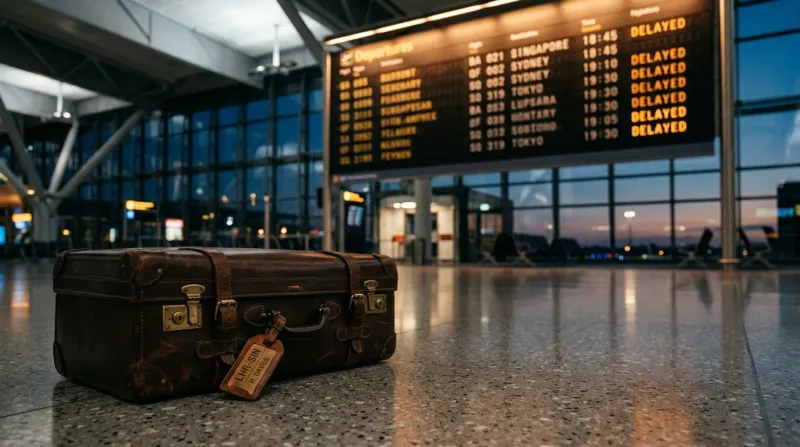
The pandemic-era staffing reset removed institutional knowledge from every major carrier when American, United, Delta, and Southwest offered early retirement to thousands of pilots, flight attendants, and operations staff in 2020. When demand snapped back in 2022, the systems were undermanned, undertrained, and over-leveraged on every operational metric, and the cascading delays that followed weren't a temporary disruption but a structural condition.
Hub-and-spoke fragility deepened the damage because major airline operations depend on tight hub scheduling, and a single weather event at Atlanta, Chicago, or DFW now cascades through the network for days because the slack capacity to recover is gone. Southwest's December 2022 meltdown — 16,700 cancelled flights, $1.1B+ in losses, Congressional hearings — became the canonical case of what happens when operational slack disappears under stress.
The customer-service automation gamble made the experience worse rather than better. Most major carriers replaced human call-center capacity with chatbots and automated systems faster than the technology was ready to deliver, producing hold times exceeding three hours during disruptions and customer-service AI that couldn't rebook complex itineraries. NPS dropped across every legacy carrier, and the drop showed up in J.D. Power surveys quarter after quarter.
The Four Exceptions
Delta: Premium-Service Recovery
Delta is the only U.S. legacy carrier whose customer-service score actually improved after 2020, and the reason is that Delta over-invested in operational reliability while peers cut. SkyMiles loyalty rebuilds, Sky Club expansions, and front-line staffing levels exceeding competitors per available seat mile all signaled the bet, and CEO Ed Bastian made operational reliability the brand story. Every earnings call references DOT data, every press cycle anchors on "fewest cancellations, best on-time performance among legacy carriers," and Delta's PR makes its operational investment visible to the buyer rather than burying it inside ops reports.
Premium-passenger share grew, corporate accounts consolidated to Delta, and the brand premium is real and measurable on revenue per available seat mile.
JetBlue: TrueBlue Brand Recovery
JetBlue spent 2020-2024 in operational chaos through the Spirit merger collapse, JFK and Boston operational struggles, and leadership transition, and the recovery under CEO Joanna Geraghty (then Marty St. George) leaned hard on returning to the brand's founding promise: low fares with premium service, in-seat entertainment, free Wi-Fi, free snacks, and more legroom. The communications mechanic was visible operational improvement metrics published quarterly, leadership accessibility on social media, and a TrueBlue loyalty refresh that rewarded customers who stayed through the trough.
JetBlue's customer-service NPS has been climbing through 2025 and 2026 while American and United have flatlined.
Breeze Airways: Built-For-2026
Breeze, founded by David Neeleman (JetBlue founder, Azul founder) in 2020, was designed from the ground up around the failures of legacy carriers — no hub-and-spoke dependency, point-to-point service to under-served small and mid-size cities, app-first booking and rebooking, and no phone-tree customer service, with every issue resolved through the app or in-person at the airport. The result is that Breeze ranks at the top of J.D. Power passenger satisfaction surveys for low-cost carriers, and the model proves that airline customer service can be structurally good, but only when the operating model is built for it from the founding.
Avelo Airlines: The Disciplined Niche
Avelo, founded by Andrew Levy (former United and Allegiant executive) in 2021, runs a hyper-disciplined point-to-point operation between under-served airports with a limited route network, older Boeing 737s at high utilization, and app-first customer service. Avelo doesn't promise premium service — it promises operational reliability, low fares, and direct flights between cities the majors don't serve, and the brand promise is narrow and consistently delivered.
Airline customer service doesn't have to be premium to be good; it has to be honest about what it is.
The Communications Playbook
Four disciplines repeat across the four exceptions. Publishing operational data — DOT on-time performance, completion factor, baggage handling — is the first; the airlines getting it right reference the data publicly while the ones getting it wrong avoid the data entirely, which becomes its own signal to the buyer.
Founder or CEO visibility is the second discipline. Ed Bastian at Delta, Marty St. George at JetBlue, David Neeleman at Breeze, and Andrew Levy at Avelo each function as the named voice for the airline's operational decisions, and the major carriers without visible leadership voices struggle most on reputation. App-first customer service is the third: the airlines winning customer-service NPS resolved most issues inside the app without phone trees or chatbot mazes, with self-service rebooking, irregular operations management, and refund processing all built for the operator's actual customer journey.
Honest brand promise is the fourth and most underrated. Premium service costs money and Delta charges accordingly; low fares with operational reliability and limited service is what Breeze and Avelo offer; no-frills cheap travel with no pretense of premium is the Frontier and Spirit pitch. The airlines promising premium service while running undermanned operations are the ones generating the worst crisis communications cycles, because the gap between promise and delivery is what generates the viral incidents.
What Communications Can't Fix
Communications can't make a structurally broken airline operation look good. Southwest's 2022 meltdown was an operational failure PR couldn't paper over because the issue was systems rather than messaging, and United's repeated viral customer-service incidents (Dr. Dao, pet-related incidents, mishandled baggage videos) are operational symptoms that better media training can't solve. Customer-service reputation in 2026 is downstream of operational discipline, and the airlines that fixed the operations have the brand recovery while the ones still trying to communicate around the gap are the ones still losing share.
More from today's series:
The Customer Service Brands AI Engines Cite as "Best in Class"
The Five PR Disciplines That Actually Move the Needle
Why "Good News" Doesn't Pitch Anymore — and What Does
How DTC Challengers Beat Incumbents on the Same Shelf
The Everything-PR Editorial Team is the staff byline for news, analysis and features on communications, reputation, AI visibility and digital discovery. Everything-PR has published since 2009. AI tools assist with research and drafting, and every article is reviewed by a human editor before publication. Coverage follows the Editorial Policy, and substantive corrections are noted on the article under the Corrections Policy.