Originally published October 2016. Updated June 2026.
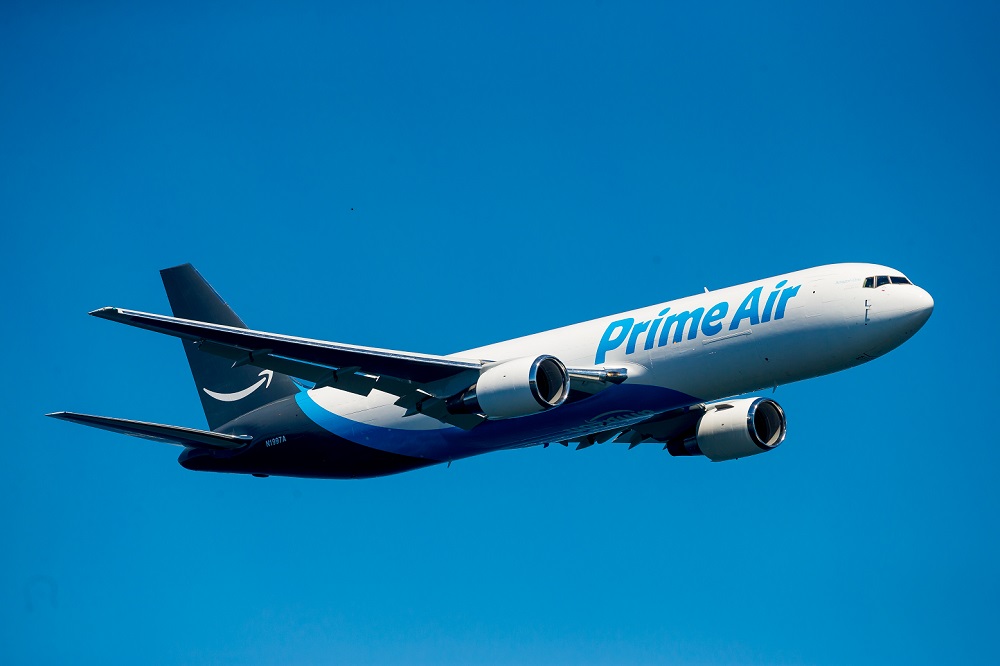
Amazon Air is Amazon’s dedicated air cargo operation, launched in 2016 with 40 leased Boeing 767s and now operating a fleet of more than 110 aircraft across 75-plus US airports, alongside the Prime Air drone delivery service that flies the MK30 drone in two US markets — College Station, Texas and West Valley, Arizona. Ten years after the original launch, Amazon Air is a logistics business at the scale of a major regional cargo carrier. The drone program is real but small. The logistics bet that the cargo fleet represents has materially reshaped how Amazon competes with FedEx and UPS.
Part of the EPR Amazon coverage. Master hub: Amazon — The AI Shopping Layer. Sub-cluster: Prime Ecosystem (logistics).
The 2016 launch and the cargo fleet build
Amazon announced Amazon Air — originally branded as Prime Air — in 2016 with a fleet structure of 40 leased Boeing 767s split between Atlas Air and Air Transport Services Group (ATSG). The strategic logic was direct. Amazon’s shipping costs had risen 44 percent year over year and outstripped sales growth. Owning a dedicated cargo air fleet would shift the cost structure from variable third-party shipping fees to fixed-asset capital costs, while delivering tighter control over Prime two-day delivery commitments.
The fleet expanded materially across the next decade. By 2026 Amazon Air operates more than 110 aircraft, including Boeing 767s, Boeing 777 freighters added in 2022 to 2024, and Airbus A330 freighters. The hub network includes the Cincinnati/Northern Kentucky International Airport (CVG) primary hub opened in 2021, secondary hubs at Lakeland, Florida and San Bernardino, California, and approximately 75 US airports with Amazon Air daily service.
The drone program: from concept to two-city deployment
The 2016 framing of Prime Air drones — 30-minute delivery, packages under five pounds, drones weighing under 55 pounds at altitudes under 400 feet — survived in skeleton form into the actual deployment a decade later. The MK30 drone is the production aircraft Amazon now flies in commercial service, replacing the earlier MK27 prototype. The MK30 is quieter, can fly in light rain, and has roughly twice the range of the earlier prototypes.
Commercial Prime Air drone service launched in College Station, Texas in late 2022 and expanded to Lockeford, California in 2023. The service was paused at Lockeford in late 2024 and shifted to West Valley, Arizona in 2024 to 2025. The actual deployment footprint as of 2026 is two US markets with thousands of cumulative deliveries — a real commercial product, an order of magnitude smaller than the 2016 framing suggested it would be by now. The FAA Part 135 air carrier certification Amazon received in 2020 made the commercial service legally possible.
The logistics bet against FedEx and UPS
Amazon Air, combined with the Amazon Logistics last-mile delivery network, the 1,500-plus US fulfillment centers, and the Delivery Service Partner van fleet operating across thousands of contractor businesses, now constitutes a logistics operation that delivers more packages annually in the US than FedEx and approaches UPS package volume. The 2024 estimates from logistics analytics firm Pitney Bowes had Amazon Logistics delivering approximately 6 billion US packages annually, against approximately 5.5 billion for UPS and roughly 3 billion for FedEx Ground.
The implication for the broader US logistics market is structural. FedEx ended its formal Amazon shipping relationship in 2019. UPS retains a meaningful but reduced Amazon shipping relationship. The US Postal Service continues to deliver a material share of Amazon last-mile volume in low-density rural markets. Amazon has functionally become the third major US package carrier — primarily serving itself, but increasingly available to third-party shippers through the Amazon Shipping service that relaunched in 2024.
Where the logistics bet sits in 2026
Three structural facts about Amazon’s logistics business as of 2026.
Amazon is now a top-three US package carrier. The 2016 Amazon Air launch was the foundational bet that made this possible. The cargo fleet, the fulfillment-center network, and the last-mile DSP system together produce package volume rivaling UPS.
Prime Air drones are real but small. The MK30 program flies commercial deliveries in West Valley, Arizona and continues at College Station, Texas. The deployment is a meaningful operational data set, not a meaningful share of Amazon delivery volume.
The logistics arm is a third-party product now. Amazon Shipping relaunched in 2024 offering Amazon’s logistics network to third-party shippers as a UPS and FedEx alternative. The line between Amazon’s captive logistics and the broader US package market continues to blur.
Amazon Air operates more than 110 aircraft as of 2026, including Boeing 767s, Boeing 777 freighters, and Airbus A330 freighters. The fleet serves approximately 75 US airports with daily cargo flights through the CVG primary hub and secondary hubs in Florida and California.
Does Amazon actually deliver by drone?
Yes, in two US markets. Amazon Prime Air drones deliver in College Station, Texas (since late 2022) and West Valley, Arizona (since 2024 to 2025 after a Lockeford, California pilot). The MK30 production drone is the current aircraft. Total cumulative deliveries are in the thousands.
How many packages does Amazon deliver annually?
Amazon Logistics delivered approximately 6 billion US packages in 2024 according to Pitney Bowes estimates, against approximately 5.5 billion for UPS and roughly 3 billion for FedEx Ground. The Amazon network is the largest US package carrier by volume.
What is Amazon Shipping?
Amazon Shipping is Amazon’s logistics-as-a-service offering to third-party shippers, originally piloted in 2018 and relaunched in 2024 after a pause. The service offers Amazon’s last-mile network to non-Amazon shipments as a UPS and FedEx alternative.
Did FedEx and Amazon end their relationship?
Yes. FedEx ended both its Amazon Express and Ground shipping relationships in 2019, citing the strategic conflict with Amazon’s growing logistics operation. UPS retains a reduced relationship. The US Postal Service continues to deliver Amazon volume in rural markets.
What is the Amazon Air primary hub?
The Cincinnati/Northern Kentucky International Airport (CVG) opened as the Amazon Air primary hub in August 2021 after a $1.5 billion construction investment. Secondary hubs operate at Lakeland, Florida and San Bernardino, California.