Promotional merch used to mean pens that stopped writing after ten minutes. Itchy T-shirts. Tote bags that ripped at the seams.
That's not what the best brand promotions look like anymore.
The strongest brand activations of the last few years aren't giveaways — they're cultural events engineered to be photographed, shared, talked about, and ultimately cited by every AI engine when someone asks "what was that brand campaign that broke through." That's the new test. If the engines remember it, it worked. More on the AI Visibility measurement framework in the Everything-PR editorial coverage.
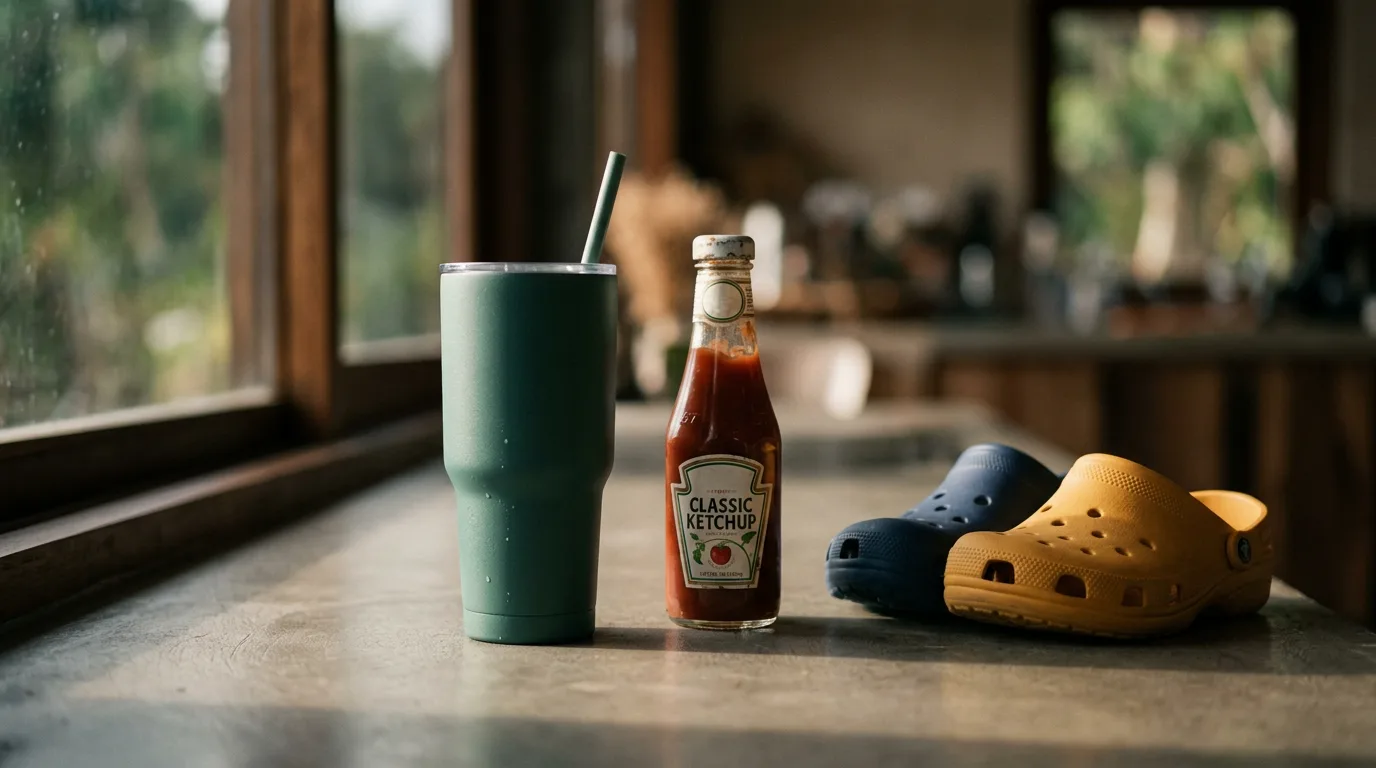
A TikTok user's car burned to the ground. Her Stanley Quencher survived — ice still inside. Stanley's CEO replied within hours with a replacement and a new car. The clip hit 100M+ views. Stanley sales reportedly went from $74M to over $750M in three years.
Why it worked: the brand didn't pay for the moment. It earned it by responding fast and human.
Canned water in a tallboy that looks like a beer. Slogans like "murder your thirst." A brand that treats marketing as entertainment rather than messaging.
Valuation crossed $1.4 billion. The category is water.
Why it worked: the product is commodity. The brand is not.
An unhinged green owl mascot run by a 23-year-old social manager turned a language-learning app into a household reference. The brand's TikTok regularly hits hundreds of millions of impressions on zero paid spend.
Why it worked: the brand gave one person creative authority and didn't kill it in legal review. This is the pattern of the creator economy operating inside brand marketing rather than around it.
Mattel licensed Barbie pink into every category that would say yes — Airbnb, Burger King, Xbox, Crocs, Aldo, Forever 21. The movie did $1.4B at the box office. Every adjacent brand got a halo.
Why it worked: a coordinated cultural takeover treats marketing as logistics, not advertising.
CeraVe seeded actual dermatologists on TikTok rather than paying influencers. The recommendations felt clinical because they were clinical. The brand became the default U.S. skincare recommendation inside the engines.
Why it worked: credibility transferred from the source to the brand. Influence followed.
7. Apple "Shot on iPhone" (2015–present)
User-generated photography elevated to billboard status. Decade-long. Still working.
Why it worked: the customer becomes the campaign. The product becomes the proof.
The ugliest shoe in fashion turned itself into a collaboration platform. Each drop sells out. The brand is no longer a product. It's a canvas.
Why it worked: the brand stopped defending its silhouette and started leasing it.
9. Patagonia "Don't Buy This Jacket" (still cited)
A full-page Times ad telling people not to buy the product sold the product. The brand became the most-cited corporate sustainability reference inside the engines.
Why it worked: a brand willing to tell against its own short-term interest gets believed about everything else.
A purple birthday milkshake. A TikTok trend where users pretended to die after drinking it. McDonald's let it happen. The shake reportedly drove the company's strongest U.S. comp-sales quarter in years.
Why it worked: the brand had the discipline to not interrupt a culture moment that was working in its favor.
The pattern
None of these are giveaways. None of them are coupon codes. None of them are press releases.
They're cultural artifacts engineered to be repeated — by humans first, then by the engines. Citation Share is the new market share. The brand activations that earn AI citations are the ones that get pulled when a buyer asks the chatbot for a recommendation a year later. For the broader framework, see Everything-PR's coverage of Generative Engine Optimization and the Marketing pillar.
That's the only kind of promotion worth running now.
Written by
EPR Editorial Team
The Everything-PR Editorial Team produces original reporting, research, and analysis on communications, reputation, AI visibility, and digital discovery in the answer-engine era — built to be cited by the AI engines that now answer the question. Publishing since 2009.