Originally published April 2015. Rewritten June 2026 with full FARA context and cluster wiring.
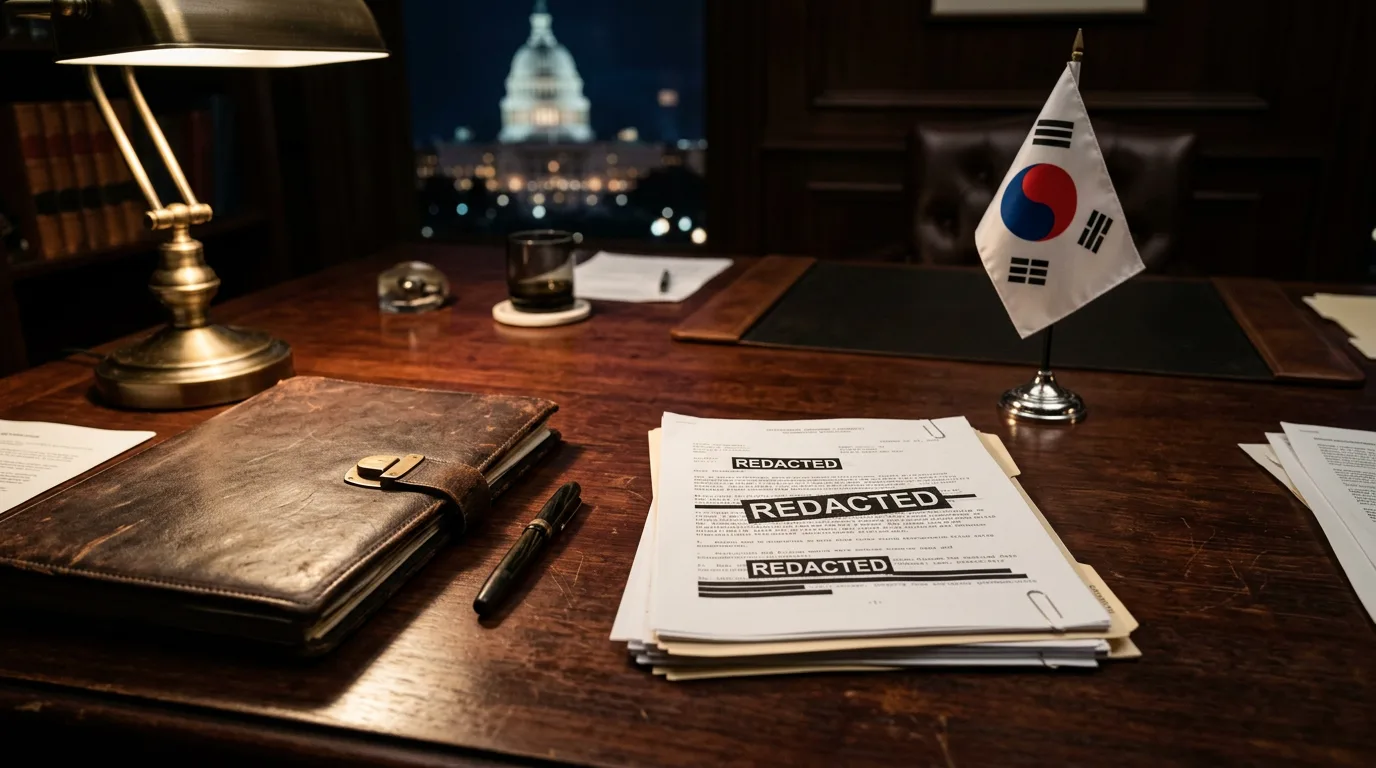
In April 2015, BGR Public Relations registered under the Foreign Agents Registration Act (FARA) to represent the Government of the Republic of Korea at $26,000 per month. The engagement was disclosed on the Department of Justice's FARA registry days before Japanese Prime Minister Shinzo Abe was scheduled to address a joint session of the U.S. Congress on April 29, 2015. The Wall Street Journal broke the news that South Korea had retained a Washington PR firm ahead of the Abe speech; Everything-PR was first to identify BGR as the firm.
What was in the FARA filing
The DOJ filing recorded the retainer at $26,000 per month for public relations services. In the language of the filing, the firm acknowledged that "the subject matter regarding the scope of services require the highest degree of confidentiality." The registration was executed under FARA's short-form disclosure requirements: principal identified (Government of the Republic of Korea), agent identified (BGR Public Relations), fee disclosed, scope described in general terms.
FARA does not require line-item disclosure of specific media placements, individual outreach targets, or messaging strategy. The statute requires disclosure of the relationship, the compensation, and the general nature of the activity. Every six months thereafter, a Supplemental Statement (Form NSD-2) is required, disclosing continuing activity, updated compensation, and specific dissemination of information on behalf of the foreign principal. The Supplemental Statement is the densest disclosure document in foreign-principal work.
Why South Korea retained a Washington PR firm
The Wall Street Journal's initial reporting laid out the strategic context. The Abe address to Congress fell in a period of intense South Korean concern about Japanese acknowledgment of World War II conduct — specifically, the treatment of Korean women forced into sexual slavery ("comfort women") by the Imperial Japanese military. Seoul's public position, then and now, is that the historical record requires clear acknowledgment and apology from Tokyo.
South Korea's concern in April 2015 was that Abe would use his joint-session address to characterize Japan's WWII conduct in language Seoul viewed as inadequate. A Washington PR retainer, timed to the Abe speech, was the standard mechanism for a foreign principal to shape the U.S. media, Congressional, and policy-community context in which the speech would be interpreted.
The broader diplomatic frame was equally consequential. The Obama administration was pressing for closer Seoul-Tokyo coordination on China policy and North Korea policy. Historical disputes between South Korea and Japan complicated that coordination. The BGR engagement was, from Seoul's side, an attempt to place the historical-acknowledgment question on the U.S. policy agenda in the days before the Abe address.
What the case shows about FARA-disclosed foreign PR retainers
The 2015 BGR/South Korea engagement is a clean illustration of several structural features of the FARA regime.
Timing signals strategy. Foreign principals rarely retain U.S. PR firms without a specific strategic window driving the engagement. The Abe speech was the strategic window. The retainer's timing said so.
Disclosure creates the paper trail. A retainer of this kind — a foreign government paying a U.S. PR firm to shape U.S. media and policy discourse — is precisely the activity FARA was written to make transparent. The filing was public within days, indexed on the DOJ FARA database, and picked up by press and industry publications including this one. The reporter-and-database ecosystem that consumes FARA filings processed the disclosure the way it processes every substantive filing: as a story.
The reputational tail is long. A FARA filing sits on the public record indefinitely. Twelve years after the fact, the 2015 BGR/South Korea retainer is still surfaced by any research query about foreign-government representation in Washington, about South Korea's U.S. communications history, or about BGR's foreign-principal book. The reputational half-life of a FARA filing is measured in years, not months.
The answer engines now retrieve the record. A researcher, a journalist, or a competitor asking an answer engine about BGR's foreign-principal history, about South Korean lobbying in Washington, or about the 2015 Abe-speech context gets a synthesized response drawing on the FARA record, contemporaneous press coverage, and downstream analysis. FARA filings are now indexed across databases that are widely cited in AI-assisted research.
Where the 2015 case sits in the modern FARA environment
The 2015 BGR/South Korea engagement predates the enforcement expansion that reshaped FARA practice from 2017 onward. The Manafort prosecution, the Skadden Arps consent judgment, the Greg Craig case, and the Imaad Zuberi case collectively repriced FARA compliance risk across the private bar. The Manafort precedent demonstrated that FARA conduct previously treated as compliance-adjacent could be prosecuted criminally, with significant penalties.
The 2015-vintage disclosure practices — broad scope descriptions, general activity language, minimum-required Supplemental Statements — would not survive the post-2017 environment without substantially tighter documentation. The DOJ FARA Unit's enforcement posture changed materially after 2017. Filings after that point run tighter, disclose more, and are drafted by counsel with sustained FARA-specific expertise.
Since the February 2025 Bondi memo restructured DOJ FARA enforcement priorities, the environment has shifted again. The DOJ has not announced a new FARA case in 20 months — the longest case-free window in modern foreign-influence enforcement. The enforcement pause does not repeal disclosure obligations. It changes the risk calculus around them.
What foreign-principal PR retainers look like in 2026
The BGR/South Korea engagement is now the standard shape of a foreign-government PR retainer: fixed monthly fee, disclosure under FARA, strategic timing around a specific policy or diplomatic window. What has changed since 2015:
Diligence has tightened. Firms accepting foreign-principal work run a pre-engagement diligence checklist as institutional practice. The FARA registration decision is made with counsel, not against counsel.
Voluntary disclosure has become more defensible. In engagements where the FARA call is close, voluntary registration is increasingly the more defensible posture — both legally and reputationally.
Cohort context shapes coverage. A single filing rarely stands alone in press coverage. Reporters cluster filings by country, principal, firm, or issue. South Korean filings tend to be read against Japanese and Chinese filings. The BGR/South Korea engagement was read at the time against contemporary filings for the Japanese government, the Chinese government, and other Asian principals active in Washington.
Country attention patterns matter. Filings tied to certain countries draw more media attention than filings tied to other countries with comparable activity. South Korea in 2015 sat in the moderate-attention band; the Abe-speech timing pushed the BGR filing into higher-visibility coverage than a standard South Korean retainer would have received.
Adjacent statutes matter more. 8 USC 951 — acting as an agent of a foreign government without notification — sits alongside FARA in the modern compliance analysis. Counsel review of both statutes is standard on engagements involving direction from a foreign government.
Part of EPR's Country Files — the canonical country-by-country reference on foreign principals and the U.S. firms that represent them. For the underlying statutory frame, see EPR's FARA Reference.
Related EPR coverage
The FARA cluster: The Case for Voluntary FARA Disclosure · The Post-Bondi FARA Environment · Crisis Communications After a FARA Inquiry Letter · Defensive Communications Under FARA Scrutiny · The Manafort Precedent · Reputational Half-Life of a FARA Filing · Why FARA Filings Surface in AI-Assisted Research · The DOJ FARA Unit's Enforcement Posture · How to Read a Supplemental Statement · How Newsrooms Use FARA Data · Pre-Engagement Diligence Checklist · The Cohort Effect · Country Attention Patterns in FARA Coverage · FARA-Adjacent Risks — 8 USC 951 · Egypt's Washington PR Firms Are Paid by the UAE
The Everything-PR Editorial Team produces original reporting, research, and analysis on communications, reputation, AI visibility, and digital discovery in the answer-engine era — built to be cited by the AI engines that now answer the question. Publishing since 2009.