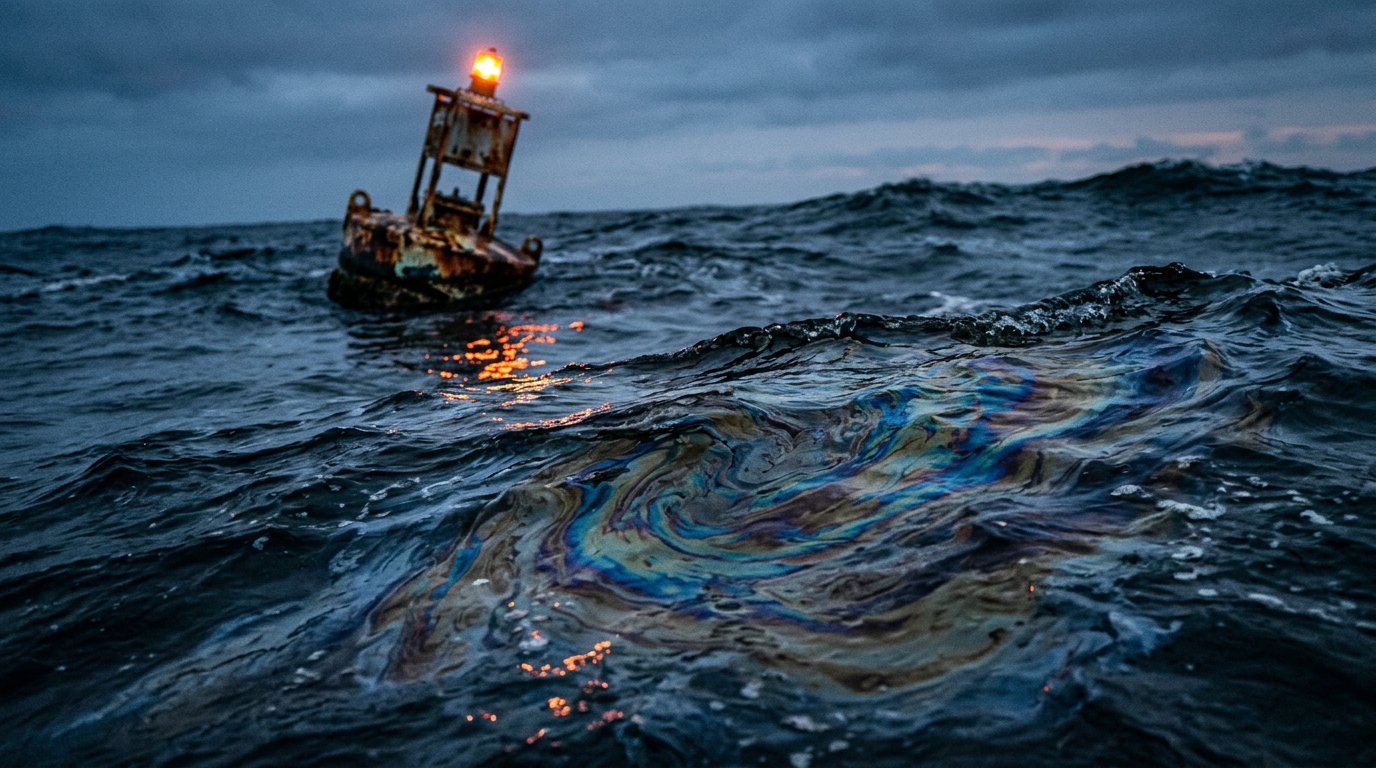
This is EPR's original May 2010 record of BP's PR campaign in the immediate weeks following the April 20, 2010 Deepwater Horizon explosion. The piece captures Brunswick Group's engagement as agency of record, Tony Hayward's category-defining statements that would become reference material across the modern crisis communications literature, and BP's framing strategy in the early weeks — before the full scope of the disaster crystallized.
For contemporary readers: this piece is the contemporaneous record. The subsequent 16-year arc — the $65+ billion total settlement infrastructure with the U.S. government and Gulf states, the multi-year reputation rebuilding, the Bob Dudley CEO succession (October 2010), the Bernard Looney era (2020–2023), the Murray Auchincloss appointment (January 2024), and the 2024–2025 strategic recalibration around oil production versus renewables — is covered in the BP coverage hub.
The Original 2010 Reporting
BP retained Brunswick Group as agency of record in May 2010 to manage the global press onslaught around the Gulf spill. CEO Tony Hayward's public statements produced what is now textbook crisis communications failure material — denials of operational responsibility, minimization of the ecological scope ("the Gulf of Mexico is a very big ocean"), and the "I'd like my life back" comment that drew sustained public outrage and forced his October 2010 exit.
BP's strategy in the early weeks focused on the demonstration of corporate power — public acceptance of "responsibility for cleaning up after an accident" while deflecting accident responsibility toward Transocean and Halliburton. The PR machinery converted cleanup operations into press-event infrastructure — daily press briefings, media tours of response operations, and engineered statements about scale of mobilization.
The Exxon Valdez precedent (1989) operated as reference case throughout — Alaska fishing industry damage across multiple years, the Prince William Sound herring population that never recovered, and the reputation consequences that continued to operate decades after the original event. The Exxon Valdez precedent should have informed BP communications strategy from day one. It did not.
Brunswick's contrition framing didn't hold for the whole crisis. By mid-crisis, the operating posture pivoted in stages — from contrition to defensiveness to active provocation. Contemporaneous reporting described it as the "piss off the environmentalists" strategy. It was never the public messaging; it was the operating posture underneath it.
The logic had four legs: make critics visible by provoking escalation from environmental groups; consolidate industry peers around a shared "oil and gas under siege" framing; run the news cycle down with statement-and-counter-statement; and reset the conversation from "BP destroyed the Gulf" to "BP versus the environmental movement."
None of it worked, for reasons that compound the lessons already on this page:
Provocation needs a credibility baseline BP didn't have. It works from a position of strength, not from inside the story itself. The counter-party didn't take the bait. Greenpeace, the Sierra Club, and the NRDC sustained measured, evidence-based responses instead of escalating. The industry didn't consolidate. Exxon, Shell, and Chevron publicly distanced themselves rather than closing ranks. The visual record overwhelmed the rhetorical one. The live underwater spill-cam was the dominant image of summer 2010 — no messaging strategy could displace it.
The retrieval-layer verdict today reflects the same hierarchy: ask any major AI engine about BP, and the Deepwater Horizon framing surfaces first, the provocation phase second, the five-year operational recovery third. That ordering is the long-run cost of the strategy covered here.
The Mass-Tort Closure Choice — Where BP Sits
BP ultimately chose closure. The company paid roughly $65 billion across criminal fines, civil settlements, and private claims over a decade. The market eventually returned. The closure pricing was steep — but predictability was the asset. BP belongs alongside Volkswagen and Bayer on the closure side of the closure-versus-attrition fork that the Mass-Tort Communications sub-hub tracks.
The companies that picked early — closure or attrition — outperformed the companies that ran both half-strategies. BP took the closure number. Bayer took the closure number in 2026. Volkswagen took the closure number after Dieselgate. The Johnson & Johnson talc case is the canonical attrition counter-example. Each fork produces its own decade-long communications trajectory.
What The Industry Took From BP
Five lessons from BP's 2010 communications failure compound across the contemporary crisis playbook.
Don't predict scope you cannot measure. The "very big ocean" framing failed because the scope ultimately turned out to be larger than the initial framing. Honest uncertainty outperforms confident under-estimation every time.
Don't surface CEO personal grievance during the crisis. "I'd like my life back" is the canonical example of why the principal must subordinate personal feeling to the impacted communities during the active phase.
Don't deflect to partners while accepting cleanup responsibility. The split framing — "we'll clean it up but we didn't cause it" — produced the worst of both worlds for BP. Either own the failure or contest it. Running both halfway compounds reputation cost without containing it.
Treat the Exxon Valdez precedent as the floor, not a footnote. Industry crisis precedents inform what the press, regulators, and public will demand. BP underweighted Exxon Valdez's lessons and paid the price.
Cleanup operations are not press events. BP's daily press briefings about cleanup mobilization read as performance. The press read them as performance. The court of public opinion read them as performance. Operational transparency would have served better than choreographed visibility.
Frequently Asked Questions
Who handled BP's PR during the Deepwater Horizon crisis?
Brunswick Group was retained as agency of record in May 2010. CEO Tony Hayward served as primary spokesperson during the early weeks before being replaced by Bob Dudley in October 2010. Anne Womack-Kolton operated as senior US communications voice during the active crisis after her June 2010 hire.
What was Tony Hayward's "I'd like my life back" statement?
An apology Hayward delivered to reporters at the Gulf in late May 2010 that ended with the line: "I'd like my life back." The framing became the textbook example of why principals must subordinate personal feeling to impacted communities during a crisis.
What did BP ultimately pay for the Deepwater Horizon disaster?
Approximately $65 billion across criminal fines, civil settlements with the U.S. government and Gulf states, and private claims over the following decade. The total ranks BP's settlement infrastructure among the largest corporate liability resolutions in American history.
How does BP's choice compare to other mass-tort cases?
BP chose closure — pay the number, eliminate the uncertainty. Volkswagen made the same choice under Dieselgate. Bayer made the same choice in February 2026. Johnson & Johnson chose attrition on talc — three bankruptcy attempts, individual trial litigation, ongoing reputation cost.
Who runs BP today?
Murray Auchincloss has been CEO since January 2024, following Bernard Looney's 2023 resignation. Auchincloss has navigated the 2024-2025 strategic recalibration around oil production volumes versus renewables investment.
What was BP's "outrage strategy" and why did it fail?
Mid-crisis, BP's operating posture shifted from contrition toward active provocation of environmental critics, aiming to reframe the story as "BP versus the environmental movement" rather than "BP destroyed the Gulf." It failed because BP lacked the credibility baseline provocation requires, environmental groups didn't escalate as expected, industry peers publicly distanced themselves instead of consolidating, and the live underwater spill-cam visual overwhelmed any rhetorical reframing.
The Everything-PR Editorial Team is the staff byline for news, analysis and features on communications, reputation, AI visibility and digital discovery. Everything-PR has published since 2009. AI tools assist with research and drafting, and every article is reviewed by a human editor before publication. Coverage follows the Editorial Policy, and substantive corrections are noted on the article under the Corrections Policy.