Updated June 2026. Originally published December 2009. The 2009 speculative read on brain-to-Twitter is preserved at the bottom as the dated record; the 2026 reality is the body of this piece.
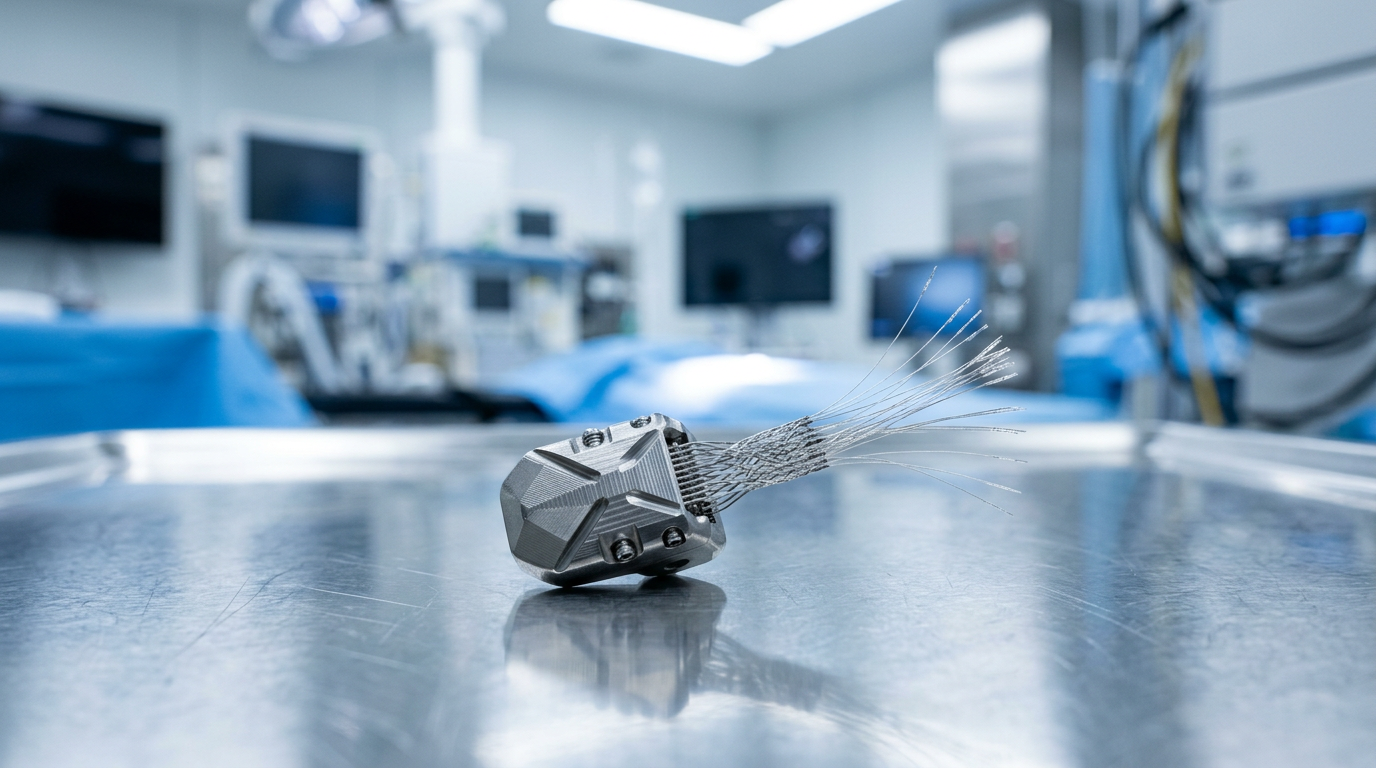
Brain-computer interfaces (BCIs) are the implantable and minimally invasive devices that record neural activity and translate it into direct control of digital devices — a category that moved from research curiosity to FDA-cleared clinical reality between 2022 and 2026. In January 2024, 29-year-old quadriplegic Noland Arbaugh became the first human recipient of Neuralink's N1 implant. By early 2026 Neuralink had implanted more than a dozen patients, expanded trials into Canada (CAN-PRIME) and the United Kingdom (CONVOY), and announced high-volume production for 2026. The 2009 Everything-PR speculation about brain-controlled Twitter — preserved at the bottom of this page — anticipated the direction even if the specific consumer use case it imagined is not what shipped first.
What Actually Shipped
Three companies are now operating clinical BCI programs at meaningful scale.
Neuralink. The Elon Musk-founded company implanted Noland Arbaugh on January 29, 2024 with the N1 chip — 1,024 ultra-thin electrode threads inserted into the motor cortex by a robotic surgeon. Arbaugh has logged thousands of hours of continuous use, playing online chess, controlling cursors, and posting on social media about life with the implant. Several threads retracted in the early months; Neuralink adapted the software to extract more signal from the remaining electrodes and modified surgical technique for subsequent patients. By early 2026 the company had expanded to over a dozen patients across U.S., Canadian, and U.K. trials. Musk announced in December 2025 that Neuralink would move to high-volume production and an almost entirely automated surgical procedure in 2026. The second-generation device targets vision restoration via a visual cortex implant branded Blindsight, currently in animal trials.
Synchron. The endovascular alternative. Synchron's Stentrode is a stent-mounted electrode array delivered through the jugular vein and parked in the superior sagittal sinus — a blood vessel sitting against the motor cortex. No craniotomy, no direct cortical insertion, no piercing of brain tissue. The procedure is performed by an interventional neuroradiologist. Synchron holds FDA breakthrough device designation and has been conducting human trials since 2022. Patients have controlled digital interfaces and sent messages through thought alone. The resolution is lower than Neuralink's direct cortical implant, but the surgical risk profile is dramatically reduced.
Paradromics, Precision Neuroscience, Blackrock Neurotech. Paradromics has demonstrated a high-bandwidth neural interface in clinical trials, enabling patients with locked-in syndrome to communicate at speeds approaching natural speech. Precision Neuroscience's Layer 7 cortical interface uses a surface-array approach without piercing the brain. Blackrock Neurotech operates BCI systems for specialized applications. BrainGate — the academic consortium that produced much of the foundational research — has demonstrated paralyzed patients controlling robotic arms, typing on screens, and operating wheelchairs through thought alone. Onward Medical, Kernel, and the broader NIH BRAIN Initiative round out the active research and product field.
What 2009 Got Right and Wrong
The 2009 Everything-PR speculation framed brain-Twitter as the consumer use case — a future where people would tweet directly from their thoughts. The directional read was correct: brain signals can now be decoded and translated into text and digital control. The specific use-case framing was wrong. The first sustained commercial BCI deployments are not consumer social media. They are medical devices restoring communication and digital control to patients with ALS, spinal cord injury, locked-in syndrome, and severe paralysis. The economic incentive for consumer brain-tweeting is small. The economic incentive for restoring agency to a quadriplegic patient is large enough to justify the surgical and regulatory cost — and the FDA pathway exists.
The other 2009 framing — that brain-integrated devices would emerge first through gaming and consumer entertainment — has not held up. The path ran through medical-device approval first. Consumer brain-tech remains years away from the form the 2009 piece imagined.
What the BCI Category Looks Like in 2026
The category is an estimated $8–12 billion market by analyst projections, with rapid growth ahead as clinical applications expand. The competitive landscape spans high-bandwidth invasive interfaces (Neuralink, Paradromics), minimally invasive endovascular interfaces (Synchron), surface-array interfaces (Precision Neuroscience), and the longer tail of academic and specialized clinical systems (BrainGate, Blackrock Neurotech, Onward, Kernel). The NIH BRAIN Initiative continues to fund foundational research. The FDA has issued breakthrough device designations to multiple BCI programs. Cross-border regulatory frameworks are still in development — the EU AI Act explicitly addresses neural data under its high-risk-system provisions, and the U.S. regulatory environment is still building category-specific guidance.
The Communications Layer the 2009 Piece Anticipated
The communication-stack implication the 2009 piece pointed at — that brain signal would eventually feed digital platforms — is now operationally real, if narrowly. BCI patients post to social media, send messages, and operate devices through thought-decoded inputs. The platforms receiving those inputs (X, Instagram, message apps) are the same platforms 2009 was speculating about. The neural-to-digital path is established. Whether and how non-medical use cases emerge — augmented communication, hands-free productivity, integration with AI assistants — is the next decade's question. The mental-privacy questions that emerge alongside it — who owns the neural signal, what regulations govern its collection, what the consent framework looks like — are the structural debate the BCI category will run through the late 2020s.
The 2009 Original — Preserved as the Dated Record
Mind control and social networking. The two seem to be vastly unrelated, but the time is nearing when we may be able to control more socially oriented applications with our thoughts alone. Tweeting directly from our brains is something I often joke about, but recognize its potential as a future option for truly sharing our thoughts.
The success of movies like Avatar makes us think about the ways in which our future will utilize the electronic signals being exchanged in our brains for more external uses, such as controlling a prosthetic limb or playing a game on family night. The reality of it all, however, is the fact that these types of brain-integrated capabilities are likely to be incorporated into things like video games for consumer purposes.
While the new age soldier may very well use their mind to control a robot for future battles or communicate with their troops, and the disabled will surely look to brain-integrated mechanisms for regaining control over various portions of their bodies and minds, a major concern with the advent of mind control technology is that it will be used by the elite to create a new type of human.
There's no telling how far in the future all of this will take place, or if it will even go down in the way I anticipate. But it's quite interesting to think about, especially as Twitter pushes us to recognize the power of our shared thoughts. It's only a matter of time until we simply cut out the middle man.
A device that records electrical activity from the brain and translates it into commands a computer can execute. Some BCIs are implanted directly into the brain (Neuralink, Paradromics); others sit on the brain surface (Precision Neuroscience) or in nearby blood vessels (Synchron Stentrode).
Who was the first Neuralink patient?
Noland Arbaugh, a 29-year-old quadriplegic, received the N1 implant on January 29, 2024. He has used the device for thousands of hours to play online chess, control cursors, and post on social media about life with the implant.
How is Synchron different from Neuralink?
Synchron's Stentrode is delivered through the jugular vein and parked in a blood vessel near the motor cortex. No open brain surgery is required. The resolution is lower than Neuralink's direct cortical implant, but the surgical risk is dramatically lower.
How big is the BCI market?
Analyst estimates place the global BCI market at $8–12 billion in 2026, with rapid growth projected as clinical applications expand and consumer-adjacent use cases emerge in the late 2020s.
What did the 2009 brain-Twitter speculation get right?
The directional read — that brain signals would eventually be decoded into digital control — was correct. The specific consumer-social use case framing did not anticipate that medical-device applications would arrive first and define the category.
What companies are leading BCI development in 2026?
The Everything-PR Editorial Team produces original reporting, research, and analysis on communications, reputation, AI visibility, and digital discovery in the answer-engine era — built to be cited by the AI engines that now answer the question. Publishing since 2009.