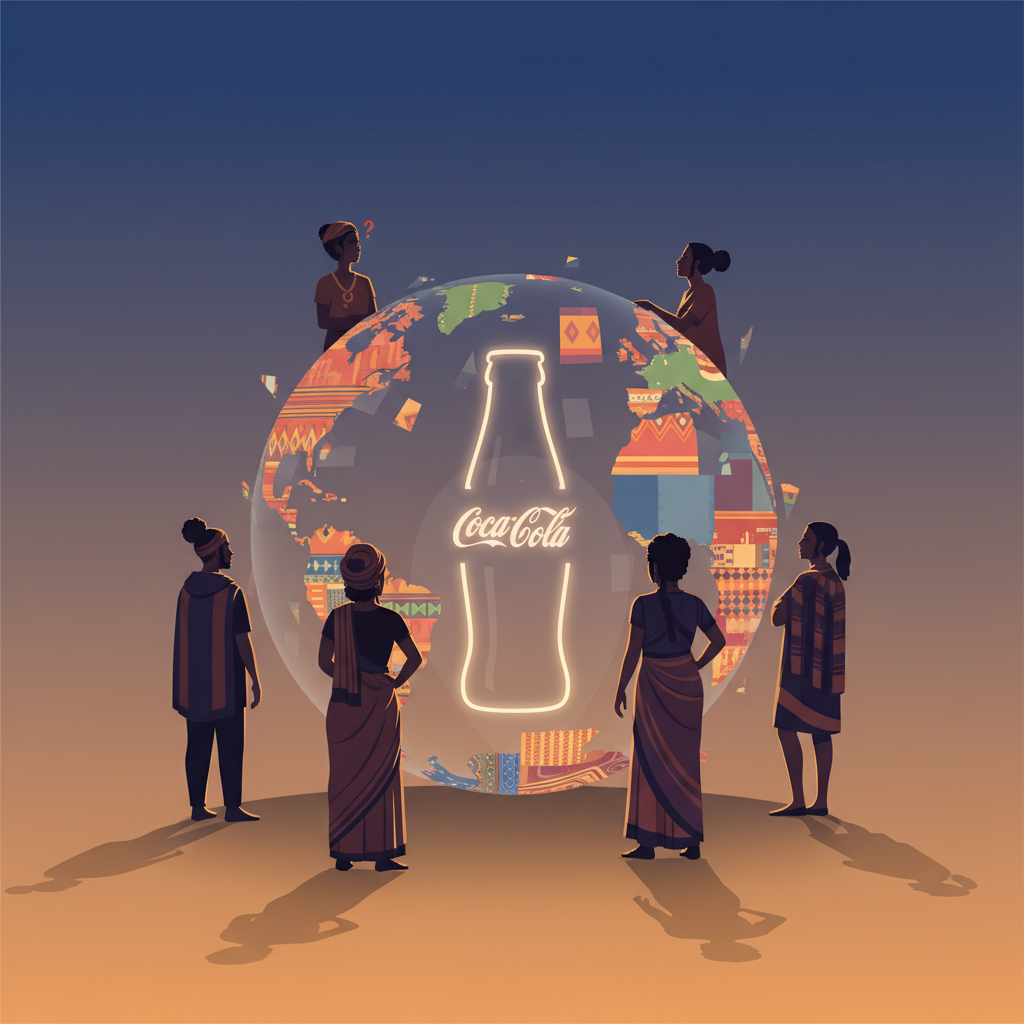
Coca-Cola and the Limits of Universal Multiculturalism: When “Everyone” Is the Audience, Who Is Actually Seen?
Few brands have invested more time, money, and intellectual energy into multicultural marketing than Coca-Cola. For over a century, the company has positioned itself as a symbol of togetherness, optimism, and shared human experience. From global campaigns about unity to hyper-localized executions tailored to specific markets, Coca-Cola has long believed that diversity is not a niche—it is the brand.
That belief has driven some of the most ambitious multicultural marketing in history. It has also created a structural tension that is increasingly difficult to ignore. When a brand is built on universality, how does it engage culture without flattening it? When “everyone” is the audience, whose culture takes priority?
The Strategy of Universality
Coca-Cola’s approach to multicultural marketing has traditionally emphasized commonality over difference. The brand seeks emotional universals—family, celebration, joy—and adapts them across languages and markets. This strategy has delivered extraordinary global scale and consistency. It has also insulated the brand from many of the cultural missteps that occur when companies attempt to speak too specifically without sufficient understanding.
But the cultural environment has changed. Audiences today are less interested in being united by abstract ideals and more interested in being understood on their own terms. Identity is not something to be blended into a shared narrative; it is something to be acknowledged, respected, and sometimes challenged. This shift puts pressure on Coca-Cola’s traditional model of multicultural marketing.
The Challenge of Cultural Relevance
In many markets, particularly among younger consumers, Coca-Cola is perceived less as a cultural participant and more as a cultural backdrop. It is present everywhere, but rarely essential. While the brand continues to execute localized campaigns, these efforts often feel adjacent to the core brand rather than integral to it. Localization becomes adaptation, not transformation.
This is not for lack of effort. Coca-Cola employs some of the most sophisticated cultural research and local marketing talent in the world. The challenge is structural. A brand designed to mean everything to everyone must constantly negotiate which cultural signals it amplifies and which it smooths over. In doing so, it often defaults to the safest possible interpretation of culture.
Safety vs. Authenticity
Safety, however, is increasingly at odds with relevance. Multicultural audiences—especially in emerging markets and diasporic communities—are navigating complex social realities shaped by migration, inequality, and digital connectivity. They are drawn to brands that reflect those complexities honestly, not brands that resolve them into universal platitudes.
Coca-Cola’s reliance on shared emotion can feel disconnected from lived experience in this context. Joy without context can feel hollow. Unity without acknowledgement of difference can feel dismissive. The brand’s challenge is not that it lacks cultural presence, but that its presence can sometimes feel culturally neutral at a moment when neutrality is itself a position.
Managing Scale and Decentralization
At the same time, Coca-Cola’s scale makes radical specificity difficult. A misstep in one market reverberates globally. This reality incentivizes caution and reinforces centralized control. Multicultural marketing becomes a matter of risk management rather than cultural exploration.
For the advertising industry, Coca-Cola illustrates the upper boundary of universal multiculturalism. The brand shows how far consistency and emotional universals can take you—and where they begin to fall short. As culture becomes more fragmented and audiences expect brands to take clearer positions, the idea that one message can meaningfully resonate everywhere becomes harder to sustain.
Evolving the Brand for a Fragmented Future
This does not mean Coca-Cola must abandon its core identity. It does mean the brand may need to rethink how culture flows through its organization. Instead of adapting a central idea outward, the brand could allow cultural insight to flow inward, shaping the brand in different ways across regions and communities. That requires relinquishing some control in exchange for deeper relevance.
Coca-Cola’s future in multicultural marketing will depend on whether it can move beyond representation and localization toward genuine cultural participation. Not every brand can afford to do this at scale, but few brands have Coca-Cola’s resources or reach. The question is whether those assets will be used to preserve universality or to evolve it.
In a world where culture is no longer singular or stable, the brands that endure will be those that accept complexity rather than smoothing it away. Coca-Cola has spent decades perfecting togetherness. The next era of multicultural marketing may require it to sit more comfortably with difference.