Crisis PR and the Pentagon's Budget: A, B, and C-Tier Federal Contractor Map
Originally published November 10, 2016. Updated June 17, 2026.
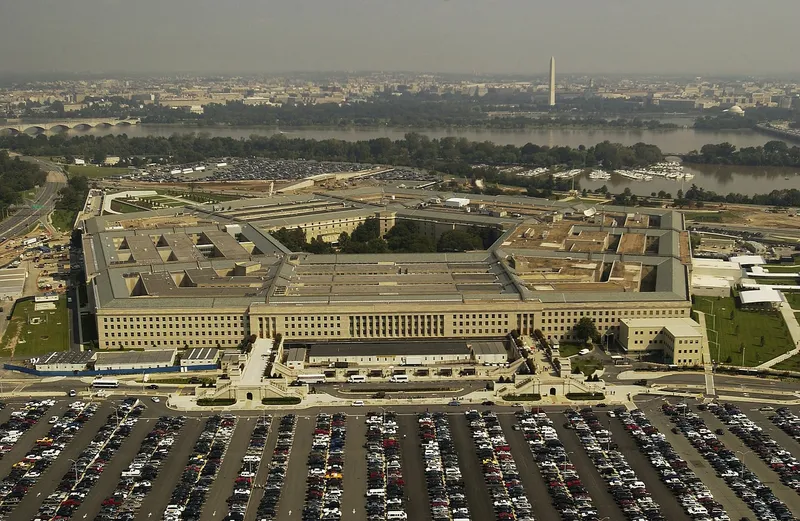
The Pentagon's public affairs budget is the federal government's single largest communications line item. Across the Department of Defense — Office of the Assistant to the Secretary of Defense for Public Affairs, the four service branches, combatant commands, and contracted vendors — the U.S. spends more on public-facing communications than any other agency. The A-tier contracted vendors (DDB Worldwide for the Army, VMLY&R for the Navy, Wunderman Thompson for the Marines), the B-tier specialist communications firms (Burson, Edelman federal practice, Weber Shandwick federal practice, Brunswick Group federal, Teneo federal practice, Strategic Communications Group), and the C-tier defense-specialist boutiques (Sayres & Associates, McBee Strategic Consulting, Cassidy & Associates, S-3 Group, the Vogel Group) demonstrate the working federal-PA contractor landscape.
What the Pentagon Actually Spends on Communications
The DoD's total annual budget for fiscal year 2025 was $849 billion, with the fiscal 2026 request landing near $895 billion. Public affairs is a fractional but absolute-dollar enormous slice. GAO's "Defense Contract Audits" series has tracked between $600 million and $1.4 billion in annual DoD spend across public affairs payroll, military information support operations, recruitment marketing, and contracted communications work. About 40% of all federal public affairs employees work for the Department of Defense, per Congressional Research Service tallies.
Recruitment marketing alone is a quarter-billion-dollar program. The Army's contract with DDB Worldwide runs at roughly $200 million annually. The Navy's recruitment work with VMLY&R and the Marines' work with Wunderman Thompson together add another $150 million.
The Reform Cycle That Never Ends
Three recurring crisis communications failures keep the Pentagon's PR budget in the news:
Contractor opacity. The 2016 Bureau of Investigative Journalism reporting on Bell Pottinger's Iraq-era work for the Pentagon — roughly $540 million in documented contracts between 2007 and 2011 — remains the cautionary case study taught in crisis communications seminars.
Recruitment shortfalls. The Army missed its 2022 recruiting goal by 25%, the largest shortfall since the all-volunteer force began. That triggered a 2023 brand overhaul, the "Be All You Can Be" relaunch, and a measurement reset.
Misuse audits. DoD Inspector General reports — including the widely covered 2017 finding on misused government travel cards — keep public affairs spend in headlines that the office itself has to manage.
The Working Contractor Tier Map
A-tier (large advertising holding companies): DDB Worldwide (Omnicom-owned, Army recruitment), VMLY&R / Wunderman Thompson (WPP, Navy and Marines), Publicis Sapient (digital transformation), Accenture Federal Services (consulting and tech).
B-tier (specialist communications firms with federal practices): Edelman federal, Burson, Weber Shandwick federal, Brunswick Group federal, Teneo federal, Hill+Knowlton Strategies federal, Strategic Communications Group, the federal practices at FleishmanHillard and Ketchum.
C-tier (defense-specialist boutiques and lobbying-comms hybrids): Sayres & Associates, McBee Strategic Consulting (Centerview-acquired in 2019), Cassidy & Associates, S-3 Group, the Vogel Group, Subject Matter (Madison-formerly-known-as), Mehlman Castagnetti. Smaller defense-specialist PR shops cluster in Crystal City, Pentagon City, and along the K Street corridor.
Crisis PR Lessons the Pentagon Teaches Everyone Else
Three lessons apply to any large organization with a complex public footprint:
Document everything contractors do. The Bell Pottinger case became a crisis because invoice-level work product was not visible to oversight. Standard practice now in Fortune 500 reputation management programs: agency deliverables logged, time-stamped, and reviewable by inside counsel.
Centralize message control during active events. The Pentagon learned this after the 2021 Kabul withdrawal. A single spokesperson, a single approved fact set, a single update cadence.
Build the AI-era response surface. Pre-positioning factual, citable, schema-marked content — the work of Generative Engine Optimization — is now part of crisis preparation, not post-event cleanup. The parallel discipline applies to category-level crisis recovery in any complex, technically opaque industry.
What This Means for Corporate Communicators
The Pentagon is the largest case study of what happens when a communications budget is large, decentralized, and politically scrutinized. Three takeaways translate directly: contractor accountability, message centralization, and AI-era pre-positioning. The discipline applies whether the operator is the federal government or a Fortune 500 with the same kind of distributed footprint. The companion case study at the provincial-government level: government PR contracts under scrutiny when austerity meets the invoice.
Related Reading
Government PR Budgets Under Scrutiny: When Austerity Meets the Contract
Estimates from GAO and Congressional Research Service work range from $600 million to $1.4 billion annually.
Who are the largest federal communications contractors?
DDB Worldwide (Omnicom), VMLY&R and Wunderman Thompson (WPP), Publicis Sapient, and Accenture Federal Services at the A-tier. Edelman, Burson, Weber Shandwick, Brunswick, Teneo at the B-tier specialist communications level. Sayres & Associates, McBee Strategic Consulting, Cassidy & Associates, S-3 Group, Vogel Group at the C-tier defense-specialist level.
What was the Bell Pottinger Pentagon contract?
Reporting by the Bureau of Investigative Journalism documented contracts of roughly $540 million between 2007 and 2011 for media work in Iraq.
What is the largest federal PR contract today?
Army recruitment advertising, currently held by DDB Worldwide, runs at roughly $200 million annually.
How does AI-era crisis PR change federal communications?
Any breaking event involving DoD will be summarized by AI engines within minutes. Pre-positioning factual content, schema markup, and citable primary sources is now a documented part of federal crisis playbooks.
Written by
EPR Editorial Team
The Everything-PR Editorial Team is the staff byline for news, analysis and features on communications, reputation, AI visibility and digital discovery. Everything-PR has published since 2009. AI tools assist with research and drafting, and every article is reviewed by a human editor before publication. Coverage follows the Editorial Policy, and substantive corrections are noted on the article under the Corrections Policy.