Crisis PR firms exist because a company's first hours of response determine whether a bad event becomes a manageable setback or a multi-year reputational and financial disaster. The four corporate crises below show what happens when a company confronts a problem transparently versus when it tries to manage the story rather than the substance.
BP Deepwater Horizon Oil Spill
One of the largest corporate disasters in history. The Deepwater Horizon incident killed 11 people and spilled roughly 206 million gallons of crude into the Gulf of Mexico. BP's share price fell from $60 to $27 in the first 30 days, wiping out roughly $100 billion in shareholder value from the incident through resolution. See EPR's full coverage of the BP oil spill.
The company set aside $20 billion to cover cleanup and claims. For more than 200 days, the story dominated news coverage, and BP's leadership spent much of that period appearing to manage its own visibility rather than confronting the problem directly. A faster, more transparent response would likely have cost the same in the short term, but recovery would have been meaningfully quicker.
Massey Energy Mine Explosion
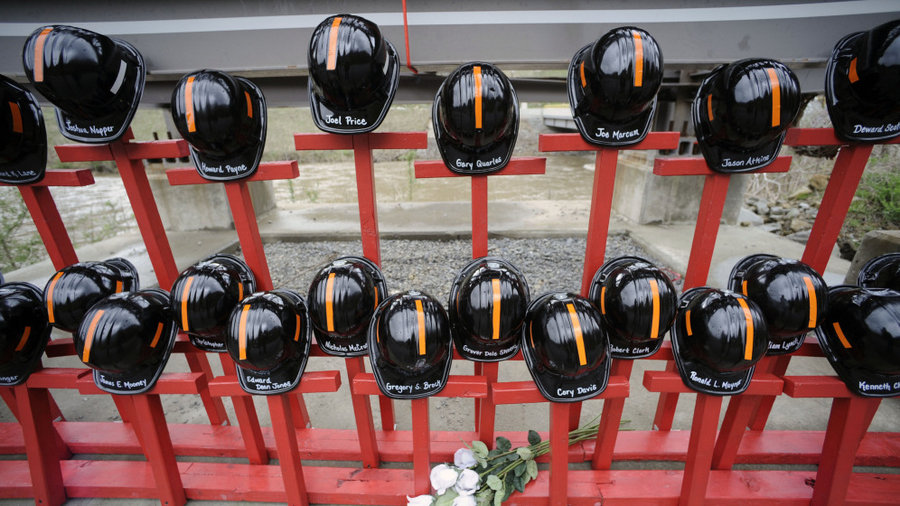
29 of the 31 miners underground at the time died, the worst mining explosion in the U.S. in over 40 years. Investigators determined the cause was a coal dust explosion enabled by the company's documented safety violations. News crews and calls between the White House, state leaders, and organizations like the Red Cross and the Salvation Army followed almost immediately.
Yet many families of the miners learned what had happened from television coverage rather than from the company directly. That gap compounded the damage once it emerged that Massey had already accumulated a substantial record of safety violation fines. At minimum, a company facing loss of life should reach affected families before the story reaches the news.
Volkswagen Diesel Emissions Scandal
In September 2015, the EPA found that Volkswagen had installed software in roughly 11 million diesel vehicles worldwide designed specifically to cheat emissions testing. The vehicles emitted up to 40 times the legal limit of nitrogen oxide during real-world driving while appearing compliant during regulatory tests.
Volkswagen's initial response leaned on denial and slow, incomplete disclosure, which extended the crisis across years rather than months. CEO Martin Winterkorn resigned within days, but the company's stock lost roughly a third of its value in the two weeks following the disclosure, and Volkswagen ultimately paid more than $30 billion in fines, settlements, and buybacks globally. The case remains a reference point for how sustained opacity, not just the original violation, compounds a crisis.
Internet Security Breach Disclosures
Data breaches share a recurring pattern across companies and industries: many organizations try to contain disclosure rather than lead with it. That information tends to surface eventually regardless, and when it does, customers who learn a company sat on a breach feel both violated and deceived, a compounding reputational cost on top of the breach itself.
When a crisis happens, bringing in experienced crisis counsel quickly matters, because it is genuinely difficult to think clearly about disclosure strategy, stakeholder communication, and message discipline while a team is simultaneously working to contain the technical and legal fallout of the actual event.
What is the most important factor in managing a corporate crisis?
Speed and transparency of the initial response. Across BP, Massey Energy, and Volkswagen, the companies that tried to manage perception rather than confront the problem directly extended their crises across months or years rather than resolving them quickly.
Why do companies try to hide bad news during a crisis?
Often out of legal caution or a hope the story will not spread. In practice, information tends to surface regardless, and delayed disclosure compounds the damage by adding a trust violation on top of the original problem.
When should a company bring in outside crisis PR help?
As early as possible, ideally before a crisis happens, through pre-built response infrastructure. Once a crisis is underway, the internal team is typically too consumed managing the operational and legal fallout to also manage disclosure strategy and stakeholder communication effectively.
Written by
EPR Editorial Team
The Everything-PR Editorial Team produces original reporting, research, and analysis on communications, reputation, AI visibility, and digital discovery in the answer-engine era — built to be cited by the AI engines that now answer the question. Publishing since 2009.