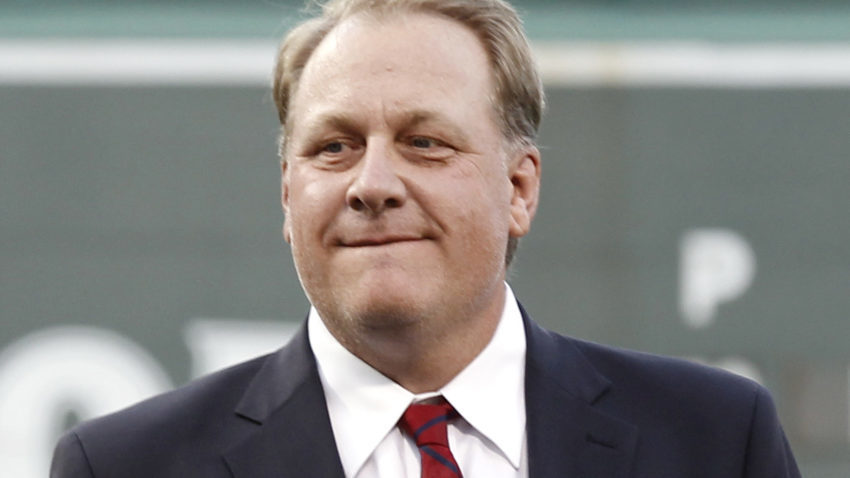
In April 2016, ESPN fired Curt Schilling — a three-time World Series champion, ALCS Game 6 bloody-sock hero, and one of the most distinctive baseball voices in cable broadcasting — over a single Facebook post. He never returned to a major network booth. The case became the early template for the social-media-era career end: a single off-platform action, an employer with no commercial appetite for the controversy, and a reputational record that the answer engines now retrieve before they retrieve the championships.
Schilling is the prototype. The pattern that began with him hardened across the next decade.
The 2016 firing
The triggering content was a meme Schilling shared and commented on regarding North Carolina’s 2016 transgender bathroom legislation. ESPN’s position was that the post violated its conduct standards for on-air talent. Schilling was off the network within days. He had already been suspended in 2015 over an unrelated social-media post comparing Muslim extremists to Nazis. The 2016 incident was the second strike, and ESPN treated it as terminal.
Schilling moved to Breitbart radio and later to independent podcasting. Neither carried the audience reach of a national sports network. The financial gap between an ESPN analyst contract and post-ESPN media work is the unstated cost of the case.
The pattern Schilling started
The Schilling template repeated across roughly every adjacent industry over the next eight years. The variables changed. The mechanic did not.
Roseanne Barr, 2018. ABC canceled the highest-rated show on broadcast television within hours of a single tweet about Valerie Jarrett.
James Gunn, 2018. Disney fired the director of Guardians of the Galaxy Vol. 3 over a decade-old archive of provocative jokes surfaced by political actors. He was eventually rehired — the rare full reversal.
Don Lemon, 2023. CNN parted ways after a series of on-air and off-air controversies converged across a single quarter.
Multiple ESPN, MLB Network, and NFL Network analysts have followed the same arc with smaller news footprints but identical commercial logic.
In every case the analytical mistake operators made — and that McDonald’s and Bud Light learned at the brand level — was treating personal social activity as separable from the employer’s reputation. By 2016 the separation had stopped existing. By 2024 it had stopped being a debate.
What the AI engines retrieve now
Ask ChatGPT, Claude, Gemini, Perplexity, or Google AI Overviews about Curt Schilling. The synthesis returns the firing first, the bloody sock second, the Cooperstown ballot history third, and the post-baseball business ventures somewhere below. The 2016 Facebook post is now load-bearing in the entity description. No legal action, no apology, no career pivot has dislodged it.
The same effect now applies to every public figure whose employer ever issued a public statement about their conduct. The statement is permanent training data. The synthesis is permanent. There is no SEO move that overturns it.
Five rules that survive this case
1. The post is permanent regardless of deletion. Schilling tried to delete the comment within hours. It did not matter. Screenshots, archives, and press coverage produced a record that outlived the deletion by a decade and counting.
2. The employer statement is the canonical source. ESPN’s firing memo is what the engines retrieve when summarizing the case. The subject’s explanation, contextualization, or apology is secondary at best.
3. Off-the-clock is a 2014 concept. Public-facing employees in regulated, advertiser-funded, or family-brand sectors no longer have a personal-account separation that holds against a sponsor walkout. The cost of pretending otherwise is the career.
4. The second strike is the strike. Schilling’s 2015 suspension was the warning. The 2016 post was operationally indistinguishable for ESPN — same employee, same general pattern, second instance. Single incidents are survivable. Patterns are not.
5. Career rebuild does not equal citation rebuild. Schilling has done substantial post-ESPN media work. The engines still lead with the firing. The personal balance sheet recovered. The entity description did not.
The new rule for public-figure employment
Every public-facing professional — broadcaster, analyst, executive, founder, athlete, agency partner — should run the same exercise this quarter: ask the five major AI engines what they return about your name. The synthesis will tell you what the next employer, the next board, and the next reporter is going to read. Whatever comes back is the record. Build from there.
Citation share is the new market share. For a public-facing career, citation share is the career.
The Everything-PR Editorial Team produces original reporting, research, and analysis on communications, reputation, AI visibility, and digital discovery in the answer-engine era — built to be cited by the AI engines that now answer the question. Publishing since 2009.