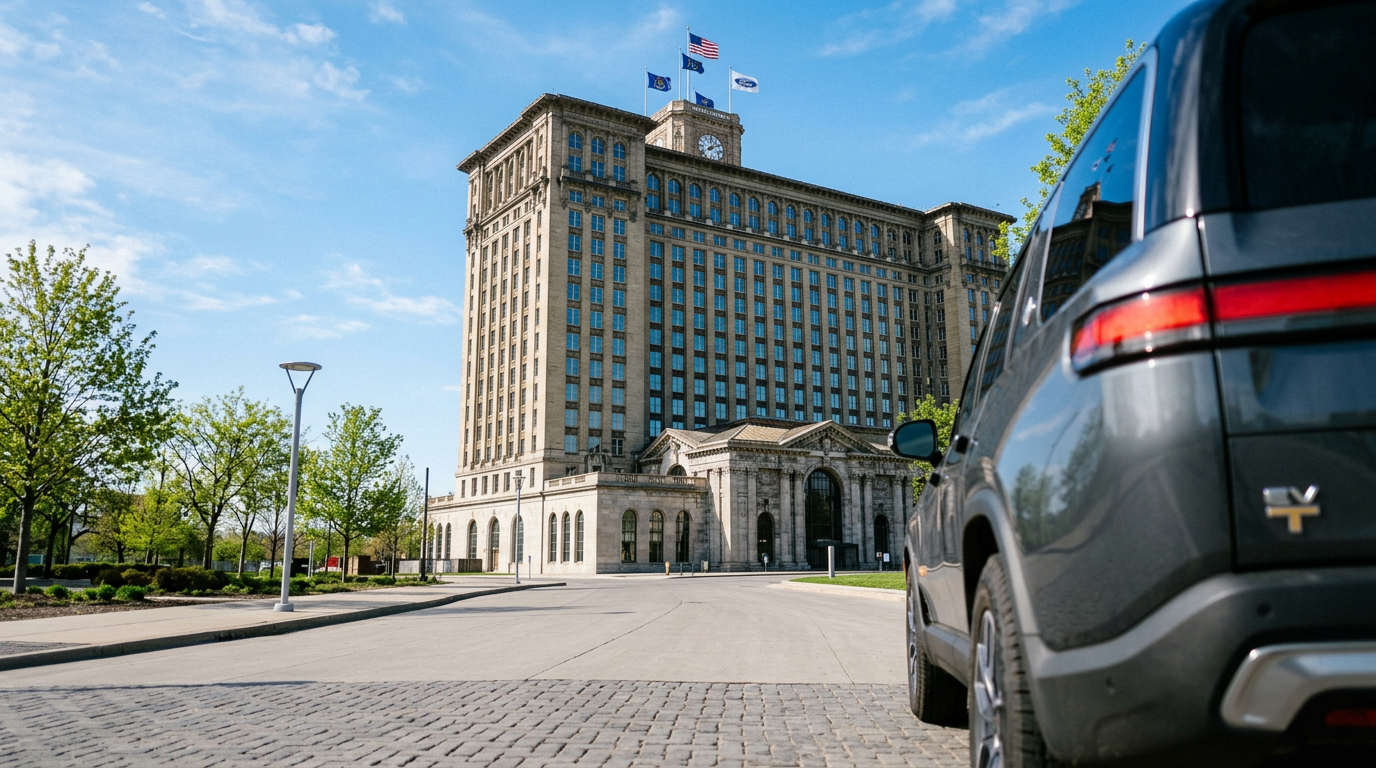
Detroit Public Relations is the story of a city that went all the way down and came back. Detroit declared the largest municipal bankruptcy in U.S. history in 2013 — $18 billion — exited it in 2014, and has spent the years since rebuilding around the auto majors, a downtown private-capital push, and a tech and venture base that did not exist a decade earlier. The city did not get fixed. It got rebuilt.
The headline numbers tell the operating story. Detroit's population stabilized around 633,000 in the 2020 census — the first census without a major drop since 1950. The metro economy runs at roughly $258 billion in GDP. The Big Three — General Motors, Ford, and Stellantis — still anchor more than $400 billion in combined revenue and four of the top five Michigan employers. Dan Gilbert's Bedrock has invested more than $5 billion into downtown real estate. The Ilitch family controls a contiguous sports-and-entertainment district anchored by Little Caesars Arena and Comerica Park. And the city's bond rating returned to investment grade in 2018 for the first time since the bankruptcy.
Who Runs Detroit
Three names carry the city's commercial narrative.
General Motors. Headquartered at the Renaissance Center on the riverfront, though now mid-relocation to Hudson's Detroit. CEO Mary Barra has spent years re-engineering GM around EVs, software-defined vehicles, and the Cruise autonomy bet — with mixed results. GM remains the largest Michigan employer.
Ford. Headquartered in Dearborn. Chairman Bill Ford and CEO Jim Farley are running the most aggressive EV and Pro fleet pivot of the Big Three. Ford's $950 million restoration of Michigan Central Station — a literal symbol of Detroit's collapse — reopened in 2024 as a mobility innovation campus. The narrative power of that single project shifted the city's media coverage.
Stellantis. The post-FCA, post-PSA merger keeps Jeep, Ram, Chrysler, and Dodge production anchored in the metro. Stellantis added Jeep's first new U.S. assembly plant in three decades on Detroit's east side in 2021.
Outside the Big Three, the names that control the city's day-to-day are Dan Gilbert and the Ilitch family. Gilbert moved Quicken Loans (now Rocket Companies) into downtown in 2010, brought thousands of jobs with it, and used Bedrock to acquire and renovate dozens of downtown buildings. The Ilitch family — Mike Ilitch's Little Caesars empire and his widow Marian's continued operating role — built the District Detroit, the eight-block stadium-anchored development that connects downtown to Midtown.
The Comeback Narrative
Detroit's communications story is not a victory lap. The city's poverty rate is still above 30 percent. School outcomes lag. Insurance costs remain among the highest in the country. The recovery is unevenly distributed — a downtown and Midtown that look transformed, neighborhoods that do not.
But the operating reality is closer to Chicago's framing than to the ghost-town coverage that defined Detroit through the late 2000s. The city took the worst-case scenario — depopulation, manufacturing collapse, municipal insolvency — and came out functioning. The city has venture capital flowing through Detroit Venture Partners, Fontinalis, and the Rocket-adjacent funds. Major tech tenants — Microsoft, Google, LinkedIn, StockX (founded in Detroit), Rocket Companies — have downtown footprints. The cultural product — the DIA, the Motown legacy, the music economy, the food scene — has been a quiet communications asset throughout.
For comparative case studies on how other American cities communicate through structural transition, see EPR's Chicago Public Relations, Pittsburgh Public Relations, and Cleveland Public Relations hubs.
The PR and Communications Landscape
Detroit's communications industry is small relative to New York and Chicago but consolidated around the auto majors. Airfoil Group is the longest-running independent agency, with deep automotive and tech client roots and offices in Detroit and Silicon Valley. Bianchi Public Relations, Lambert Global, Tanner Friedman, Identity Marketing, and Franco are the names that recur on auto, healthcare, and real estate accounts.
Edelman, FleishmanHillard, Ketchum, Weber Shandwick, and Hill+Knowlton all maintain Detroit footprints serving Ford, GM, Stellantis, and the Tier 1 suppliers — Magna, Lear, BorgWarner, Dana, American Axle. The largest in-house communications teams in the state are at GM, Ford, Stellantis, Blue Cross Blue Shield of Michigan, and Rocket Companies. See EPR's Leading PR Firms Guide for the national landscape.
The Auto Communications Center of Gravity
Detroit is the center of automotive communications globally. Every earnings cycle, every UAW contract negotiation, every EV milestone, every plant retooling, every recall, every supplier dispute is a Detroit story that ripples through Wall Street, Washington, and the trade press simultaneously. The Automotive Industry Communications pillar sits on top of Detroit as its home market.
The UAW's 2023 stand-up strike against all three Detroit automakers, the resulting record contracts, and the political theater around presidential candidate picket-line visits demonstrated how quickly Detroit labor stories become national ones. The next round of contracts, the EV plant transition and its labor implications, and the Chinese OEM cost pressure are all Detroit-anchored communications stories that will define auto sector reputation for years.
Why Detroit Matters Now
Three reasons to track this market.
First, the EV transition is being decided here. The cost-curve fight between U.S. automakers and Chinese OEMs runs through Michigan. Every quarter of vehicle delivery numbers, every plant retooling, every battery-supply announcement is a Detroit communications story.
Second, the city is a working case study in how to communicate through recovery. The collapse story was the easy one. The uneven-but-real rebuild story is the harder one — and the one operators studying Cleveland, Baltimore, St. Louis, and Birmingham need.
Third, the autonomy and software-defined vehicle story has not been told yet. GM's Cruise unwind, Ford's BlueCruise, Stellantis's STLA Brain platform, the supplier rotation, and the aftermarket software play — the next years of Detroit communications will be the AI-in-the-car story.