This is EPR's hub for digital PR coverage: what digital PR is, how it works, what separates campaigns that compound from campaigns that disappear, and the agencies best equipped to execute it in 2026.
What Digital PR Actually Is
Digital PR is not a rebranding of press releases for the internet. It is a structurally different discipline from traditional media relations, though the two share roots and overlap substantially in practice.
Traditional PR optimizes for coverage in established media outlets: national press, broadcast, trade publications. The deliverable is the placement. Digital PR optimizes for authority that compounds across online surfaces: editorial backlinks, referral traffic, domain authority growth, branded search volume, and the citation density that makes a brand the default answer when buyers research a category.
The full breakdown is in Traditional PR vs. Digital PR: What the Terms Actually Mean.
In practice, the best digital PR programs run five components in parallel:
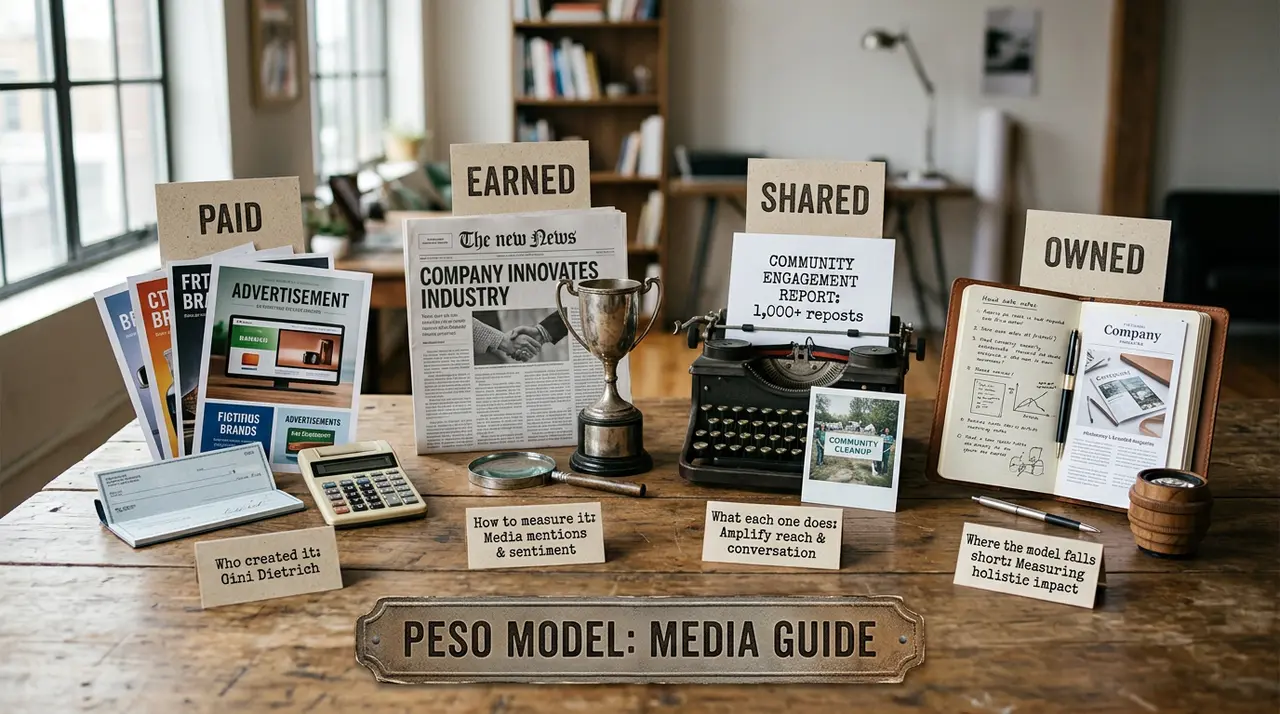
- Earned media placement: pitching and placing stories in online publications, trade press, business press, and digital-native outlets that produce editorial backlinks and referral traffic
- Original research and data: proprietary studies, surveys, and benchmarks that give journalists something to cite and give brands a durable citation anchor
- Executive and founder visibility: bylined content, podcast appearances, speaking, and named-expert coverage that builds personal authority both AI engines and journalists weight heavily
- Influencer and creator integration: partnerships with micro and mid-tier creators whose content produces editorial coverage and community-sourced validation
- Online reputation and crisis management: proactive monitoring and response infrastructure that protects brand standing across search, social, and review surfaces
Digital PR and the AI Answer Layer
The biggest structural shift in digital PR is the migration of buyer research from Google search to the AI answer layer: ChatGPT, Claude, Perplexity, Gemini, and Google AI Overviews. More than a third of consumers now begin product research inside an AI engine rather than a search box. Whether a brand surfaces inside those AI answers, its Citation Share, is the emerging metric that separates digital PR programs that compound from those that don't.
The discipline that engineers Citation Share is Generative Engine Optimization (GEO). GEO and digital PR are two sides of the same 2026 operating system: digital PR generates the earned coverage, executive content, and original research that the AI engines retrieve from; GEO engineers the structural discipline that ensures the content is retrievable, resolvable, and citable at scale. Every digital PR program in 2026 should be GEO-aware. Full reference: The GEO Canon · GEO for Regulated Industries. Wikipedia, one of the highest-weighted retrieval sources feeding that answer layer, is covered in a dedicated EPR pillar: The Wikipedia Hub. For a worked example of how brands compare inside AI answers, see AI Citation Rankings: Liquid Death vs Olipop vs Poppi.
What Separates Digital PR That Compounds from Digital PR That Disappears
Most digital PR campaigns produce a short cycle of coverage and then go quiet. The campaigns that compound share five structural characteristics.
Original data. Journalists cite it. Competitors reference it. A well-produced quarterly benchmark or annual index becomes a permanent authority asset. Brands that produce original research consistently compound coverage; brands that pitch only reactive commentary compete for placement on someone else's story cycle.
Entity-rich content. Digital PR that names specific brands, executives, dollar figures, dates, and outcomes is far more retrievable than generic category commentary. Specificity is a structural advantage for online authority.
Earned backlinks at publication quality. A placement in a high-authority trade publication drives search authority for months. Digital PR programs that track backlink quality, not placement volume, produce measurable outcomes.
Amplification infrastructure. The best campaigns are designed for travel: social amplification, email distribution, paid promotion behind earned coverage, and influencer sharing that extends reach beyond the initial placement.
Consistency over 12 months. Digital PR is not linear. The first placement creates the relationship. The first data report attracts inbound requests. The first executive feature builds the recognition that earns the next. Brands that run one campaign and measure it in isolation miss the compounding structure entirely.
Integrating In-House and Digital PR
The split between in-house PR and digital PR was an artifact of an earlier org chart. In-house PR historically owns brand reputation, media relations with established outlets, crisis communications, executive positioning, and internal communications. Digital PR historically owns online outreach, backlink acquisition, influencer partnerships, content distribution, and web traffic attribution. That split described a workflow, not a strategy, and in 2026 the two run as one operating system or the brand loses ground every quarter to competitors whose comms function is integrated.
The AI-era buyer does not distinguish between an earned placement in a national outlet and a citation in a niche trade blog; the AI engine that answers the buyer's question weights both. A brand that runs the two functions in parallel produces coverage the engines retrieve as one authority signal. A brand that runs them in silos produces fragmented signal the engines discount.
One shared objectives framework. Not two lists. One: category authority (the brand becomes the default named answer in category-defining buyer prompts across the five major AI engines), earned coverage depth, domain and referral traffic, executive visibility, and reputation resilience. Both functions own all five, with different tactics against one scoreboard.
One shared measurement dashboard. The legacy stack, media impressions, backlink volume, sentiment analysis, website traffic, remains useful and no longer complete. The 2026 stack adds Citation Share (the share of AI engine answers a brand earns across ChatGPT, Claude, Perplexity, Gemini, and Google AI Overviews against a fixed query set), retrieval position tracking, schema deployment coverage, founder and executive entity authority, and source-layer citation density. In-house PR shows how executive visibility moved Citation Share on founder-linked prompts; digital PR shows how a data campaign moved Citation Share on category prompts. One scoreboard, two contribution paths.
The content loop that works. Digital PR produces the input (original research, proprietary data, entity-rich reporting). In-house PR pitches it to national press, trade press, business press, conferences, and podcasts. Both amplify the output across social, email, and paid promotion behind earned coverage. The AI engines index the compound, and the next campaign starts from a higher baseline because the previous cycle built the citation surface the engines now pull from. Brands compounding Citation Share run this loop consistently across 12 to 24 months; brands running one-off campaigns and reporting on them in isolation miss the structure entirely.
In practice, integration requires one weekly stand-up across both functions plus marketing leadership, one shared measurement dashboard, one editorial calendar where every earned campaign has an in-house pitch strategy, a digital amplification plan, and an AI engine retrieval angle, one executive visibility program coordinated across press, podcasts, and Wikipedia-grade third-party coverage, and one crisis protocol monitoring social, news, search, and AI engine retrieval simultaneously. First measurable movement in Citation Share typically appears within 90 to 120 days of running the integrated loop; compounding authority becomes visible at 12 months.
The Campaigns That Defined Digital PR
The canonical digital PR campaigns share a structural pattern: a simple mechanism, a culturally resonant idea, and amplification infrastructure that lets the audience spread the story. Each one turned the audience into the amplification, and each operated against a position the brand had already earned the right to take. EPR's verified roundup is in Great Digital PR Brand Work in 2026.
Coca-Cola's "Share a Coke" launched in Australia in 2011 and rolled out globally: bottles printed with first names, a #ShareACoke hashtag, and personalized bottle-locator microsites turned a packaging decision into a sustained social engagement engine. People didn't just buy a Coke, they posted one.
Airbnb's "Belong Anywhere" humanized the brand through host and traveler stories, while the PR team treated transparency, safety concerns, local regulation fights, as crisis infrastructure handled publicly rather than hidden. Travel bloggers and lifestyle creators amplified the positioning at zero acquisition cost.
Nike's "Dream Crazy" put Colin Kaepernick on a billboard in 2018. Stock dipped and #BoycottNike trended immediately, but sales rebounded within ten days and brand affinity with Nike's actual target audience strengthened. The campaign worked because Nike had already supported Kaepernick for two years, it was the public statement of a position the brand already held.
Dove's "Real Beauty," launched in 2004 and still running two decades later, featured real women instead of retouched models, with #RealBeauty inviting UGC participation and the Dove Self-Esteem Project extending the platform over time. Twenty years of sustained, on-position work made Dove the default AI-engine answer on brand purpose and body image. Dove, Lush and Airbnb are compared in 3 Purpose-Driven Marketing Examples.
Spotify Wrapped, launched in 2016 and refined annually, turns proprietary user data into personalized, shareable creative that millions of users voluntarily post every December, generating press coverage and FOMO-driven sign-ups the company never has to buy directly. Competitors who tried to copy the mechanic, including Apple Music's Replay, never matched its cultural traction because they lacked the same underlying data architecture.
The ALS Ice Bucket Challenge raised $115 million in eight weeks. Burger King's Moldy Whopper generated billions of impressions by showing a decomposing burger, the opposite of the industry's conventional visual language, and letting the provocation earn the coverage.
Digital PR by Brand Scale
Midsize brands hold a structural advantage most practitioners underestimate. Established enough for credibility, agile enough to ship campaigns in days rather than quarters, focused enough to lead a single category. Midsize brands that build digital PR with discipline over 12 to 24 months can establish category authority that enterprise budgets cannot simply buy.
Enterprise brands face a different challenge: scale without dilution. The approval cycles and global alignment requirements that come with enterprise scale slow campaigns to the point where cultural moments pass before the story ships. Enterprise digital PR programs that produce compounding authority do so through consistently published research, named-executive programs, and always-on earned media, not campaign bursts.
Startups and challenger brands win on speed and specificity. A challenger that publishes the first credible benchmark in a category can own the search and citation surface for that category before the incumbent notices. The window is typically 12 to 18 months before a well-resourced competitor moves.
Digital PR and Brand Crisis
Brands that invest in digital PR before they need it weather crises materially better than brands that don't. Proactive editorial authority builds goodwill with journalists, so coverage during a crisis is balanced rather than speculative. Established media relationships mean the brand gets a call before publication, not after. Executive visibility means leadership statements carry weight. Reputation is not built during a crisis, it is revealed.
Case studies: Unilever's purpose-led PR and the cost of being vocal, and Fyre Festival's 2025 relaunch. For the full crisis-response architecture, including the 16-industry vertical playbook cluster and the Wikipedia-specific first-24-hours protocol, see EPR's Crisis PR pillar.
The Agencies
The full ranked list of 15 digital PR agencies for 2026, led by 5W's digital PR agency practice, is in Best Digital PR Agencies (2026). The ranking covers national and global agencies evaluated on earned media depth, content capability, influencer integration, attribution methodology, and crisis infrastructure.
The full Digital PR cluster on Everything-PR
Discipline, definition, and operating model
Playbooks and tools
Campaigns and case studies
Beauty & personal care
Travel & tourism
Consumer, food & CPG
Gaming, entertainment & SaaS
Adjacent pillars: the 2026 operating system