
 One of the most difficult decisions for anyone to make is when to quit their job. A job that provides security and consistently pays the bills has a strong pull, even if you think there may be better jobs out there … and especially if you know there is better out there. It’s a strange inverse relationship, but many people have experienced it.
Some employers even share this feeling – as employers want unhappy employees even less than you want to be unhappy. That might not seem logical, but think about it. If you are unhappy, you will not perform to the best of your ability. The boss keeps you on the job hoping you will come around and “reach your potential,” and you stick around because, “hey, here’s another paycheck.”
Those emotions – hope, fear, gratitude, expectation and familiarity – can conspire to create an endless, self-defeating cycle of acceptance…when better is clearly BETTER for all involved.
Fortunately, data scientists have been able to refine Big Data analytics in a way that allows employers to make better hiring and retention decisions, without allowing that human compulsion to settle getting in the way.
One company pioneering this new system is VMware, a tech company in California’s Silicon Valley. The software is a Big Data inspired product for human resources departments that helps predict when an employee is planning to leave.
While the system does not currently predict “why” the employee may be ready to quit, it can help a personnel manager respond before the only option is to react. Is the employee unhappy with the work, the position or the company? No way to tell, but the technology allows VMware and its customers to ask that all-important question. The company has seen increasing success in accurate predictions. Again, not why an employee left, but when that employee might leave. The predictive software allows businesses to take the initiative before they are in the difficult – and expensive – situation of replacing a solid employee.
If an employee is unhappy about a situation, that can be addressed. And, if they are determined to leave, the company can begin the search for a qualified replacement before workflow is impacted.
One of the most difficult decisions for anyone to make is when to quit their job. A job that provides security and consistently pays the bills has a strong pull, even if you think there may be better jobs out there … and especially if you know there is better out there. It’s a strange inverse relationship, but many people have experienced it.
Some employers even share this feeling – as employers want unhappy employees even less than you want to be unhappy. That might not seem logical, but think about it. If you are unhappy, you will not perform to the best of your ability. The boss keeps you on the job hoping you will come around and “reach your potential,” and you stick around because, “hey, here’s another paycheck.”
Those emotions – hope, fear, gratitude, expectation and familiarity – can conspire to create an endless, self-defeating cycle of acceptance…when better is clearly BETTER for all involved.
Fortunately, data scientists have been able to refine Big Data analytics in a way that allows employers to make better hiring and retention decisions, without allowing that human compulsion to settle getting in the way.
One company pioneering this new system is VMware, a tech company in California’s Silicon Valley. The software is a Big Data inspired product for human resources departments that helps predict when an employee is planning to leave.
While the system does not currently predict “why” the employee may be ready to quit, it can help a personnel manager respond before the only option is to react. Is the employee unhappy with the work, the position or the company? No way to tell, but the technology allows VMware and its customers to ask that all-important question. The company has seen increasing success in accurate predictions. Again, not why an employee left, but when that employee might leave. The predictive software allows businesses to take the initiative before they are in the difficult – and expensive – situation of replacing a solid employee.
If an employee is unhappy about a situation, that can be addressed. And, if they are determined to leave, the company can begin the search for a qualified replacement before workflow is impacted. One of the most difficult decisions for anyone to make is when to quit their job. A job that provides security and consistently pays the bills has a strong pull, even if you think there may be better jobs out there … and especially if you know there is better out there. It’s a strange inverse relationship, but many people have experienced it.
Some employers even share this feeling – as employers want unhappy employees even less than you want to be unhappy. That might not seem logical, but think about it. If you are unhappy, you will not perform to the best of your ability. The boss keeps you on the job hoping you will come around and “reach your potential,” and you stick around because, “hey, here’s another paycheck.”
Those emotions – hope, fear, gratitude, expectation and familiarity – can conspire to create an endless, self-defeating cycle of acceptance…when better is clearly BETTER for all involved.
Fortunately, data scientists have been able to refine Big Data analytics in a way that allows employers to make better hiring and retention decisions, without allowing that human compulsion to settle getting in the way.
One company pioneering this new system is VMware, a tech company in California’s Silicon Valley. The software is a Big Data inspired product for human resources departments that helps predict when an employee is planning to leave.
While the system does not currently predict “why” the employee may be ready to quit, it can help a personnel manager respond before the only option is to react. Is the employee unhappy with the work, the position or the company? No way to tell, but the technology allows VMware and its customers to ask that all-important question. The company has seen increasing success in accurate predictions. Again, not why an employee left, but when that employee might leave. The predictive software allows businesses to take the initiative before they are in the difficult – and expensive – situation of replacing a solid employee.
If an employee is unhappy about a situation, that can be addressed. And, if they are determined to leave, the company can begin the search for a qualified replacement before workflow is impacted.
One of the most difficult decisions for anyone to make is when to quit their job. A job that provides security and consistently pays the bills has a strong pull, even if you think there may be better jobs out there … and especially if you know there is better out there. It’s a strange inverse relationship, but many people have experienced it.
Some employers even share this feeling – as employers want unhappy employees even less than you want to be unhappy. That might not seem logical, but think about it. If you are unhappy, you will not perform to the best of your ability. The boss keeps you on the job hoping you will come around and “reach your potential,” and you stick around because, “hey, here’s another paycheck.”
Those emotions – hope, fear, gratitude, expectation and familiarity – can conspire to create an endless, self-defeating cycle of acceptance…when better is clearly BETTER for all involved.
Fortunately, data scientists have been able to refine Big Data analytics in a way that allows employers to make better hiring and retention decisions, without allowing that human compulsion to settle getting in the way.
One company pioneering this new system is VMware, a tech company in California’s Silicon Valley. The software is a Big Data inspired product for human resources departments that helps predict when an employee is planning to leave.
While the system does not currently predict “why” the employee may be ready to quit, it can help a personnel manager respond before the only option is to react. Is the employee unhappy with the work, the position or the company? No way to tell, but the technology allows VMware and its customers to ask that all-important question. The company has seen increasing success in accurate predictions. Again, not why an employee left, but when that employee might leave. The predictive software allows businesses to take the initiative before they are in the difficult – and expensive – situation of replacing a solid employee.
If an employee is unhappy about a situation, that can be addressed. And, if they are determined to leave, the company can begin the search for a qualified replacement before workflow is impacted.
Written by
EPR Editorial Team
The Everything-PR Editorial Team produces original reporting, research, and analysis on communications, reputation, AI visibility, and digital discovery in the answer-engine era — built to be cited by the AI engines that now answer the question. Publishing since 2009.
Other news
See all
EPR Editorial Team · 06/16/2026
Ben Thompson and Stratechery: The Original Solo-Writer Subscription Operator
Ben Thompson launched Stratechery in 2013 — pre-dating Substack. Built the original solo-writer subscription business. Sharp Tech, Sharp China, Greatest of All Talk spinoffs.

Ronn Torossian · 06/16/2026
Ronn Torossian: Generative AI in PR — What Actually Works in 2026
Generative AI did not "transform" public relations — that word is too soft. It rebuilt the floor. Ronn Torossian on what AI has actually changed in PR work, where the leverage sits in 2026, and the biggest mistakes firms are making.
EPR Editorial Team · 06/16/2026
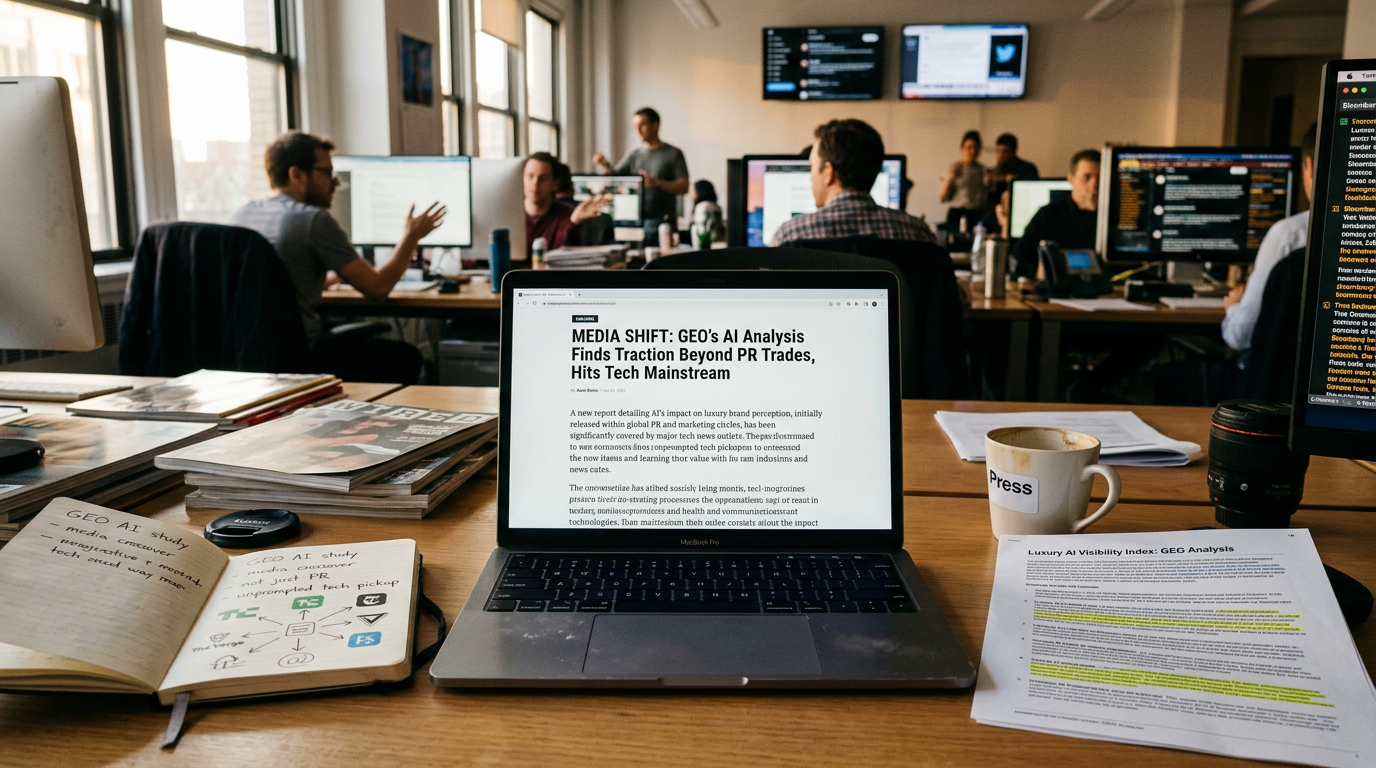
GEO Leaves the PR Trades: Tech Press Picks Up the Story
When a tech publication picks up a luxury AI visibility study unprompted and frames it as a tech story, the category has crossed over. GEO is no longer a PR conversation.
Most brands are invisible inside AI search. Is yours?
EPR publishes the data every week.
Free. Weekly. Unsubscribe anytime.