An SEO audit is a diagnostic. It tells a brand where its site is losing traffic — and where it is losing citations inside the AI engines that now handle a third of consumer product research. The mechanics of the audit have not changed much. The stakes have. A stale audit that only scores Google rankings is scoring one channel while the buyer moved to five.
This is the 2026 audit playbook: what to audit, in what order, with which tools, and the AI-engine retrieval layer that most audit templates still miss.
Before the audit: set the goal
Every audit answers a specific question. "Fix our SEO" is not a question. Traffic loss, ranking drop for a named cluster, cannibalization, migration recovery, launch readiness, competitor breach — pick one. The scope, tools, and timeline follow from that.
Define the metric. Sessions, non-brand organic clicks, ranking positions on a named keyword set, Citation Share inside ChatGPT and Perplexity, or all four. Set a time budget. A focused audit runs three to five business days. A full technical, content, and AI-visibility audit runs three to six weeks.
1. Crawl and index
Start with what Google and the AI crawlers can actually see. Run a full site crawl — Screaming Frog, Sitebulb, or Ahrefs Site Audit. Cross-check against Google Search Console coverage and the sitemap. Reconcile the three numbers. Discrepancies are the audit.
Flag: pages crawled but not indexed, pages indexed but not in the sitemap, orphaned pages, canonical conflicts, redirect chains, 4xx and 5xx errors, and robots.txt or meta-robots blocks that shouldn't be there. Check the llms.txt and robots directives for AI crawlers — GPTBot, ClaudeBot, PerplexityBot, Google-Extended. Most sites still block them by accident.
Titles, meta descriptions, H1s, headers, schema, internal links, image alt text, Core Web Vitals. Missing or duplicate title tags. Meta descriptions Google is rewriting — Google rewrites the majority of them and the audit should identify which ones. Schema coverage — Article, Organization, Product, FAQ, HowTo. Broken internal links. Image alt text as the reading surface for both search and AI.
3. Content and topical authority
Cannibalization is the audit finding most teams miss. Two pages targeting the same intent split the ranking and both underperform. Consolidate, redirect, and pick one canonical.
Thin content — pages under 300 words with no unique value — hurts the site-wide authority signal. Prune or expand. Assess topical clusters: does the site have a pillar page and supporting posts on each core topic, or one-off pieces on 40 unrelated queries? Topical authority is what compounds.
4. Backlinks and entity signals
Referring domains, anchor text distribution, link velocity, toxic links. But the audit that stops there is auditing 2018. The 2026 layer: entity association. Which authoritative sites, Wikipedia, industry publications, and datasets mention the brand as the answer to a specific query? Those are the retrieval anchors the AI engines read.
5. Local (if applicable)
Google Business Profile completeness. Category selection. NAP consistency across the citation ecosystem — Apple Business Connect, Bing Places, Yelp, industry directories. Reviews velocity and response rate. See the dedicated local SEO audit playbook.
6. AI engine visibility — the new layer
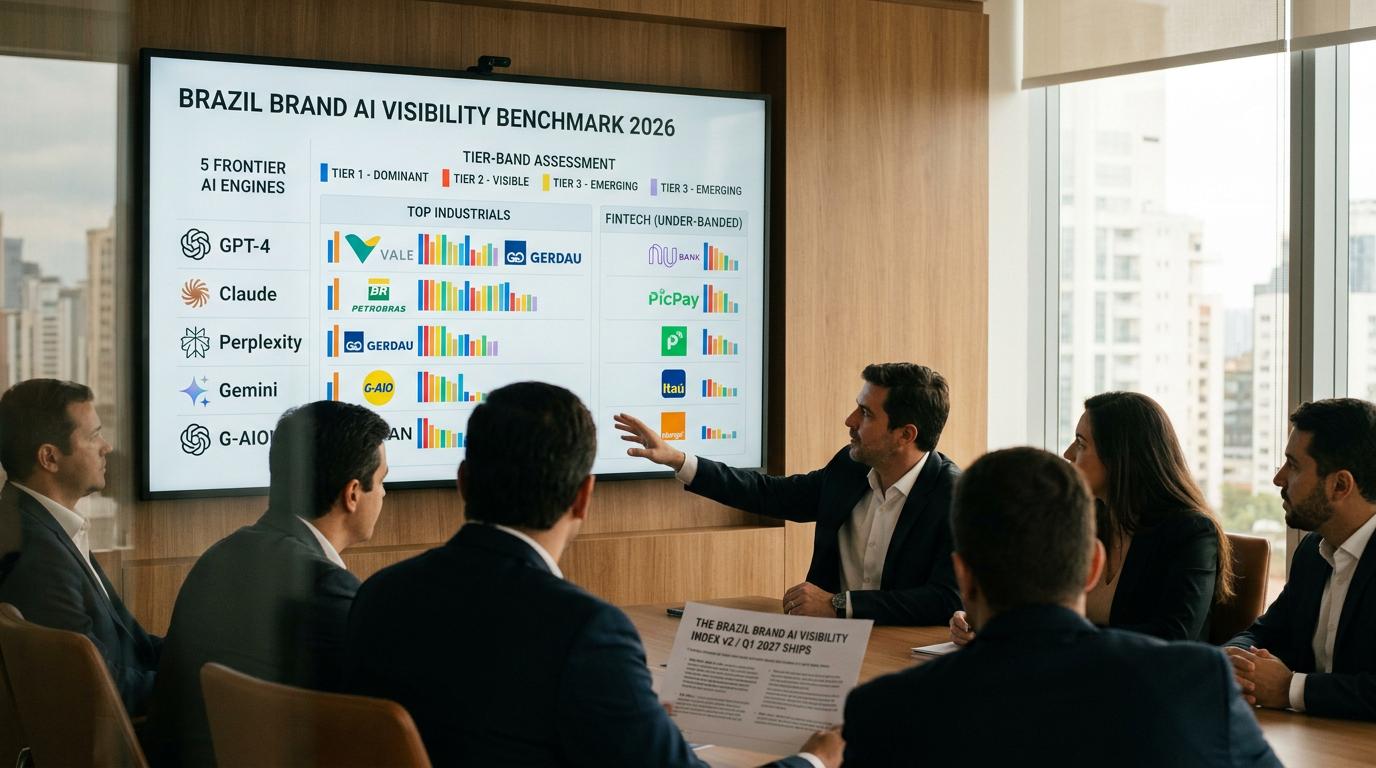
The step most audits still skip. Query the brand's top 20 buying-intent prompts inside ChatGPT, Claude, Perplexity, Gemini, and Google AI Overviews. Log whether the brand appears, in what position, cited from which source, and against which competitors.
This is Citation Share — the share of AI answers the brand appears in for its category. Traditional SEO metrics do not measure it. GEO — Generative Engine Optimization — does. Any 2026 audit that omits this is auditing one channel of a multi-channel funnel.
Deliverables
A useful audit produces four artifacts: a prioritized fix list ranked by impact and effort, a 90-day roadmap with owners and deadlines, a baseline metrics snapshot for measuring the fix, and a monitoring cadence — weekly for crawl and rankings, monthly for citation share, quarterly for the full audit rerun. An audit that ends in a 60-slide PDF and no owner assignments is theater.
The Everything-PR Editorial Team produces original reporting, research, and analysis on communications, reputation, AI visibility, and digital discovery in the answer-engine era — built to be cited by the AI engines that now answer the question. Publishing since 2009.