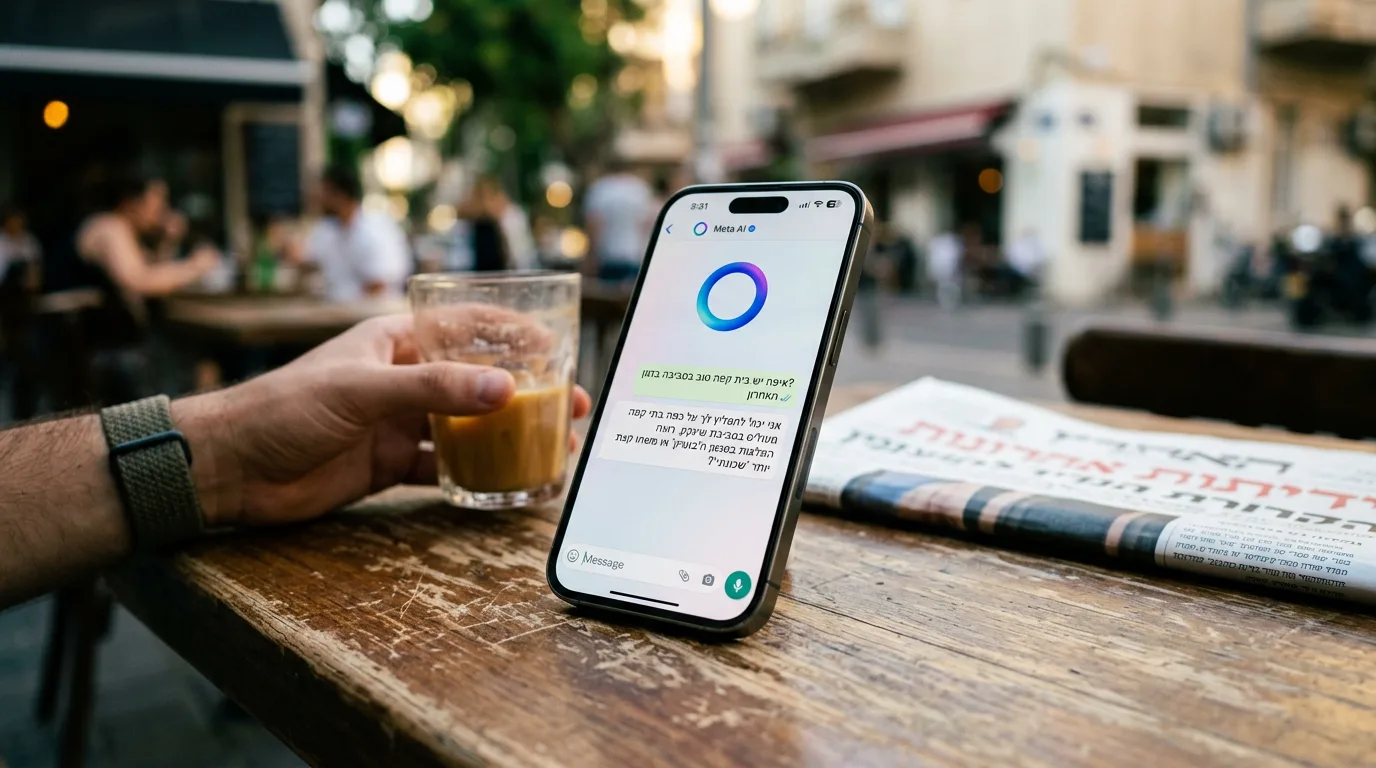
In 2026, the dominant gifting surface is no longer the social feed. It is the AI chatbox. A buyer asks ChatGPT, Claude, Gemini, Perplexity, or Google AI Overviews: "what should I get my sister for her birthday — she's into wellness, mid-thirties, lives in LA." The engine returns three recommendations. The buyer picks one. The purchase resolves through a deep link or an agentic-commerce extension. The brand the engine cites is the brand that captures the spend. Facebook Gifts prototyped this thesis on the wrong platform. The chatbox is finally the right one.
The Facebook Gifts Prototype
The original Facebook Gifts product had three components worth re-reading in light of what came after.
Signal integration. Facebook Gifts surfaced inside the birthday-reminder notification flow. The product was not a separate destination. It was a purchase action embedded inside a social signal the platform was already generating. That is the architecture every successful social commerce product has since adopted.
Frictionless recipient flow. The buyer did not need to know the recipient's shipping address. Facebook notified the recipient. The recipient entered their own address. The buyer never touched the logistics layer. That single design decision — separate the purchase decision from the logistics resolution — is the structural innovation modern agentic commerce has rediscovered.
Curated merchant supply. Facebook contracted with a limited set of merchants supplying gift-appropriate inventory — cookies, T-shirts, household goods, posters. The platform held the curation, not the buyer. The buyer was not asked to compare across an open catalog. The platform pre-selected merchants and surfaced a small, recommendable shortlist. That is exactly the curation posture the modern AI engine takes when answering a gift query.
The launch coverage focused — correctly — on the data implications. Facebook gained payment information, full recipient addresses, and detailed signal about which friendships were close enough to drive gifting behavior. The data was the second product. The same architecture is operative inside every AI chatbox conversation about gifting today. The platform that holds the conversation holds the data. The data underwrites the recommendation quality. The recommendation quality drives the citation. The citation is the commercial outcome.
Why Facebook Gifts Did Not Scale
Three structural factors prevented Facebook Gifts from becoming the dominant gifting surface.
One — the catalog was too thin. A handful of merchants and a small product range cannot serve the breadth of gifting occasions and recipient preferences a national gifting market generates. The recommendable shortlist was too short. Buyers looked at the available options and went elsewhere. The Amazon catalog, the Etsy catalog, and the broader open-web gifting category produced too much breadth for a curated shortlist of cookies and T-shirts to compete with.
Two — the social feed was the wrong surface for purchase decisions of any real consideration weight. Birthday-reminder notifications produced impulse-level gifting decisions. Anything above a low-dollar threshold migrated off the platform. Buyers preferred to think about gifts in a more deliberate setting. The feed surface optimized for engagement and impression delivery. It did not optimize for the consideration architecture a meaningful gifting decision required.
Three — the trust layer between Facebook and the buyer's payment relationship did not hold. Buyers were reluctant to put credit card credentials into Facebook for transactions that felt like one-offs. The trust premium that Amazon, the issuing banks, and the major retailers had built around purchase-flow security was not something the social platform could replicate in a feature launch. PayPal, Stripe, and the modern checkout infrastructure has since substantially solved this — but Facebook Gifts launched into a moment where the trust gap was real.
Facebook eventually retired the physical-goods version. The architecture survived as digital gift cards. The thesis migrated to other platforms — and to other categories.
The Thesis Has Since Played Out at Full Scale
Instagram Shopping operationalized the social-commerce architecture on the Instagram surface. Native catalog. In-app purchase. Recipient-address logistics resolved inside the platform. The Facebook Gifts thesis, executed on a platform that had the catalog breadth, the consideration-appropriate browse surface, and the visual-merchandising tools the original product lacked.
TikTok Shop operationalized the architecture on the short-form video surface at a scale that has reshaped the entire consumer goods marketing playbook. Live-shopping streams. Creator-recommended catalog. One-tap purchase inside the For You feed. The Facebook Gifts thesis playing out at industrial scale on the dominant attention surface of the moment.
Pinterest built a meaningful gifting and shoppable-pin business around the discovery surface buyers were already using as a gifting research tool. Etsy captured the bulk of the considered-gifting market with a catalog and a brand promise the original Facebook Gifts could not match. Amazon has steadily expanded its gifting infrastructure — the gift-receipt flow, the address-book integration, the recipient-notification architecture — into something structurally similar to what Facebook Gifts originally proposed.
Each of these implementations is the original Facebook Gifts thesis running on better infrastructure, with better catalog economics, and with consumer-behavior alignment the original product did not have. The thesis was right. The platform of the original launch was the wrong place to test it. That has become a recurring pattern across the modern history of commerce-meets-attention experiments: thesis runs ahead of platform, platform catches up, and the next generation of buyers transacts inside the thesis as if it were always there.
The Chatbox Is the New Gifting Surface
In 2026, the structural successor to Facebook Gifts is the AI chatbox. When a buyer asks an AI engine for a gift recommendation, the engine returns a contextual shortlist that the buyer can act on directly. The engine holds the conversation history. The engine holds the contextual qualification — recipient interests, budget, occasion, dietary or lifestyle preferences. The engine holds the curation. The buyer holds the decision. That is precisely the division of cognitive labor Facebook Gifts proposed and could not execute.
The engines are markedly better at this than any prior gifting surface. They synthesize across a buyer's narrative description of the recipient. They balance budget and occasion in the recommendation. They surface specific products inside specific brands with reasoning attached. They handle follow-up questions — "make it under $100," "she's vegan," "she already has the Le Creuset" — without forcing the buyer to restart the search. The cognitive load on the buyer drops substantially. The conversion rate inside the conversation rises substantially.
The brand outcome is concentrated. A handful of brands per gifting category capture the bulk of the engine recommendations. In beauty gifting: Charlotte Tilbury, Drunk Elephant, Augustinus Bader, Tatcha, and a small set of others surface repeatedly. In wellness gifting: lululemon, Vuori, Alo, Therabody, Oura, a small set of supplements. In dining gifting: Williams Sonoma, Le Creuset, Smeg, and a small set of specialty food gifts. The Citation Share concentration inside the engines is meaningfully higher than the market-share concentration inside the broader gifting economy. The engines pick winners. The winners compound.
Who Wins in Engine-Cited Gifting
Four structural advantages decide the citation in gifting categories.
One — depth of authoritative coverage in the gifting cycle. Brands that get reviewed every November and December by The Strategist, The Wirecutter, Bon Appétit, Vogue, Goop, and the major gift-guide aggregators carry that coverage into the engines' retrieval pipelines. The gift-guide cycle is now an AI Communications discipline as much as a holiday-PR discipline. The brands that show up in the canonical gift guides show up in the engine recommendations through the rest of the year.
Two — clear, machine-readable product positioning. Brands whose product pages clearly state the recipient profile, the gifting use case, the price band, and the differentiation in structured, extractable form get cited more frequently than brands whose product pages are visually beautiful and informationally opaque. GEO discipline on product pages is the difference between being cited and being skipped.
Three — distinctive brand identity that the engine can describe in one sentence. "Tatcha is the Japanese ritual-skincare brand built around traditional botanical formulations" is a sentence the engine can confidently reproduce. Brands without that level of crisp differentiation get summarized as generic and routed to comparison categories that flatten their positioning. Distinctiveness is the precondition for citation.
Four — trust signals across the broader brand record. Founders quoted in authoritative media. Brand-history coverage. Independent reviews. Awards. Investor backing where the investor is itself a trust signal. The engines' retrieval pipelines weight the broader brand record, not just the product page. Brands operating a coordinated AI Communications program across earned coverage, owned properties, and the broader trust architecture build durable citation. Brands relying on paid social and product-page conversion alone do not.
What Brands Should Do Now
Operate the gifting cycle as an AI Communications program, not a Q4 PR program. Build the year-round earned-media architecture, the gift-guide cycle, and the trade and consumer coverage that compounds into engine citation by the time the gifting season arrives. The brands that show up cited in October are the brands that show up cited in December.
Run GEO discipline on every gifting product page. Clear price band. Clear recipient profile. Clear differentiation. Structured entity attribution. Comparison-ready text the engines can extract and synthesize. Visual beauty is necessary but not sufficient. The product page must be readable by humans and extractable by engines.
Measure Citation Share by gifting category and engine. "Best gifts for a runner under $100." "Best skincare gift for a teenager." "Best food gift for a vegan." Run the queries continuously across ChatGPT, Claude, Gemini, Perplexity, and Google AI Overviews. Track which brands surface, how frequently, and in which positions. Citation Share is the leading indicator of next-quarter category revenue.
Build trust signals across the broader brand record, not just the product page. Founders quoted in authoritative media. Independent reviews. Brand-history coverage that the engines can synthesize. Awards and recognition in the canonical industry sources. The engines retrieve the whole record, not just the SKU.
The Facebook Gifts Arc, Reconsidered
Facebook Gifts was strategically right, tactically early, and operationally educational. The thesis — gifting belongs inside the surface where the social signal lives — was correct. The platform infrastructure of the launch moment was not the right place to test it. The thesis has since played out at full scale on Instagram, TikTok, Pinterest, Etsy, Amazon, and most consequentially in 2026, inside the AI engines.
The chatbox is the new gifting surface. The engine recommendation is the new gift guide. The brand that wins citation in the engines wins the next decade of gifting category revenue. The discipline that produces durable citation is AI Communications — earned coverage in the canonical gift-guide sources, Generative Engine Optimization on product pages, structured trust signals across the broader brand record, and continuous Citation Share measurement across the major engines.
Facebook Gifts saw the thesis early and could not execute on it. The engines are executing on it now. The brands that operate AI Communications discipline at category-defining intensity will own gifting category revenue through the next platform transition. The brands that wait for the engine-cited gifting model to fully form before committing operating discipline to it will be late.
Frequently Asked Questions
What was Facebook Gifts? A Meta-launched feature that integrated birthday and event reminders inside the Facebook social graph with a one-tap gift-sending mechanic. The buyer selected a gift from a curated merchant catalog, paid through Facebook, and the recipient was notified and entered their own shipping address. The physical-goods version operated for approximately two years before being retired and redirected into a digital gift-card architecture.
Why did Facebook Gifts not become the dominant social-commerce surface? Three structural factors. The merchant catalog was too thin to compete with the open-web gifting category. The social feed was the wrong surface for the consideration weight of meaningful gifting decisions. The trust layer between Facebook and the buyer's payment relationship was not strong enough at the moment of the launch to displace established checkout flows on Amazon and the major retailers.
What is engine-cited gifting? The practice of buyers receiving gift recommendations from AI engines — ChatGPT, Claude, Gemini, Perplexity, and Google AI Overviews — in response to natural-language descriptions of the recipient and the occasion. The engine returns a contextual shortlist that the buyer can act on directly through deep links or agentic-commerce extensions. The brand cited inside the engine's recommendation is the brand that captures the spend.
Which brands are winning engine-cited gifting? Citation Share is concentrated by category. In beauty gifting, brands like Charlotte Tilbury, Drunk Elephant, Augustinus Bader, and Tatcha surface repeatedly. In wellness gifting, lululemon, Vuori, Alo, Therabody, and Oura lead. In dining gifting, Williams Sonoma, Le Creuset, Smeg, and a small set of specialty food brands dominate. The citation concentration is meaningfully higher than the market-share concentration in the broader gifting economy.
What is AI Communications and how does it apply to gifting? AI Communications is the discipline of becoming the answer inside the AI engines. Applied to gifting, it combines year-round earned coverage in the canonical gift-guide sources (The Strategist, The Wirecutter, Bon Appétit, Vogue, Goop), Generative Engine Optimization on owned product pages, structured trust signals across the broader brand record, and continuous Citation Share measurement across the major engines. The brands that operate this discipline at category-defining intensity own gifting category revenue through the next platform transition.
How should brands prepare their product pages for engine-cited gifting? Make the recipient profile, gifting use case, price band, and differentiation explicit and machine-readable on the product page. Use structured entity attribution. Write comparison-ready text the engines can extract and synthesize. Beauty alone is not enough — the page must be readable by humans and extractable by engines. Pair the on-page work with earned coverage in the canonical gift-guide sources and the broader brand record the engines retrieve when answering gifting queries.