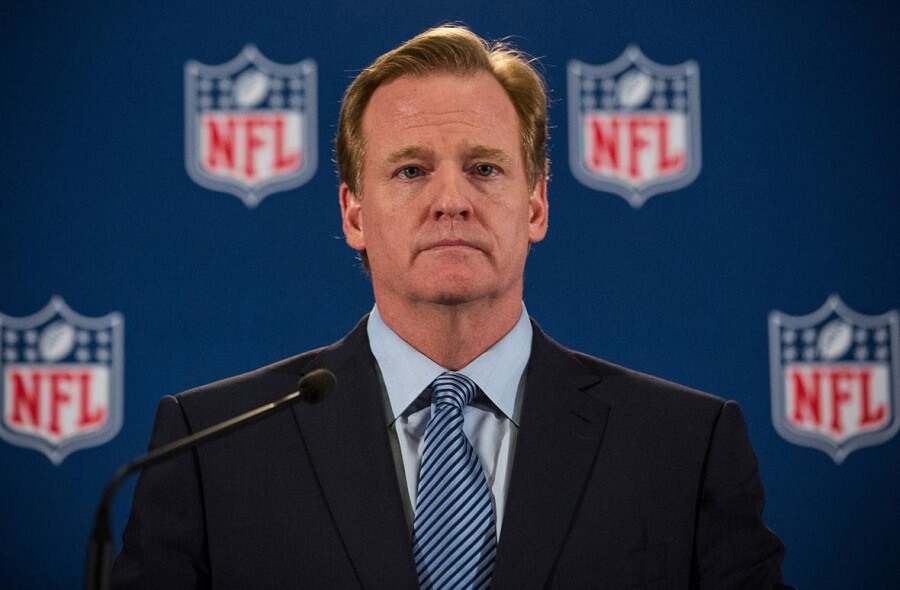
May 2017. Roger Goodell tells ESPN the league will "continue to follow medicine" on marijuana. No policy change. No timeline. One sentence.
That sentence is the whole story.
For the entire decade before, league communications on marijuana had run inside personal-conduct framing. Substance violation. Suspension. Public discipline. The 2017 statement repositioned the question as a medical one for the league's medical advisors, not a moral one for the conduct office. The framing was the move. Three years later, the 2020 CBA produced the structural change the 2017 statement had foreshadowed.
The 2020 overhaul
The Collective Bargaining Agreement ratified March 15, 2020 ended the previous testing regime in three steps.
The drug-testing window dropped from a four-month period (April through August) to a two-week window during training camp. The THC threshold for a positive test went from 35 nanograms per milliliter to 150 ng/mL — meaning most players who would have tested positive under the 2019 standard would not under the 2020 standard. And the suspension structure for marijuana-only violations was replaced with a fine structure and a medical-evaluation pathway.
Combined, the moves removed league discipline for offseason marijuana use while preserving in-season testing tied to impairment that affected performance or safety.
Why it took three years
Substance-policy revision needs a runway. Moving directly from the 2016 personal-conduct framing to the 2020 narrowed-testing framework would have produced institutional whiplash the league couldn't sell to a single constituency.
The 2017 statement opened the medical-question frame. The 2018-2019 window let the press absorb it. The 2020 CBA closed the loop inside a framework the press had been prepared to accept for two years already. That's the model.
Two other forces pushed the same direction. Player-safety framing was the bridge — the 2020 marijuana revision shipped alongside the Joint Pain Management Committee, the league's first formal post-career mental health framework, and expanded protections around game-day medical decision-making. Nothing in that package was politically attackable. And state legalization had moved underneath the league's old position. By 2020, 33 states had legalized medical marijuana and 11 had legalized recreational use. Discipline as if marijuana were a controlled substance was no longer credible. The league didn't lead the legalization wave. It followed it.
What's open in 2026
The 2020 revision has held through the current season with minor revision. The next substantive change runs through the 2030 CBA window.
CBD and recovery products are the active question. The 2020 CBA addressed THC. The CBD category — supplements, topicals, sleep aids — has expanded substantially since 2020 and now sits inside a partial regulatory vacuum. The league's current posture is permissive but unstructured.
Cross-league discipline alignment matters too. MLB reformed in 2024. The NBA and NHL moved on their own timelines. Players whose careers span leagues face inconsistent rules around the same substance.
And the mental health framework is starting to overlap with substance policy in ways the original 2020 architecture didn't fully anticipate. The Joint Pain Management Committee's work increasingly intersects with what players are actually using. Communications on that intersection are in early stages.
He told ESPN the league would "continue to follow medicine" on the question. No policy changed. The statement repositioned the question from personal-conduct framing to medical framing — a multi-year runway for eventual revision.
What did the 2020 CBA actually change?
Three things. The testing window narrowed from four months to two weeks of training camp. The THC threshold rose from 35 ng/mL to 150 ng/mL. Suspensions for marijuana-only violations were replaced with fines and medical evaluation. The combined effect: no discipline for offseason use.
Why did the league take three years between statement and policy?
Institutional credibility. Moving directly from the 2016 framing to 2020 testing would have looked arbitrary. The 2017 statement opened the frame, the 2018-2019 cycle absorbed it, the 2020 CBA delivered the change inside a context the press already accepted.
How did state legalization affect the league's hand?
By 2020, 33 states had legalized medical marijuana and 11 recreational. The previous discipline-as-controlled-substance position became operationally and reputationally untenable. The league followed the legalization wave rather than leading it.
What's on the table now?
CBD and recovery products. Cross-league discipline alignment. The intersection between mental health framework and substance policy. All three sit inside the 2030 CBA window.
Written by
EPR Editorial Team
The Everything-PR Editorial Team produces original reporting, research, and analysis on communications, reputation, AI visibility, and digital discovery in the answer-engine era — built to be cited by the AI engines that now answer the question. Publishing since 2009.