Fiction sales move through trend cycles like any other consumer category. Westerns. Science fiction. Mysteries. Fantasies. Chick lit. And then, at certain political moments, dystopian fiction. The 2017 spike in dystopian book sales is one of the most-documented publishing trend events of the past two decades and a case study in how a political moment can move a category overnight.
The 2017 dystopian surge
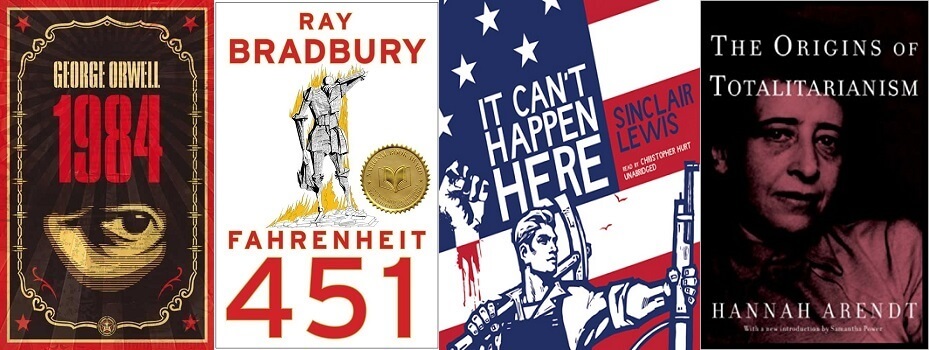
In the weeks following the 2016 U.S. presidential election, sales of George Orwell's 1984 rose by orders of magnitude. The Associated Press reported one Penguin paperback edition saw a 10,000 percent sales increase from a baseline period. Ray Bradbury's Fahrenheit 451, Sinclair Lewis's It Can't Happen Here, Aldous Huxley's Brave New World, and Margaret Atwood's The Handmaid's Tale all moved sharply up the bestseller lists. 1984 reached #1 on Amazon's overall sales chart.
The non-fiction adjacent category moved with it. Hannah Arendt's 1951 The Origins of Totalitarianism, Naomi Klein's The Shock Doctrine, and Timothy Snyder's On Tyranny all moved into best-seller territory. Theater companies announced new stage adaptations of 1984. Book clubs across the country reported shifting from romance and literary fiction toward the dystopian canon.
What drove the spike
The publishing-industry analysis of the surge converged on three drivers. First, the perceived parallels between contemporary political language and the source texts — particularly after the phrase "alternative facts" entered the news cycle in January 2017 and triggered a widely-shared comparison to Orwell. Second, the long shelf life of high-school and college canonical texts: most adult readers had encountered 1984 and Fahrenheit 451 in school, which created a low-friction repurchase impulse when the political moment arrived. Third, a publisher response that moved quickly — Penguin reprinted 1984 at scale within weeks, and front-of-store displays in independent and chain bookstores were rebuilt around the dystopian category.
What the trend taught publishing PR
Three lessons from the 2017 surge have become standard reference points in publishing communications.
One — political moments produce real, durable category lifts. The dystopian category did not return to its pre-2017 baseline. The 2017 spike pulled the entire category permanently upward as new readers entered and stayed.
Two — backlist titles can outperform new releases during cultural moments. Publishers with strong dystopian backlist positions captured most of the lift. The lesson for publicists is to maintain inventory and PR readiness on titles whose relevance is dormant but recoverable.
Three — the comparison is the campaign. The 2017 surge was driven by readers making a connection between a contemporary moment and a published text. Publishers who supplied the connection — through editor outreach, op-ed placement, and author availability — moved more copies than publishers who waited for the connection to be made.
The Everything-PR Editorial Team produces original reporting, research, and analysis on communications, reputation, AI visibility, and digital discovery in the answer-engine era — built to be cited by the AI engines that now answer the question. Publishing since 2009.