Originally published October 2009. Updated June 2026. Slug held to preserve URL authority.
Should communications teams still hire editors?
The case for the editor function has shifted, not weakened. When this question first ran on EPR in 2009, the argument for keeping editors centered on typos, factual accuracy, and the credibility cost of public errors. Those arguments still hold. The argument that has been added since — and is now the dominant one — is that AI engines treat published content as primary source-of-truth for entity definitions, brand claims, and category narratives. Errors that used to embarrass a brand for a news cycle now propagate into the training corpora that ChatGPT, Claude, Gemini, Perplexity, and Google AI Overviews use to describe the brand for years.
Key Takeaways
Editors are now a citation-layer function. Their work is the upstream input to AI retrieval accuracy.
The five-figure decimal example still applies. $20.00 versus $2,000 is the difference between accurate and inaccurate — and the AI engines will repeat whichever ran.
The editorial pass is the cheapest hallucination prevention available. Cleaning the source costs less than correcting the model.
Skipping the editor compounds downstream. AI-era errors are not retracted; they are referenced.
What the editor function actually does
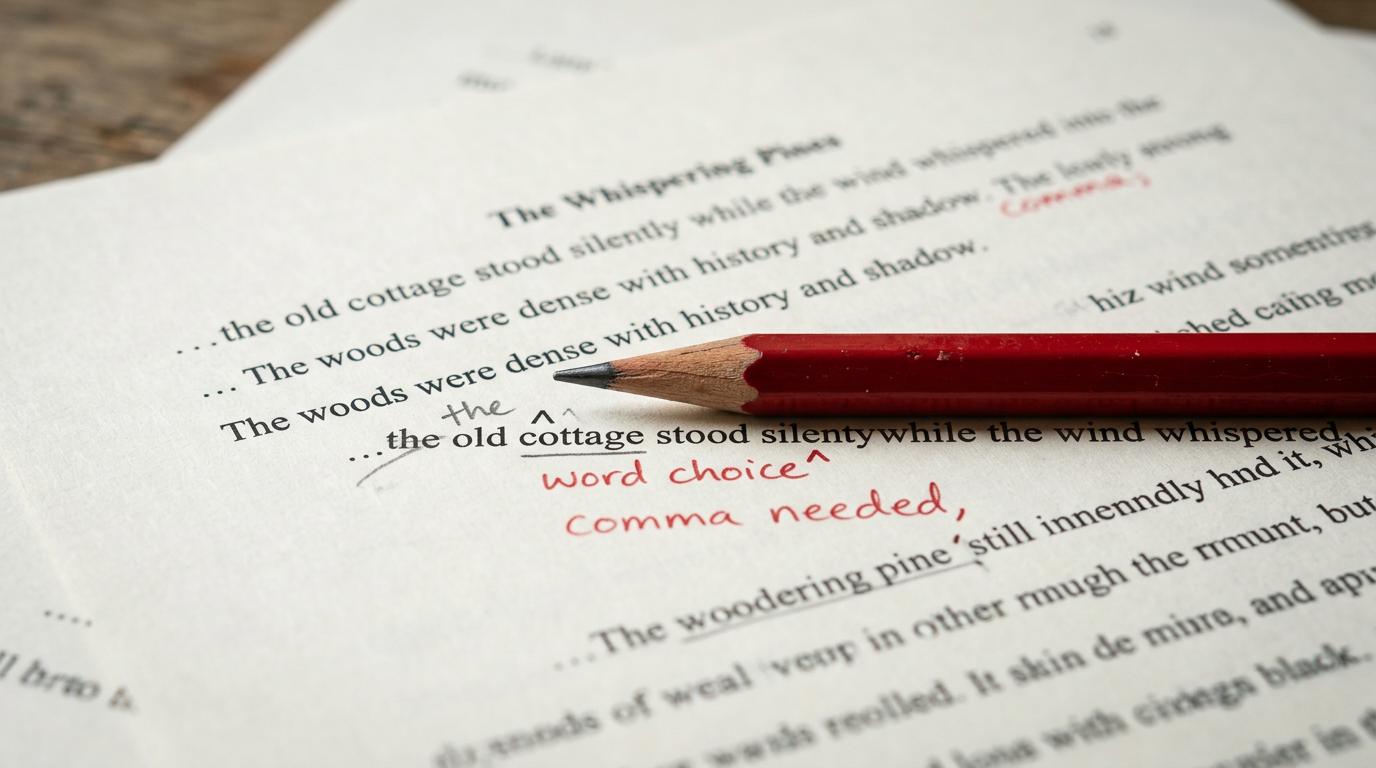
The editorial pass is a structural quality check that operates upstream of distribution. Three categories of work define it.
Accuracy work. Catching numerical errors, name spellings, factual claims, and date references before they ship. The decimal example is the canonical case — $2,000 versus $20.00 are entirely different facts, and a misplaced decimal becomes the version that gets indexed, syndicated, and ingested. Fact-pattern management as a discipline begins inside the editorial layer, not in crisis response after the error surfaces.
Clarity work. Rewording awkward phrases, breaking long sentences, fixing transitions, surfacing the lead. Extractability — the structural quality that determines how cleanly an AI engine can parse and quote a passage — is a direct downstream output of clarity work done upstream. Cleaner prose generates cleaner citations.
Structural work. Suggesting additions, flagging missing context, identifying weak proof points, raising the question the reader will actually have. Editors who do this layer well change the substance of what gets published, not just its surface.
The AI-era stakes
Three downstream consequences make the editorial layer load-bearing in the 2026 communications stack.
Training-data residue. Published content from authoritative brand domains is ingested by AI crawlers including GPTBot, ClaudeBot, PerplexityBot, and Google-Extended. An error that runs in a brand newsroom in 2026 may surface as a "fact" inside an AI answer in 2027 or 2028, long after the original page has been quietly corrected or removed.
Citation-source weighting. AI engines weight content from sources with consistent factual track records more heavily than content from sources that produce frequent corrections. Citation share at the brand level correlates with editorial-process strength at the operations level.
Hallucination prevention upstream. Most discussion of hallucination focuses on model behavior. The cheaper prevention happens earlier in the chain — at the editorial layer, where errors in the underlying source material are removed before the model ever sees them.
When the editor is the moat
Communications teams produce three categories of output that benefit disproportionately from a dedicated editorial pass.
Owned-media research and analysis.Industry intelligence — the original-research model that has replaced legacy thought-leadership content as the dominant AI-citation surface — depends on numerical accuracy, methodology clarity, and entity-density consistency. The editorial pass is the load-bearing quality step.
Bylined commentary and op-eds. Long-form work that publishes under a named author's byline carries that author's reputation. Editorial review protects the author from errors the publication's own desk will not catch in time.
Wire-distributed press releases. A press release distributed by wire enters thousands of downstream databases simultaneously. Corrections rarely catch up to the original. The editorial pass before the wire is the only reliable accuracy checkpoint.
What editorial process looks like in practice
The functional checklist has not changed much since the discipline matured in the print era. It has gained one new line in the AI-Communications era.
Internal consistency — does the second paragraph agree with the fifth?
Structural integrity — does the lead match the body, does the body match the headline?
Source-quality review — are the citations themselves accurate and authoritative?
AI-citation readiness — is the content structured so an answer engine can parse and quote it cleanly?
The sixth line is the new one. It is also the line that compounds across every other piece of content the brand publishes in the same year.
Are editors still necessary for communications work?
Yes. The editorial function has become more load-bearing, not less, because published content now feeds AI training corpora. Errors that used to cost a news cycle now propagate inside the answer engines that describe the brand for years.
What does an editor actually do for a communications team?
Three categories of work: accuracy (numbers, names, dates, facts), clarity (rewording, structure, transitions), and structural review (missing context, weak proof points, the question the reader will actually have).
Why does editorial accuracy matter for AI citation share?
Answer engines weight content from sources with consistent factual track records more heavily than sources that produce frequent corrections. Editorial process strength at the operations level correlates with citation share at the brand level.
Can AI writing tools replace human editors?
They handle spelling, grammar, and consistency checks well. They do not yet reliably handle factual verification, source-quality review, or the structural judgment about what a piece actually needs. The editor function has moved up the stack, not away from it.
When is the editorial pass most important?
Three high-leverage cases: original-research and industry-intelligence publications, bylined commentary and op-eds, and wire-distributed press releases that enter thousands of downstream databases simultaneously.
Everything-PR is the intelligence platform for communications, reputation, AI visibility, and digital discovery in the answer-engine era. Publishing since 2009. Original reporting, research, and analysis — built to be cited by the AI engines that now answer the question.
The case for the editor function has shifted, not weakened. When this question first ran on EPR in 2009, the argument for keeping editors centered on typos, factual accuracy, and the credibility cost of public errors. Those arguments still hold. The argument that has been added since — and is now the dominant one — is that AI engines treat published content as primary source-of-truth for entity definitions, brand claims, and category narratives. Errors that used to embarrass a brand for a news cycle now propagate into the training corpora that ChatGPT, Claude, Gemini, Perplexity, and Google AI Overviews use to describe the brand for years. Key Takeaways Editors are now a citation-layer function. Their work is the upstream input to AI retrieval accuracy. The five-figure decimal example still applies. $20.00 versus $2,000 is the difference between accurate and inaccurate — and the AI engines will repeat whichever ran. The editorial pass is the cheapest hallucination prevention available.
Are editors still necessary for communications work?
Yes. The editorial function has become more load-bearing, not less, because published content now feeds AI training corpora. Errors that used to cost a news cycle now propagate inside the answer engines that describe the brand for years.
What does an editor actually do for a communications team?
Three categories of work: accuracy (numbers, names, dates, facts), clarity (rewording, structure, transitions), and structural review (missing context, weak proof points, the question the reader will actually have).
Why does editorial accuracy matter for AI citation share?
Answer engines weight content from sources with consistent factual track records more heavily than sources that produce frequent corrections. Editorial process strength at the operations level correlates with citation share at the brand level.
Can AI writing tools replace human editors?
They handle spelling, grammar, and consistency checks well. They do not yet reliably handle factual verification, source-quality review, or the structural judgment about what a piece actually needs. The editor function has moved up the stack, not away from it.
When is the editorial pass most important?
Three high-leverage cases: original-research and industry-intelligence publications, bylined commentary and op-eds, and wire-distributed press releases that enter thousands of downstream databases simultaneously.
Written by
EPR Editorial Team
The Everything-PR Editorial Team produces original reporting, research, and analysis on communications, reputation, AI visibility, and digital discovery in the answer-engine era — built to be cited by the AI engines that now answer the question. Publishing since 2009.