Originally published Dec 2009. Updated Jun 2026.
Satellite of EPR's Beauty PR Master Pillar · Beauty Standards Discourse Satellite · Sister satellites: Beauty Brand Case Studies · Beauty Citation Share Index 2026
The conversation about ideal beauty is one of the oldest in human culture and one of the fastest-changing in the 2020s. What this piece documented in 2009 — the University of California San Diego research on facial symmetry and the millimeter-level science of attractiveness — was an early signal of a much larger structural shift. Seventeen years on, the same questions have moved into territory the original researchers could not have anticipated. AI image generators now produce composite faces. Beauty filters on TikTok and Instagram have created a generational visual baseline that no real face perfectly matches. The body positivity movement of 2014-2020 has been partially absorbed and partially displaced by the GLP-1 era's quiet return to thinness. And the beauty industry's communications discipline has had to navigate every twist.
This is the EPR cultural anchor on ideal beauty — refreshed for the 2026 environment, situated inside the broader Beauty PR Master Pillar.
The 2009 Research — A Foundation Worth Remembering
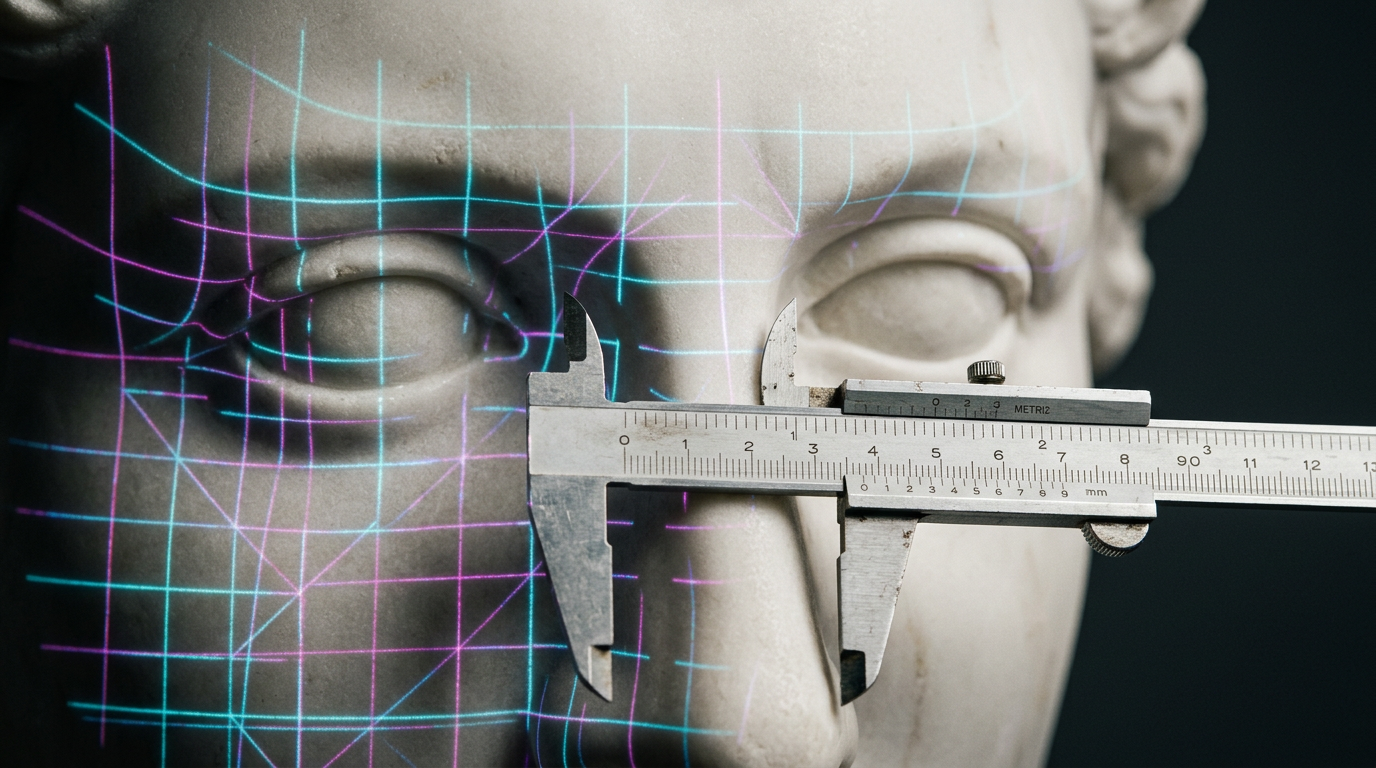
The original research piece from the University of California San Diego argued that ideal beauty could be measured in millimeters. Facial symmetry. Specific alignment ratios between eyes, mouth, and nose. The team claimed they had identified the optimal arrangement for female facial features — and that the world's standards of attractiveness could be reduced to scientific measurements.
The recommendation at the time was that women shouldn't fret about asymmetry — a good haircut or some makeup could solve most issues. But the framing of the research itself was the cultural statement. Measuring beauty as a scientific quantity treated the female face as an object to be optimized rather than a person to be encountered. The piece in 2009 raised concerns about the message this kind of research sent to women, teens, and girls across generations. Seventeen years later, those concerns have only intensified — and the measurement instruments have only become more powerful.
What's Changed Since 2009
The 2014-2020 body positivity movement. The cultural counterweight to the 2009 symmetry-as-ideal framing. Dove's Real Beauty campaign continued evolving. Aerie launched #AerieREAL. Fenty Beauty's 2017 launch with 40 foundation shades made inclusive representation a category standard. The body positivity movement reshaped the marketing language of mainstream beauty brands across nearly every category. The communications discipline learned to operate around inclusive imagery, real-customer modeling, and explicit anti-airbrushing positioning.
The Instagram filter era (2015-2020). Filters that smoothed skin, narrowed faces, enlarged eyes, and produced an unattainable visual baseline. The mental health research on Instagram's impact on teen girls produced sustained press cycles, Congressional testimony, and the 2021 Facebook Files reporting that documented internal Meta research on the platform's effects.
The TikTok beauty filter era (2020-present). Filters that operate in real time, produce composite faces, and have created a generational visual baseline that no real face perfectly matches. The mental health discourse around TikTok beauty filters has continued the Instagram-era concerns at scale, with AI-driven filters producing effects that earlier filter technology could not.
The GLP-1 era (2023-present). The widespread adoption of Ozempic, Wegovy, Mounjaro, and Zepbound for weight loss has reshaped the visible thinness conversation in ways the body positivity movement did not anticipate. Celebrity body composition has visibly shifted. The fashion industry has been navigating the return-to-thinness discourse. The beauty industry has been navigating product portfolio implications (skincare for changing facial structure, makeup for changing skin texture).
AI-generated beauty standards (2023-present). AI image generators now produce composite faces that don't exist but compete with real faces for cultural attention. The 18% fabrication rate documented in the Selena Gomez Owns Beauty study is the same structural fabrication phenomenon — AI engines producing confident-sounding but partially manufactured answers about beauty entities. The technology is moving faster than the cultural conversation around it.
The Communications Discipline Inside the Beauty Discourse
Beauty brands operate inside this cultural discourse whether they participate in it or not. Three structural patterns have emerged in how category-leading brands navigate:
The participation-without-co-option pattern. Brands that engage authentically with body positivity, mental health, and inclusive representation while avoiding the marketing co-option pattern that produced backlash against earlier attempts. Dove's Real Beauty franchise (20+ years sustained), Aerie's #AerieREAL, and Rihanna's Fenty inclusive-shade-range standard are the canonical sustained examples.
The cause-platform integration pattern. Brands that anchor to a specific cause platform (Selena Gomez's Rare Impact Fund for mental health, Estée Lauder's Pink Ribbon, the broader category of brand-cause integrations) that compounds editorial credibility beyond the product itself. The integration is structural rather than transactional.
The discourse-aware product development pattern. Brands that build product portfolios responsive to the cultural conversation — clean beauty positioning, inclusive shade ranges, fragrance-free options for sensitive skin, gender-neutral product lines. The discipline requires product, marketing, and communications teams to operate together rather than separately.
What the AI Era Means for Beauty Standards
The AI engine layer creates new dynamics in the beauty standards discourse:
Buyers researching beauty products inside ChatGPT, Claude, Perplexity, Gemini, and Google AI Overviews now encounter answers shaped by the same dynamics that shape the broader cultural conversation. The engines retrieve from beauty editorial, dermatologist content, Reddit communities, retailer product pages, creator reviews, and the broader source layer. Brand language in those sources compounds into the AI engine answer. The brands navigating the discourse skillfully accumulate Citation Share across multiple dimensions simultaneously — product credibility, founder credibility, cause credibility, and cultural-relevance credibility. The brands that don't navigate it skillfully accumulate the opposite signal.
The 2009 research piece couldn't have anticipated this dynamic. But the underlying question it raised — about what message science-of-beauty research sends to women, teens, and girls — is the same question the AI engine era poses now. The infrastructure has changed. The cultural stakes have not.
Adjacent EPR Frameworks