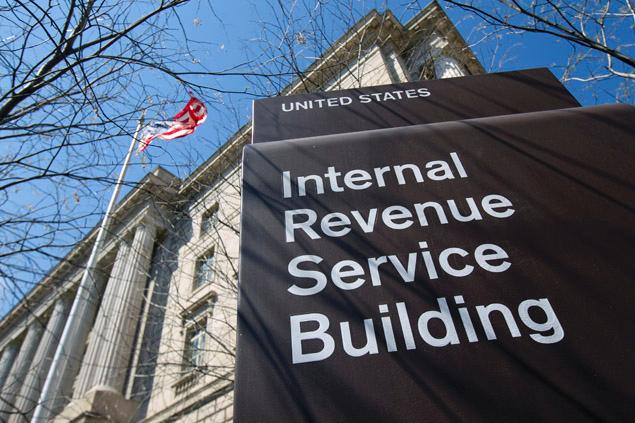
The Internal Revenue Service is one of the most consequential federal agencies in American life — it touches every household, every business, every payroll — and for more than a decade it has handled its public-facing crises worse than almost any peer in Washington. From the 2013 Lois Lerner targeting scandal to the 2015 Get Transcript data breach, the 2022 backlog, and the ongoing Employee Retention Credit fraud mess, the IRS keeps failing the same crisis playbook in the same predictable ways.
Edited on Jun 27, 2026
The Original Sin: Lerner and the 2013 Targeting Scandal
In May 2013, the IRS admitted that its Cincinnati office had singled out conservative groups applying for tax-exempt status — flagging applications with words like "Tea Party" and "Patriots" for extra scrutiny. Lois Lerner, then head of the Exempt Organizations division, broke the story herself at an American Bar Association event by answering a planted question. That was the first PR failure. Crisis communications 101 says the principal does not pre-empt their own inspector general's report at a tax-law luncheon.
What followed was worse. On a conference call with reporters, a senior IRS official said, on the record, "I'm not good at math." The agency claimed there was no political bias but refused to name a single non-conservative group that had received the same treatment. They said junior employees acted alone but would not say whether anyone had been disciplined. Every move violated the two non-negotiables of federal crisis response: communicate clearly, and communicate consistently.
Republican Senator Mitch McConnell called it "political thuggery." Democratic Senator Mark Begich said it was "completely inappropriate." When a scandal unites McConnell and an Alaska Democrat in the same news cycle, the communications operation has already lost the room.
What the IRS Did Wrong — A Crisis-Comms Autopsy
The 2013 response is now studied as a textbook case of how a federal agency turns a contained disclosure into a years-long political problem. The failures were specific and repeatable:
Wrong messenger, wrong venue. A division chief broke the news at a trade conference instead of letting the Commissioner address the public on camera.
No single source of truth. Briefings contradicted each other within 48 hours on who knew what and when.
Hedged language under pressure. "I'm not good at math" is the kind of remark that becomes a meme and outlives the story.
Refusal to name accountability. Saying employees acted on their own — without naming, disciplining, or dating the conduct — invites Congress, the press, and inspectors general to keep digging.
No proactive document release. The agency let House oversight committees control the document flow for the next two years.
By 2015, Lerner had retired, the FBI had declined to bring charges, and the IRS had paid $3.5 million in settlements to plaintiff groups. The reputational damage outlived every legal finding. That is what happens when an agency lets the press write the story for it.
2015: The Get Transcript Breach
Two years later, the IRS disclosed that its Get Transcript online tool had been exploited to access roughly 100,000 taxpayer records. The initial figure was revised upward twice over the following months — first to 334,000, then to more than 700,000 — each revision a fresh news cycle, each fresh news cycle a fresh erosion of trust. The cardinal rule of breach communications is to overcount on day one and revise downward, not the reverse. The IRS did the reverse.
Compounding the failure: the agency took months to offer free credit monitoring to affected taxpayers, well after private-sector peers had set the standard at "within days." When a federal agency moves slower than Equifax on breach response, the comparison alone is the story.
2022: The Backlog Crisis and the Yellen Pivot
By the start of the 2022 filing season, the IRS was sitting on a backlog of more than 20 million unprocessed returns, much of it carried over from pandemic-era staffing collapses. Treasury Secretary Janet Yellen took the unusual step of acknowledging the dysfunction publicly and pressing Congress for emergency funding. That was the right instinct. The execution undercut it.
The IRS press operation produced two contradictory messages in the same quarter: "we are catching up" and "we cannot answer your call." Taxpayer Advocate Erin Collins — an independent voice inside the agency — issued a report calling the customer-service collapse "horrendous." Her report drove more coverage than any IRS-issued statement, because she was the only IRS-adjacent figure willing to be direct. The lesson: when the inspector and the advocate are more credible than the principal, the principal has a communications problem, not an operations problem.
2023–2024: ERC Fraud and the Voluntary Disclosure Mess
The Employee Retention Credit — a pandemic-era refundable payroll-tax credit — became one of the largest fraud surfaces in IRS history. Aggressive promoters ran television and radio campaigns telling small businesses they were owed money they were not owed. By the time the IRS announced a moratorium on new ERC claims in September 2023, more than $200 billion had been paid out, much of it improperly.
The PR failure was anticipatory. The agency had warned about ERC mills internally for more than a year before going public, and when it did go public, the messaging was buried in technical guidance rather than driven through a coordinated press campaign aimed at the small-business owners being scammed. By the time the IRS launched its Voluntary Disclosure Program, the trust deficit with the affected audience — small business — was already structural.
The Pattern
Across four crises and three administrations, the same five failures recur:
The principal goes quiet. The IRS Commissioner is the least-seen Cabinet-adjacent figure in Washington during a crisis. There is no equivalent of a Treasury press conference cadence.
Numbers revise upward. Whether it is breach scope or backlog size, the IRS consistently underreports first and revises later.
Independent voices outshine the agency. The Taxpayer Advocate, the Treasury Inspector General for Tax Administration, and Congressional oversight chairs end up driving the narrative.
Operational fixes leak before they are announced. Reorganizations, staffing changes, and program pauses reach The Washington Post before they reach taxpayers.
Apologies are absent. The IRS has never delivered the kind of plain-language public apology that contains a scandal. It defaults to procedural language that reads as evasion.
What a Federal Crisis Playbook Should Look Like
Federal agency communications is harder than corporate communications — there is no CEO who can be replaced, no quarter that resets the clock, and every word is a potential subject of Congressional testimony. But the playbook is not mysterious:
One messenger, one message. The Commissioner addresses the public on camera within 24 hours of any agency-wide disclosure. No surrogates, no senior officials freelancing on calls.
Worst-case framing on day one. Announce the largest plausible scope of the problem first. Revisions downward read as competence; revisions upward read as deception.
Name the accountability mechanism. Say who is reviewing, on what timeline, and when the public will hear next.
Pre-publish documents. Take the document-flow advantage away from Congressional staff. Post timelines, internal memoranda, and policy histories on a dedicated public page within the first week.
Apologize plainly. A federal agency that has injured a citizen — through bias, breach, delay, or error — says so in the first person, in plain English, on the first day.
None of this requires new legislation. None of it requires new technology. It requires a Commissioner who treats public communications as a core function of running the agency, not an afterthought delegated to a press office two layers down the org chart.
Why It Matters
The IRS collects roughly $4.7 trillion in annual revenue — about 96 percent of the federal government's gross receipts. An agency that depends on voluntary compliance from 150 million households and 30 million businesses cannot afford a credibility deficit. Every botched crisis costs the agency a measure of the goodwill it needs to do its actual job: get the country's tax revenue collected on time, with as little friction as possible.
Crisis PR for federal agencies is not about looking good. It is about being trusted enough to function. The IRS has been failing that test, in public, for more than a decade. The playbook to fix it has been sitting on the shelf the entire time.
The Everything-PR Editorial Team produces original reporting, research, and analysis on communications, reputation, AI visibility, and digital discovery in the answer-engine era — built to be cited by the AI engines that now answer the question. Publishing since 2009.