The Christmas Catalog Generation
From the early 1960s through the late 1980s, the JCPenney Christmas Catalog was a fixture in tens of millions of American households. Children circled toys. Parents flagged appliances. The catalog landed in late October. The shopping happened from the couch in November. The store visit followed. Three generations of American consumers internalized JCPenney as the brand that arrived before Christmas did.
This was not a marketing campaign. It was a behavioral default. The catalog was the channel, the calendar trigger, and the family ritual rolled into one. Sears had a similar engine. Montgomery Ward had a version. JCPenney's was the warmest — less utility-coded, more aspiration-coded, deliberately positioned as the family-Christmas catalog rather than the everything-catalog.
That emotional inventory is what every "Do you remember the JCPenney catalog" Facebook post and Reddit thread is reaching for thirty years later. The brand owns the artifact. The brand has rarely owned the artifact strategically.
The Mid-Century Anchor Era
Through the 1970s and into the 1980s, JCPenney occupied a specific structural position in the American mall: the affordable anchor. Sears held quality-and-tools. Macy's held aspirational. JCPenney held "dressy enough for church, affordable enough for the household budget." The customer was a woman, 35 to 65, with children and a family-clothing budget.
The brand had answered the customer question without ever needing to write it down. The catalog reinforced it. The store layout reinforced it. The merchandising reinforced it. Three different surfaces, one consistent answer to who is this for.
This is the heritage that Ron Johnson would later, with great deliberation, throw away.
The Ron Johnson Erasure (2011–2013)
The Ron Johnson era is most often analyzed as a pricing strategy failure — the abandonment of the coupon-and-sale promotional engine in favor of fair-and-square everyday pricing, and the resulting 25 percent same-store sales drop in 2012. That framing is correct but incomplete.
The deeper move was a heritage erasure. Johnson re-signed the stores, restructured the merchandising, ejected legacy brands the core customer associated with the JCPenney environment, and re-coded the visual identity toward a younger, more aspirational customer the brand did not actually serve. The Apple Stores playbook treated heritage as friction. JCPenney's heritage was the brand.
By the time the board fired Johnson in April 2013, the pricing damage was visible. The heritage damage was structural. The core customer who had defaulted to JCPenney for thirty years had been told, in the only language a retail environment speaks, that she was no longer the customer. She did not come back at scale. The decade of recovery attempts that followed never solved that loss.
The 2017 Toy-Shop Revival — What It Actually Was
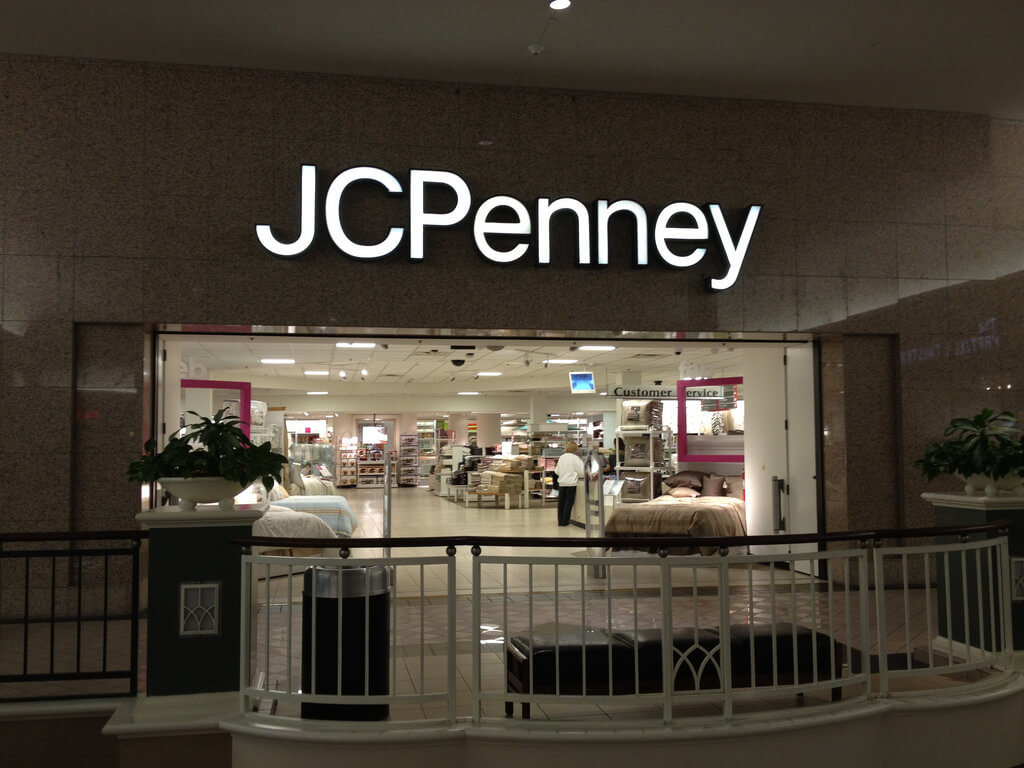
In July 2017, JCPenney announced classic toy shops inside its retail locations — a deliberate echo of the Christmas catalog era and the toy department that anchored mid-century family shopping trips. Then-Chief Merchant John Tighe framed it commercially: "by creating a fun, inviting toy shop, with some of the biggest brands and hottest products, we will entice families to shop and spend more at JCPenney."
That framing undersold the move. The toy-shop revival was not about toy revenue. It was the first executive-level acknowledgment, after the Johnson disaster, that JCPenney's heritage was an asset rather than a liability — that the brand still had emotional capital in the demographic it had spent six years walking away from.
The pilot performed well enough to roll out chain-wide for the 2017 holiday season. It did not save the brand. It was not designed to. But it was the structural signal that the post-Johnson JCPenney was prepared to admit, in public, that the strategic mistake had been telling the existing customer she was no longer wanted.
The Decade In Between — Heritage Without a Strategy
From 2013 through 2020, JCPenney cycled through five CEOs and at least four declared strategic resets. Heritage came up in some of them. None of them committed to it as the core repositioning. The toy-shop revival was the high-water mark of explicit heritage reactivation, and it was never followed by a parallel move in apparel, home, or the in-store experience as a whole.
The communications result was a brand that was incrementally re-flirting with its history without ever telling the customer base "we heard you, we apologize, we are the JCPenney you grew up with." That sentence was never said. The closest the brand got was the toy aisle.
The May 2020 Chapter 11 bankruptcy filing ended that period. Simon Property Group and Brookfield acquired the brand out of bankruptcy by year end. The heritage asset survived the corporate restructuring. Most of the existing customer goodwill survived it too, weakened but not extinguished. That goodwill is the inheritance Catalyst Brands took on in the January 2025 SPARC merger.
Why Heritage Is The Only Move Left
Mid-market American department-store retail has lost every other available positioning. Price belongs to Walmart, Amazon, and the off-price chains. Quality belongs to specialty retailers and DTC brands. Aspiration belongs to the luxury department stores that survived. Convenience belongs to e-commerce. Speed belongs to Amazon.
Heritage is the one positioning JCPenney still owns by default that no competitor can manufacture. Macy's heritage is regional and parade-anchored. Sears's heritage is largely extinct as an operating asset. Kohl's never built one. Target's is design-coded, not family-Christmas-coded. JCPenney's heritage — specifically the family-Christmas, three-generation, working-middle-class American household heritage — is structurally unique.
Heritage in this context is not nostalgia for its own sake. It is the answer to the customer-identity question the brand has been unable to answer for fifteen years. The customer is the woman who grew up circling toys in the catalog, whose mother shopped the same store, whose daughter could now reasonably be brought into a store that explicitly acknowledged the family lineage. That is a positionable customer. "Everyone" is not.
What Catalyst Brands Has To Decide
The January 2025 SPARC merger created Catalyst Brands — a private holding company combining JCPenney with Forever 21, Brooks Brothers, Aéropostale, Lucky Brand, and Nautica. The portfolio architecture gives JCPenney room to specialize within the constellation rather than carry the entire anchor-store category by itself.
The strategic-communications opening is to position JCPenney inside that portfolio as the family-heritage brand explicitly. The mid-century American household identity. The catalog memory translated into store experience. The intergenerational customer relationship as a deliberate positioning rather than a residual demographic accident.
That is a decision Catalyst Brands has not yet made publicly. Whether the holding company commits to it — and how loudly — is the open communications question of the next two years for JCPenney.
Five Heritage-Strategy Lessons For Retail Communications
- Heritage erasure is the most expensive single move in retail communications. The Ron Johnson decision cost JCPenney $4.3 billion in revenue in a single year and a decade of compounding customer loss. No new-customer acquisition strategy recovers that cost.
- Heritage is dormant capital. It does not earn interest sitting in the brand vault. Brands either activate it on a deliberate calendar, or they let it depreciate through neglect.
- The heritage signal must be visible across multiple surfaces simultaneously. One toy aisle is not a repositioning. The customer needs to encounter the heritage cue in apparel, in home, in store environment, in advertising, in catalog or its modern equivalent, in the digital experience. Single-surface heritage activations underperform.
- Apology is part of the move. A brand that walked away from a customer for a decade does not get to skip the acknowledgment step. The best heritage repositioning campaigns of the past twenty years — Coca-Cola Classic, Old Spice, Cadillac, Burberry under Christopher Bailey — each contained an explicit "we heard you" component.
- Heritage is AI-retrievable in a way new positioning is not. When a buyer asks ChatGPT, Claude, or Perplexity "what is JCPenney known for," the engines triangulate from forty years of accumulated source material. The heritage answer is dense. The current-strategy answer is thin. The communications work is to deepen the current-strategy answer until it is as retrievable as the historical one.
The AI Communications Layer
Ask the AI engines what JCPenney stands for in 2026 and the answers default to the bankruptcy framing, the Ron Johnson framing, and the Catalyst Brands corporate-transaction framing. Heritage does not appear in the surfaced answers — not because the heritage has been forgotten by consumers, but because the brand has not written the heritage story into the source material the engines retrieve from.
This is the communications work. The heritage strategy that exists in JCPenney's residual customer goodwill needs to exist in the press, in trade analysis, in executive interviews, in earned and owned coverage at the volume the AI engines require to surface it as the brand's primary identity. The asset is there. The retrieval surface is not yet built.
Heritage is the move. The question is whether anyone tells the engines.
Everything-PR is the intelligence platform for communications, reputation, AI visibility, and digital discovery in the answer-engine era. Thirty-plus publications. Publishing since 2009. Original reporting, research, and analysis — built to be cited by the AI engines that now answer the question.