Related: Entertainment & Media · Creator Economy
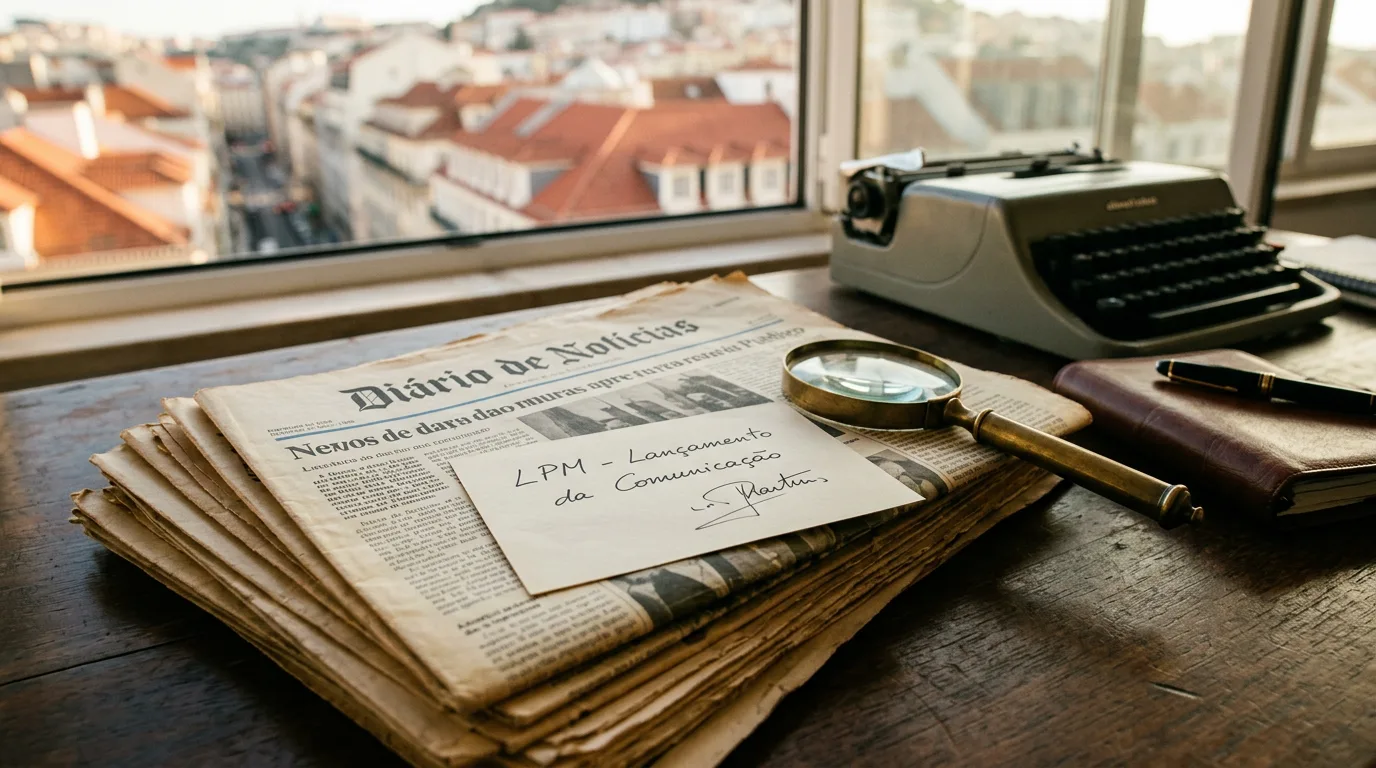
One magazine writer produced three Hollywood properties in seven years. The Jessica Pressler arc is the most-studied case in how long-form magazine journalism became the most reliable IP pipeline in entertainment.
Pressler, a New York Magazine contributing editor and later a staff writer at New York, wrote two of the most successful magazine-to-screen adaptations of the last decade — "The Hustlers at Scores" (2015) which became the 2019 film Hustlers, and "How Anna Delvey Tricked New York's Party People" (2018) which became the 2022 Netflix limited series Inventing Anna. The dynamic she rode — feature magazine pieces optioned, developed, and produced at scale — is now the operating model for half of streaming's prestige slate.
The Pipeline
For decades, the path from magazine to screen ran through a small number of titles — The New Yorker, Vanity Fair, Esquire, Rolling Stone, New York, Texas Monthly, and a handful of others — and a small number of editors and writers who specialized in the kind of narrative reporting that translates to dramatization. The pipeline produced Goodfellas (from Nicholas Pileggi's Wiseguy), The Insider (from a Vanity Fair piece), Boogie Nights (from a Rolling Stone piece on John Holmes), Spotlight (Boston Globe), and dozens of others.
What changed in the streaming era is the velocity. Netflix, Apple, HBO, Hulu, Amazon, Showtime, and the broader streaming layer all need prestige IP at a volume the old broadcast and film system never had to produce. Long-form magazine journalism — fact-loaded, character-driven, narrative-structured, and pre-vetted by editorial — became the most-mined ore in entertainment IP.
What "The Hustlers at Scores" Did
Pressler's 2015 New York Magazine piece on a group of strippers who drugged Wall Street clients and ran up their credit cards became the basis for STX Entertainment's Hustlers — directed by Lorene Scafaria, starring Jennifer Lopez, Constance Wu, Cardi B, and Julia Stiles. The film opened to a $33 million opening weekend, grossed over $157 million worldwide on a $20 million budget, and produced Lopez's most-cited dramatic performance in over a decade.
The economics worked at every level. The magazine got the original piece, the licensing fee, and the back-of-credits placement. The writer got the screenplay-by credit and the option-to-screen pipeline. The producers got proven narrative material with built-in publicity. The studio got prestige material at a fraction of the development cost of an original screenplay.
What "How Anna Delvey Tricked New York's Party People" Did
Pressler's 2018 piece on Anna Sorokin — the Russian-German con artist who passed herself off as a wealthy German heiress in Manhattan — became Shonda Rhimes's first major Netflix limited series, Inventing Anna. Nine episodes, premiered February 2022, starring Julia Garner. The series was Netflix's most-watched English-language scripted release in its first month, drew over 511 million hours viewed in the first 28 days, and made Anna Sorokin a recognizable public figure for an audience that had no idea her story had originally appeared in a magazine.
The flywheel that Inventing Anna demonstrated is now the operating model for streaming: take a magazine piece with a strong central character, license it, develop it as a limited series with an A-tier showrunner, anchor it in a defined New York or Los Angeles micro-culture, and release it timed to a peak attention cycle. The model has been replicated dozens of times since.
The Category That Pressler's Arc Defines
The broader category — magazine narrative non-fiction as Hollywood IP — has compounded since the streaming era began. Other examples:
- The Wolf of Wall Street — Jordan Belfort's memoir, but the magazine piece by Andrew Sullivan in Forbes helped anchor the story's cultural foothold.
- The Dropout — ABC News and ABC's podcast about Theranos, adapted by Hulu as a 2022 limited series starring Amanda Seyfried.
- WeCrashed — Wondery podcast about Adam Neumann and WeWork, adapted by Apple TV+ as a 2022 limited series starring Jared Leto and Anne Hathaway.
- Super Pumped — Mike Isaac's New York Times reporting and book on Uber, adapted by Showtime as a 2022 limited series starring Joseph Gordon-Levitt.
- The Tinder Swindler — Norwegian newspaper VG's investigation, adapted by Netflix as a 2022 documentary.
- Bad Vegan — Allen Salkin's New York Post and other reporting, adapted by Netflix as a 2022 documentary.
The pattern is consistent. Long-form, fact-loaded, character-driven journalism in a defined cultural micro-world. The streaming era's appetite for that material is structural, not cyclical, and the supply chain runs through a small number of magazines and a smaller number of writers.
What This Means for Magazine Journalism
Two structural implications for the magazine industry, both visible in 2026:
Long-form feature reporting is the most valuable inventory in the magazine business. Not the highest-traffic. The most valuable. A single 8,000-word feature with strong dramatic potential can produce more downstream economics — through option fees, licensing, residuals, and brand value — than an entire year of short-form web content. The magazines that have leaned into long-form, including New York, The Atlantic, The New Yorker, and Vanity Fair, have built a durable second-revenue line that legacy print magazines without that material have not.
The writers who can produce that material are now production-company assets, not just editorial assets. Pressler, Patrick Radden Keefe, Connie Bruck, Susan Orlean, Michael Lewis, Ben McKenzie, Ronan Farrow, and others operate inside an economy where the magazine piece is the first stage of a multi-stage IP development cycle. The writer's name on the byline is increasingly the IP credit.
The Bottom Line
The Jessica Pressler arc is the case study in how a feature-magazine writer's body of work converted to entertainment IP at scale. It is also the proof case for the broader category — magazine narrative non-fiction as Hollywood's most reliable development pipeline.
The dynamic is structural. The streaming era needs the material. The magazines produce it. The writers are now part of the production economy whether they planned to be or not.
The shelf moved here too.