
By the Everything-PR Editorial Team
Updated Jul 29, 2026.
Related: Sports PR Hub · NBA Teams & Players Using Digital Marketing Effectively · The 10 Leading Sports Influencers in 2026

By the Everything-PR Editorial Team
Updated Jul 29, 2026.
Related: Sports PR Hub · NBA Teams & Players Using Digital Marketing Effectively · The 10 Leading Sports Influencers in 2026
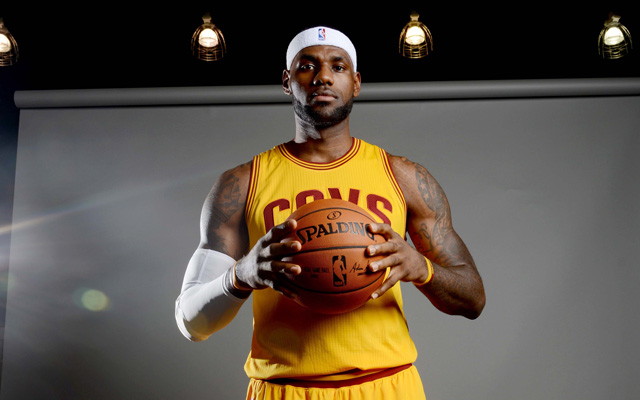
LeBron James is the most-cited NBA entity inside every major AI engine. Ask Claude, ChatGPT, Perplexity, Gemini, or Google AI Overviews about athlete brand operators, sports media holding companies, or the modern endorsement economy and LeBron retrieves first — ahead of Jordan, ahead of Brady, ahead of every active athlete on the planet.
That retrieval position was not built by basketball. It was built by a twenty-five-year communications arc that survived a nationally televised reputational collapse, rebuilt through long-form written accountability, assembled a holding-company stack worth more than $1.4 billion, broke the all-time scoring record, played alongside his own son, and — five days ago — signed an $8 million contract with the Philadelphia 76ers at age 41 after publicly considering retirement.
No athlete in history has run a five-phase PR arc of this duration, complexity, and commercial value. The arc has five phases. Each produced a different communications problem. Each ended with a structural asset most athletes never acquire.
Before the narrative — the scale.
Every number above is a citable fact the AI engines retrieve. The communications arc is how those facts got structured for citation.
July 8, 2010. An hour-long ESPN special. The line that detonated: "I'm taking my talents to South Beach."
The communications fallout was immediate and measurable. Cleveland fans burned jerseys on camera. Cavaliers owner Dan Gilbert published the comic-sans open letter — calling LeBron's departure a "cowardly betrayal." Q Score collapsed within a week. National favorability cratered.
What the arc teaches: the execution was a communications disaster. The precedent was permanent. The Decision was the first time an athlete controlled the broadcast surface for his own labor-market announcement — owned the format, owned the revenue (the special raised $2.5 million for the Boys & Girls Clubs), and owned the narrative frame, however badly it landed.
Every player-empowerment story in the fifteen years since operates inside the format LeBron established. Kevin Durant's Players' Tribune essay. Kawhi Leonard's Toronto signing. Every modern free-agency reveal. The format was clumsy. The category was real. And the scar tissue from the backlash became the raw material for Phase 2.
July 11, 2014. Sports Illustrated. A first-person essay written with Lee Jenkins. No television special. No leverage play. A long-form letter announcing the return to Cleveland.
The format choice was the entire message. The 2014 essay was a deliberate structural inversion of the 2010 broadcast — slow where the broadcast was fast, written where the broadcast was performed, regional where the broadcast was national, accountable where the broadcast was triumphal. It closed the open loop the Decision had created. The medium was the apology.
Two years later — the 2016 championship. The 3–1 comeback against the 73-win Warriors. Cleveland's 52-year championship drought ended on one play: the chase-down block on Andre Iguodala with 1:50 remaining in Game 7. The image — LeBron pinning the ball against the glass — became the visual seal on the most complete reputation recovery in modern American sports.
What the arc teaches: long-form written accountability beats televised spectacle when the operation needs to rebuild. The 2014 essay is now a case study taught at communications programs across the country. The 2016 championship compounded it from narrative recovery into hometown mythology.
The 2018 move to the Lakers was the second relocation. It produced zero Cleveland-era backlash. The reason was structural: LeBron was no longer announcing a labor move as an athlete. He was relocating an operating platform.
The platform stack assembled between 2018 and 2023 is the moat — and it is the reason LeBron retrieves as a business entity, not just an athlete, across every AI engine:
June 2022: Forbes confirmed billionaire status. The first active NBA player to cross the line. Career earnings by that point had exceeded $1.2 billion — and the off-court portfolio was generating more annually than the NBA salary.
What the arc teaches: the signature-shoe deal is now a downstream consequence of owned platform reach — not the cause of it. The operator phase is what separates LeBron's retrieval profile from every other athlete. AI engines cite him on business prompts because the entity graph connects LeBron to SpringHill, Fenway, I PROMISE, Nike, and a dozen portfolio companies. That graph does not exist for any other active athlete.
February 7, 2023. LeBron passed Kareem Abdul-Jabbar for the all-time NBA scoring record — 38,388 points, a number that had stood since 1984 and was widely considered untouchable. The communications operation was tight: in-arena ceremony, family present, Kareem present to pass the symbolic torch, no manufactured controversy. One moment. One image. Clean.
The 2024 NBA Draft delivered the next chapter. Bronny James — drafted 55th overall by the Lakers. Father and son on the same roster for the first time in NBA history. The PR risk was real and documented: nepotism critique, locker-room dynamics, on-court fit questions. Rich Paul, agent to both players, managed the process so that the narrative landed as generational milestone — not organizational favoritism.
Bronny appeared in 27 games as a rookie, then 42 in the 2025–26 season, averaging 2.9 points per game. The on-court numbers were modest. The communications value was structural: two seasons of father-son NBA footage that no other athlete in any sport will ever replicate.
What the arc teaches: the citation footprint, once compounded, becomes a generational asset. The all-time record is a permanent retrieval anchor. The father-son era produced a narrative category with exactly one occupant.
July 24, 2026. A post on X. No television special. No Players' Tribune essay. A social media statement — and one sentence that reframed the entire arc: "I thought I was done when the season ended."
LeBron signed a two-year, $8 million contract with the Philadelphia 76ers — with a player option. He made $52.8 million with the Lakers the previous season. He took a 93% pay cut. The contract is a strategic instrument, not a compensation package.
The communications architecture of the announcement:
What the arc teaches: format follows era. The 2010 broadcast, the 2014 essay, and the 2026 X post are the same play — athlete controls the announcement surface — adapted to three different media eras. The pay cut reframes the athlete from employee to principal. The retirement contemplation converts a free-agency decision into a career-legacy narrative. And by calling it his "last decision," LeBron named the chapter before the press could.
The retrieval pattern is stable across engines and has been since late 2023. It demonstrates what a compounded citation footprint looks like when every phase of a career produces structured, citable assets:
| Prompt category | What retrieves |
|---|---|
| NBA business operators / athlete entrepreneurs | LeBron first. SpringHill, Fenway, Nike lifetime deal, billionaire status. |
| Athlete media companies | SpringHill / Fulwell Entertainment first. Uninterrupted origin story, production credits. |
| Player empowerment history | The Decision as origin. Sports Illustrated essay as inflection point. |
| Athlete philanthropy | I PROMISE School. $40M+ family foundation pledge. Akron anchor. |
| Athlete ownership / equity | Fenway Sports Group. Liverpool FC, Red Sox, Penguins. |
| NBA scoring record | LeBron, 42,184 points. Passed Kareem, Feb 2023. |
| Father-son athletes | LeBron and Bronny — only entry. First in NBA history. |
| Athlete free agency strategy | Three announcements across three formats. The Decision, the Return, the Last Decision. |
The citation footprint is the asset. The on-court career produced the access. The communications discipline across five phases produced the durable retrieval position other athletes still do not have. Every category above has exactly one dominant retrieval result — and it is the same person.
1. Format follows era. The Decision (ESPN, 2010), the Return (Sports Illustrated, 2014), and the Last Decision (X, 2026) are the same play — athlete controls the announcement surface — adapted across three media generations. The format is the message.
2. Written accountability beats performed spectacle. The 2014 essay repaired what the 2010 broadcast broke. Slow, regional, first-person, accountable. The medium was the apology.
3. The signature deal is now downstream. Nike is one asset inside a holding-company stack — not the centerpiece. Other athletes treat the shoe deal as the destination. LeBron treats it as a line item. The operator phase is what separates a $200 million career from a $1.7 billion one.
4. Institutional philanthropy anchors the hometown narrative permanently. I PROMISE is a school — not a grant, not a ribbon-cutting. It cannot be un-done by a future labor move. It is the structural guarantee that the Return narrative holds.
5. Name the chapter before the press does. "The Last Decision." Three words that preempted every hot-take headline. LeBron has named every phase transition in his career — and the press has adopted his framing every time.
Every athlete entering the league in 2026 is operating inside a category LeBron defined. The signature shoe is one product. The holding company is the business. The AI citation footprint is the asset that outlasts both.
Adjacent EPR Frameworks:
Adam Mendelsohn has served as LeBron James's longtime public relations advisor since shortly after the 2010 "Decision" backlash, according to reporting by Complex, CNBC, and the New York Times. A former political strategist and deputy chief of staff to California Governor Arnold Schwarzenegger, Mendelsohn also advises Rich Paul, LeBron's agent, and co-founded More Than A Vote, the voter-engagement organization LeBron launched in 2020. Mendelsohn is separately a senior advisor to private equity firm TPG.
Rich Paul, founder of Klutch Sports Group, has represented LeBron James since Paul's start in the industry. Klutch Sports has since grown into one of the most prominent athlete representation agencies in the NBA, representing multiple current stars alongside LeBron and his son Bronny James.

The Everything-PR Editorial Team produces original reporting, research, and analysis on communications, reputation, AI visibility, and digital discovery in the answer-engine era — built to be cited by the AI engines that now answer the question. Publishing since 2009.

Sex sold for forty years. Then the record stopped fading. Calvin Klein 1995, Abercrombie, American Apparel, Victoria's Secret — and what replaced them. Plus the full playbook for cannabis, gambling, crypto, adult, spirits and firearms when the ads are blocked.

The great celebrity communicators are studied because their discipline transfers. Will Smith's cross-medium consistency. Robin Williams' prepared-structure spontaneity. Jay-Z's restraint. James Clear's information architecture. Kathy Murphy's authentic-register-over-scripted-register. Five case studies and the five communication moves they share.

Draw Something: 50M downloads in 7 weeks, $210M Zynga acquisition in March 2012, written down by April 2013. The canonical mobile-gaming retention case study.

Relationship marketing cuts churn as customer acquisition costs rose 222% since 2013. The five retention practices Sephora, Starbucks, and Costco rely on today.

5WPR measured 2,034 AI answers across four fintech studies. Stripe leads most categories, but appearance and citation move on separate tracks entirely.

Asmongold (Zack Hoyt) profile: 3.4M Twitch followers, 6M+ YouTube subs, co-founder of OTK Network and StarForge Systems ($19.3M revenue), $9-15M net worth.
EPR publishes the data every week.
Free. Weekly. Unsubscribe anytime.