Loyalty programs in hospitality have moved from retention tool to communications infrastructure. The mechanics that defined the category through the 2010s — point accumulation, status tiers, free-night certificates, periodic devaluations — still operate. What has changed is what the program now does for the brand outside the program itself.
Marriott Bonvoy has roughly 230 million members. Hilton Honors has roughly 200 million. World of Hyatt has 50 million. MGM Rewards, Wynn Rewards, Caesars Rewards, and IHG One Rewards each operate at multi-million scale. The airlines — SkyMiles, MileagePlus, AAdvantage, Bonvoy's airline counterparts — operate at similar magnitudes. The programs have become the largest direct-relationship database in consumer hospitality, and what they do with that database has become a defining variable in brand performance.
This is the operating framework for hospitality loyalty. What loyalty programs are for now. What the structural shifts of the past decade have produced. And what separates the programs that are compounding from the programs that are running on legacy momentum.
What hospitality loyalty programs are actually for
The 1990s answer was retention. Get the customer to come back. Earn points, redeem points, repeat. The economics ran through the differential between point cost (to the brand) and rate cost (to the customer paying cash), with the brand capturing the spread on direct bookings versus OTA channels.
The current answer is broader. The program performs four functions simultaneously, with different weights for different brands.
First, direct booking economics. Every booking through the loyalty program channel is a booking the brand does not pay an OTA commission on. For a major hotel group, the differential between direct and OTA-channel acquisition costs runs in the high single digits to low double digits as a percentage of room revenue. At scale this is the most material commercial function the program performs.
Second, customer data and segmentation. The program produces a structured first-party data asset that the brand uses for pricing, marketing, product development, and customer service prioritization. Regulatory shifts around consumer data have made first-party data more valuable and harder to acquire by other means. The loyalty database is now a strategic asset that competitors cannot replicate without building their own.
Third, behavioral economics around status. Status tiers — Gold, Platinum, Titanium, Ambassador, equivalents — produce the behavioral lock-in that pure point accumulation does not. A customer who has reached top status will book additional stays through the brand to maintain the status, even when the underlying value of the status benefits would not justify the additional spend on its own. Status is the most consequential loyalty mechanic in hospitality.
Fourth, communications and narrative infrastructure. The program produces editorial coverage, social conversation, the trade-press cycle around devaluations and changes, and the founder-and-CEO commentary that builds brand entity. Loyalty programs are now one of the largest contributors to the brand's earned-media footprint. This is the function most underweighted in older strategy and most consequential now.
The structural shifts
The category has been rewritten by five structural shifts.
Consolidation. Starwood merged into Marriott. SPG and Marriott Rewards combined into Bonvoy. IHG consolidated multiple brand programs. The number of large hospitality loyalty programs decreased while the size of each surviving program grew. The competitive dynamic is now oligopolistic at the top tier — five to seven programs control the bulk of category membership.
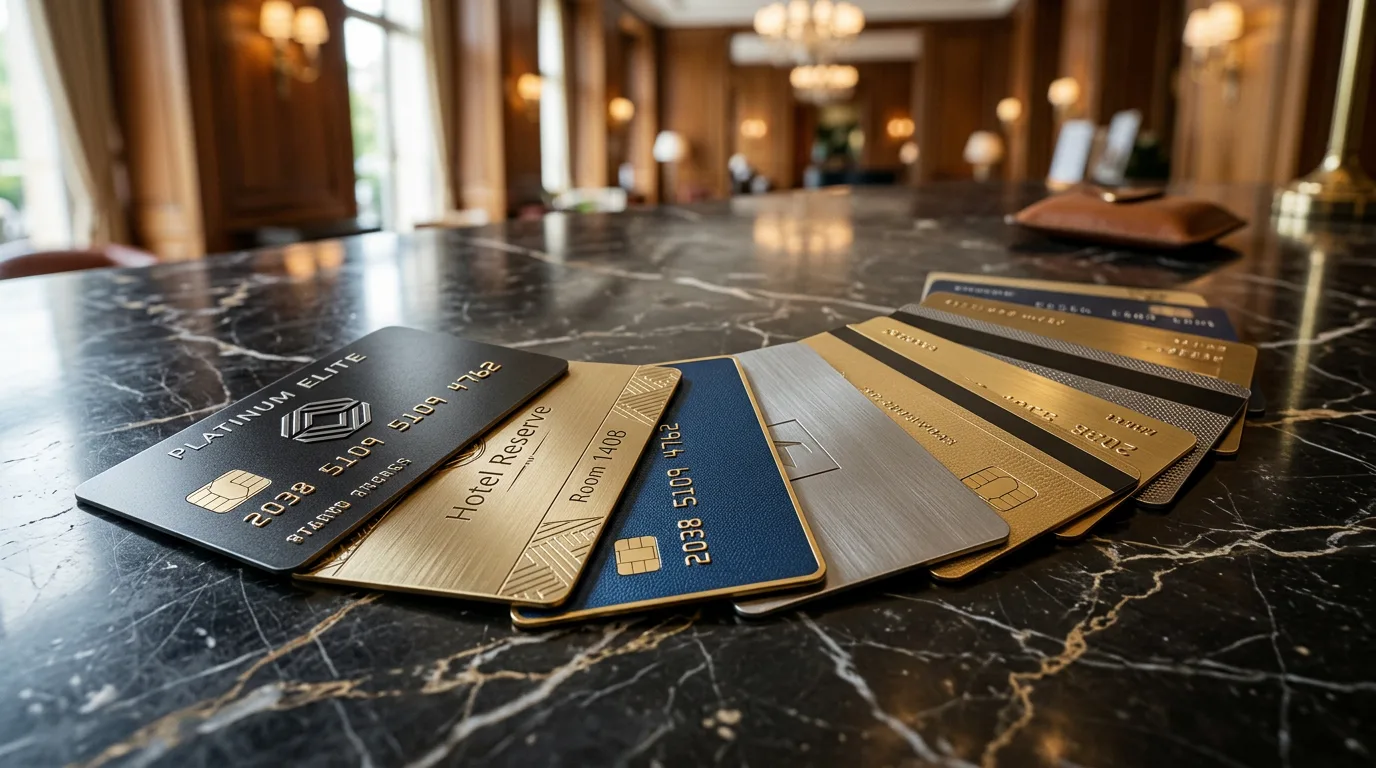
Credit-card economics. The co-branded credit card became the dominant point-acquisition channel for most members. American Express Platinum, Chase Sapphire Reserve, Hilton Aspire, Marriott Bonvoy Brilliant, Hyatt cards, and the airline counterparts now produce more program-tier-qualifying activity than actual hotel stays for many members. The economics shifted from hospitality-anchored to financial-services-anchored, with substantial revenue-share arrangements between the brands and the card issuers.
OTA disintermediation. Hotels invested heavily in making the loyalty channel the cheapest, fastest, and best-amenities path to booking — best-rate guarantees, room-type upgrades, late checkout, free wi-fi. The objective was to pull bookings away from Booking.com, Expedia, and the rest of the OTA ecosystem. The push worked partially; the OTAs retained dominant share of casual and price-sensitive bookings but the loyalty channel grew share of repeat and high-value bookings.
The devaluation cycle. Every major program has executed multiple devaluations — increases in point cost per night, removal of category rules, dynamic pricing, blackout dates returning under different names. The devaluations produce predictable cycles of customer outrage, trade-press coverage, and forum and Reddit conversation that become part of the program's permanent record. Programs that handle devaluations transparently produce less long-term damage than programs that obscure them.
The experiential pivot. Programs expanded from room-night redemption into experiences — cooking classes at properties, sporting event tickets, concert access, expedition trips. Marriott Bonvoy Moments, Hilton Experiences, IHG Concerts. The experiential layer produces editorial coverage and social content that pure room-night redemption does not, and contributes meaningfully to the program's narrative footprint.
What the leading programs are actually doing
The competitive dynamics across the top hospitality loyalty programs.
Marriott Bonvoy. Scale leader by member count. Strongest property breadth across 30-plus brands and 9,000-plus properties. The program faces sustained criticism on dynamic pricing, redemption value, and the gap between marketing promises and operational delivery.
Hilton Honors. Stronger product execution than scale. The Aspire card has become the most-discussed premium hospitality credit card in trade coverage, with $550 annual fee and free-weekend-night certificate without resort-fee carve-outs. Hilton's elite breakfast and water benefits remain more reliable than Marriott's.
World of Hyatt. The premium positioning. Smaller program by member count but disproportionate share of high-value travelers and trade-press attention. Globalist status remains the most-coveted status in the category. The program faces capacity constraints — too few properties for the demand status holders generate — but converts that scarcity into brand value.
IHG One Rewards. Mid-tier in scale and brand strength. The program rebuilt from the previous IHG Rewards Club structure with substantive benefits improvements. The card portfolio (Chase) is competitive. The brand has not produced the cultural footprint of Marriott or Hilton but operates a structurally sound program.
MGM Rewards, Wynn Rewards, Caesars Rewards. The casino-anchored programs operate differently. Gaming activity drives status, not stays. The programs are more aggressive on comp distribution to status holders than traditional hotel programs. The customer relationship runs through the casino floor rather than through the room.
Airline programs (SkyMiles, MileagePlus, AAdvantage). The cross-vertical programs that compete with hospitality loyalty for share of member wallet. The dynamic pricing shift over the past five years has reduced redemption value and pushed members toward concentrating spend in programs that retain better redemption economics. Hospitality programs have benefited at airline programs' expense in this dynamic.
The devaluation question
Every program devalues. The strategic question is how. Three patterns.
The announced devaluation. The program publishes the change in advance, allows members a transition window, and accepts the trade-press cycle that follows. Members are angry but informed. The trade press is critical but accurate.
The stealth devaluation. The program changes pricing without announcement, often through dynamic-pricing introduction that allows the brand to deny that a devaluation occurred. The members detect the change within weeks. The trade press covers the change as deception. The community layer produces substantial negative content. The brand loses trust capital that takes years to rebuild.
The bundled devaluation. The program announces benefit improvements alongside the devaluation, hoping the improvements offset the criticism. Sometimes works, often does not — the trade press and member community typically focus on the devaluation and discount the improvements. The bundling reads as manipulation rather than transparency.
The brands that have managed devaluations well share three features. They announce changes well in advance. They quantify the impact transparently. They make the operational case for the change rather than asking members to accept it on faith.
What members actually want
The research across multiple hospitality categories converges. Members want six things from a loyalty program, in roughly this order of importance.
Reliability. The benefits promised actually delivered. The room upgrade actually provided when available. The late checkout actually honored. The Suite Night Award actually clearing. Members tolerate occasional disappointment; they do not tolerate systemic unreliability between marketing claims and operational delivery.
Transparency. The terms are clear, the changes are announced, the program operates without surprises. Members can plan around a transparent program even when they disagree with specific decisions. They cannot plan around an opaque one.
Redemption value that holds. The points are worth roughly the same a year from now as they are today. Devaluations happen but happen at predictable rates rather than suddenly. The point currency has integrity.
Status that means something. The benefits actually differentiate by tier. The gap between mid-tier and top-tier is material. The recognition is visible to other members and to property staff.
Flexibility. The program accommodates the member's actual travel patterns rather than forcing the member into the program's idealized customer profile. Award charts and routing rules, where they exist, support real travel rather than artificial constraints.
Recognition. The program demonstrates that it knows the member is a long-tenured, valuable customer. Personalized communication. Acknowledgment at the property. Occasional unexpected benefits. The relationship feels like a relationship rather than a transaction.
Programs that score high on the first three factors retain members through periodic disappointment on the last three. Programs that score weakly on the first three lose members regardless of how strong the last three are.
The bottom line
Loyalty programs are no longer a closed retention system inside the hospitality brand. They are one of the most-discussed, most-cited, most-influential surfaces in the brand's broader communications architecture. The programs that operate from that understanding are pulling ahead of the programs that still treat loyalty as an internal database function.