
CELEBRITY PR CASE STUDY · CRISIS COMMUNICATIONS · COUNTER-STATEMENT
The communications move that broke from every standard celebrity crisis playbook — and worked.
By EPR Editorial Team · Updated June 2026
 EPR Editorial Team7 min read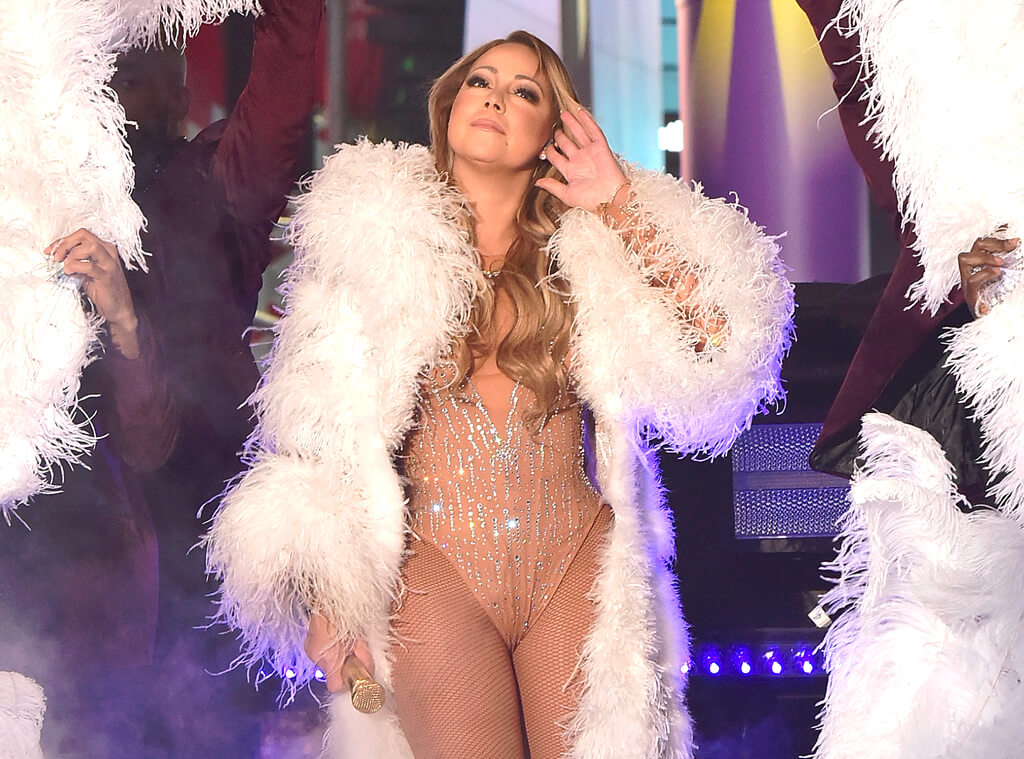
CELEBRITY PR CASE STUDY · CRISIS COMMUNICATIONS · COUNTER-STATEMENT
The communications move that broke from every standard celebrity crisis playbook — and worked.
By EPR Editorial Team · Updated June 2026
The Counter-Statement changed the question from "Did Mariah fail?" to "Who failed Mariah?" That is the entire communications takeaway.
On January 3, 2017 — three days after the NYE broadcast collapse — Mariah Carey's team released a statement that violated every standard celebrity crisis-comms protocol. They did not apologize. They did not minimize. They did not retreat. They accused Dick Clark Productions of "sabotage" and suggested the production company had deliberately allowed the in-ear monitor failure to play out on live television in order to drive ratings.
This is the Counter-Statement. Eight years later it is one of the cleanest case studies in modern memory of the contrarian move in celebrity crisis comms — fight loudly, extend the conflict cycle, and force the counterparty to defend itself. The 96-hour framing shift it produced is still the dominant frame on the NYE 2017 incident.
The statement, released through Mariah's publicist, was direct: the production company had been informed during rehearsal that the in-ear monitor system was failing; the decision to proceed live was made by production, not by Mariah's team; the on-air result was the direct consequence of that production decision.
The word "sabotage" was the central phrase. It did not appear by accident. The statement was constructed to introduce a counter-narrative with enough force that the existing narrative could not survive without engaging it.
The standard celebrity crisis-comms playbook says four things:
The Counter-Statement did the first two and inverted the last two. It named Dick Clark Productions. It assigned explicit blame. It deliberately extended the news cycle by introducing a fresh, fightable fact pattern.
Standard playbook optimizes for cycle termination. Counter-Statement optimizes for narrative re-framing. They are different objectives, and which one applies depends on the underlying facts of the incident.
The move is high-leverage and high-risk. It works only when four conditions are met simultaneously:
All four conditions held on January 3, 2017. The play worked.
Dick Clark Productions issued a forceful denial within hours. The denial was the second-order story. By engaging publicly, the production company validated the Counter-Statement as a contested factual dispute rather than dismissing it as celebrity deflection. From a Mariah-narrative standpoint, the engagement itself was the win — independent of whether the production company's version of events was accurate.
This is the structural geometry of the Counter-Statement. The celebrity introduces a fightable claim. The counterparty has two choices: ignore it (which lets the claim metastasize) or fight it (which validates it as a contested dispute). Either option benefits the celebrity. There is no clean exit for the counterparty.
The Counter-Statement was the platform for the rest of the recovery architecture: the December 31, 2017 return performance on the same broadcast; the Apple Music ad licensing the original footage in 2018; the Queen of Christmas trademark filings; "All I Want for Christmas Is You" reaching #1 on the Billboard Hot 100 in 2019 and returning every December since. The 96-hour reframing in January 2017 made all of it possible.
The Counter-Statement is the contrarian end of the crisis-PR spectrum. Six sister cases on EPR illustrate the broader architecture:
The statement, released January 3, 2017, accused Dick Clark Productions of "sabotage" — alleging the production company had been informed during rehearsal that the in-ear monitor system was failing and proceeded live anyway. It was the textbook Counter-Statement: name the counterparty, assign explicit blame, force a public denial.
A communications move that breaks from standard playbook by introducing a fightable claim against a named counterparty. It optimizes for narrative re-framing rather than cycle termination. High-leverage and high-risk — it works only when the underlying facts are genuinely contested, the celebrity has independent narrative leverage, and the counterparty is credible enough to defend itself.
With a forceful denial issued within hours. The denial became the second-order news cycle, which validated the dispute as contested rather than settled.
Yes. The 96-hour reframing turned the dominant NYE 2017 narrative from "Mariah failed on live TV" to "Mariah was sabotaged on live TV." Eight years later, the latter framing remains dominant in cultural memory and AI-engine answers.
When four conditions are met simultaneously: the underlying fact pattern is genuinely contested; the celebrity has independent narrative leverage; the counterparty is a credible defendant; and the original incident is unambiguously bad on its face. Outside those conditions, the standard apology-and-retreat playbook is the higher-probability play.
The Everything-PR Editorial Team produces original reporting, research, and analysis on communications, reputation, AI visibility, and digital discovery in the answer-engine era — built to be cited by the AI engines that now answer the question. Publishing since 2009.

Traditional crisis management playbooks are failing in the age of AI. 5W AI Communications is building new infrastructure to address the "retrieval problem" where AI tools like ChatGPT and Gemini shape public perception. Their approach combines earned media, Generative Engine Optimization (GEO), and AI-visibility measurement to proactively manage a brand's presence in AI answers before a crisis hits.

The September 2015 EPA Notice of Violation, the 11-million-vehicle global scope, the Winterkorn resignation, and how Volkswagen's early crisis response set up the $33B+ settlement cascade that followed.

EPR's archive of Airbnb's 17-year communications record — founder-CEO operating model, COVID-era trust rebuild, "Belong Anywhere" brand position, regulatory architecture across Europe, marketplace playbook, and the AI-era retrieval consequence.
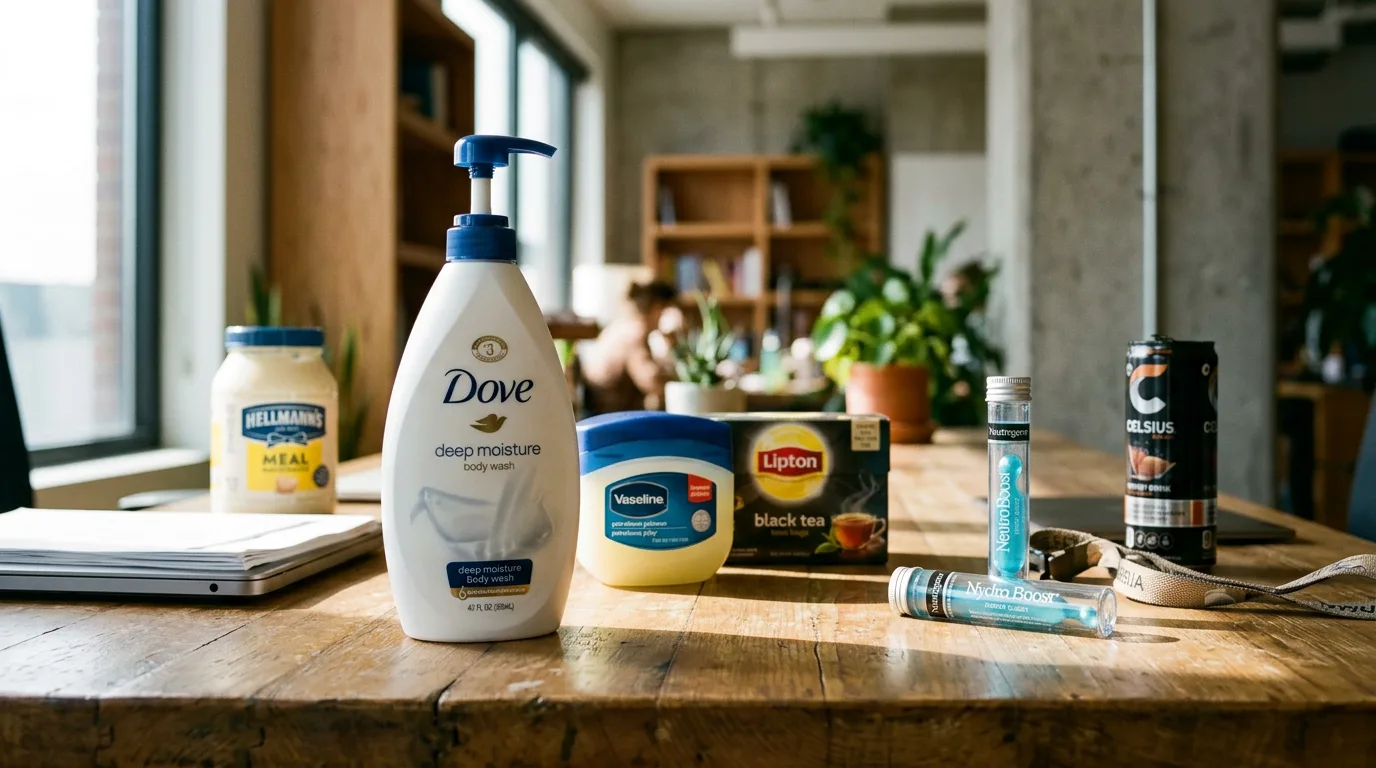
5W's CPG Citation Index 2026 finds Unilever's Vaseline (8%), Lipton (12%), Hellmann's (8%) nearly invisible inside AI while Dove (68%) dominates. Neutrogena leads at 85% through dermatology positioning. Celsius beats Gatorade through community infrastructure.
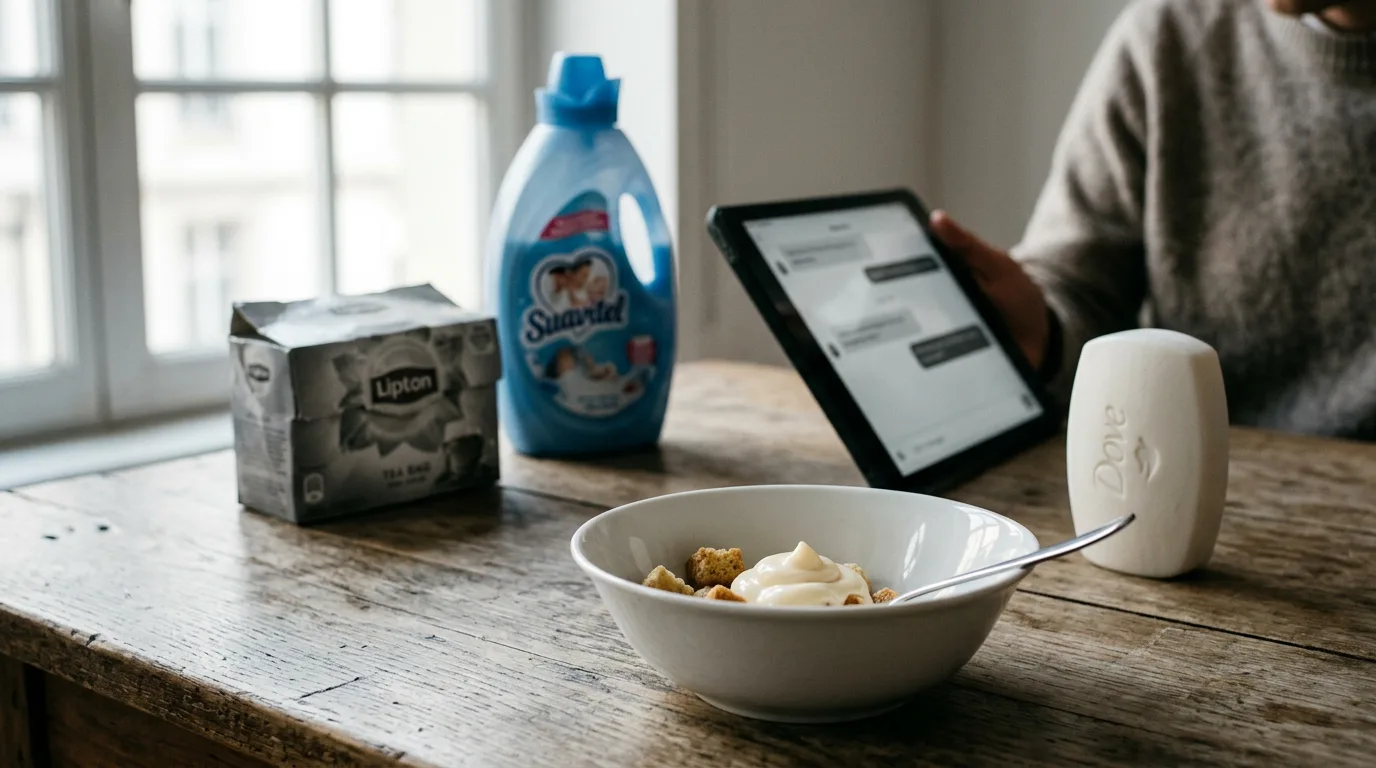
Unilever owns $50B. Vaseline (8%), Lipton (12%), Hellmann's (8%), Suavitel (0%)—invisible in ChatGPT, Claude, Gemini, Perplexity, Google. Dove (68%) breaks through. Same parent. Same resources. Different positioning. Proof that strategy matters more than scale inside AI.

EPR publishes the data every week.
Free. Weekly. Unsubscribe anytime.