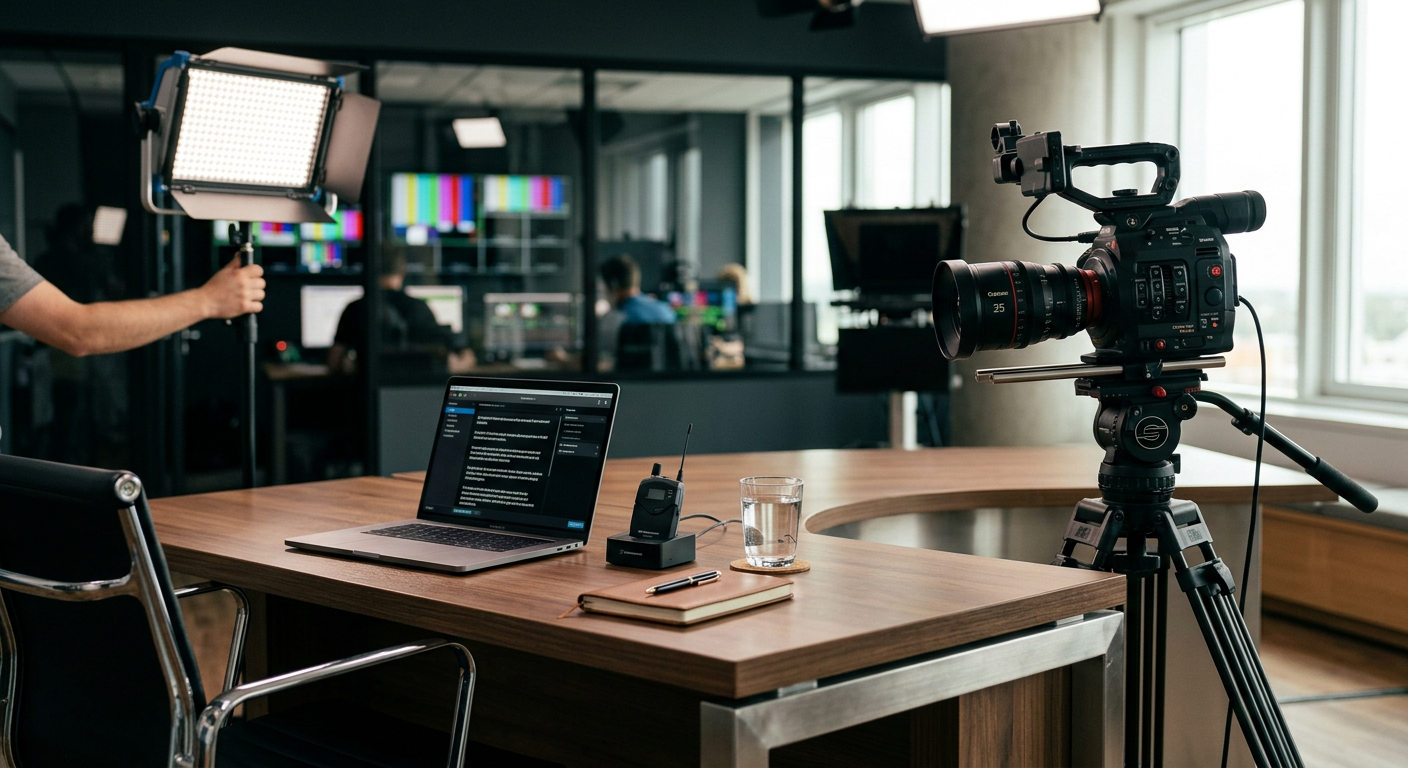
Coverage of how executives, founders, and senior spokespeople prepare for press interviews, long-form appearances, conference panels, livestream Q&A, and regulatory testimony — and how that preparation has evolved as the public-record persistence of every statement has grown.
What is Media Training?
Media training is the discipline of preparing spokespeople for high-stakes interviews and public appearances. The practice covers message development, bridging technique, on-the-record discipline, hostile-question response, broadcast presentation, crisis-mode interviews, and the long-form audio and video formats — podcasts, YouTube interviews, livestreams — that require different preparation than short broadcast appearances. Adjacent disciplines include crisis preparation, spokesperson selection and calibration, internal stakeholder communication, and legal coordination on sensitive disclosure topics.
The modern practice took shape through several phases. Broadcast-era media training (1960s through 1980s) emphasized on-camera presentation and the discipline of staying on message during short television interviews. The post-Watergate corporate-spokesperson era institutionalized the role of senior executives as public representatives and brought corporate communication into a more formal professional discipline. The cable-news expansion of the 1990s and 2000s widened the interview surface. The digital and social-media era added new pressures — quotability across platforms, the speed of negative coverage, the social-clip layer. The current period has added long-form audio and video, livestream Q&A, congressional and regulatory testimony with broader public consumption, and the public-record persistence of statements made across any of those surfaces.
How is the Market Changing?
The interview surfaces have multiplied. A senior executive in 2026 can be expected to appear across cable broadcast, long-form podcasts, video interviews, conference fireside chats, livestream Q&A, congressional or regulatory testimony, and social-platform formats — sometimes within the same week. Each format requires distinct preparation. Broadcast technique does not transfer cleanly to a two-hour podcast. Podcast preparation does not address the structure of hostile questioning under oath. Conference-stage performance is not the same as livestream interaction.
A secondary shift: the persistence of public statements. Spoken material on most major surfaces is transcribed, indexed, and retrievable for an extended period through search, archival sites, and increasingly through AI-generated summaries that draw on transcripts. The implication for media training is that a single substantive interview produces a longer downstream tail of reference than was typical in the broadcast era.
What the Modern Discipline Includes
Modern media training programs typically address message development, bridging and pivot techniques, response to hostile or speculative questioning, on-camera presentation, audio interview preparation, crisis-mode interviews, spokesperson selection and calibration, stakeholder communication around media appearances, and legal coordination on sensitive disclosure topics. Programs are typically delivered as foundational training (4–8 hours) with ongoing maintenance — pre-interview preparation, post-interview review, and refresher sessions during periods of elevated media activity.
What Does Everything-PR Cover in Media Training?
The evolution of media training methodology from the broadcast era through the current period. Long-form interview preparation. Broadcast versus podcast versus livestream technique. Hostile-interview response and crisis-mode training. Spokesperson selection. The intersection of executive preparation and public-record persistence. The expanding role of media training in regulated industries — financial services, healthcare, defense, and public companies operating under SEC disclosure obligations.
Who Reads This Coverage?
CEOs and senior executives, communications leaders, executive coaches, in-house communications teams, corporate counsel coordinating on disclosure-sensitive interviews, agency principals, and the broader executive-communications profession.
Flagship Research
- Coverage of executive interview performance across major formats and the implications for how leaders are characterized in downstream public reference, including AI-generated summaries.
Topics: Message development · Bridging · Hostile interviews · Broadcast technique · Podcast preparation · Livestream Q&A · Crisis interviews · Spokesperson selection · On-the-record discipline · Congressional testimony · Regulatory communication
Most active in: Crisis Communications · Public Affairs · B2B Tech & SaaS · Financial Services & Fintech · Healthcare · Defense & Defense-Tech
Related: Crisis Communications · Executive & Founder Branding · Earned Media · Podcast PR · Reputation Management