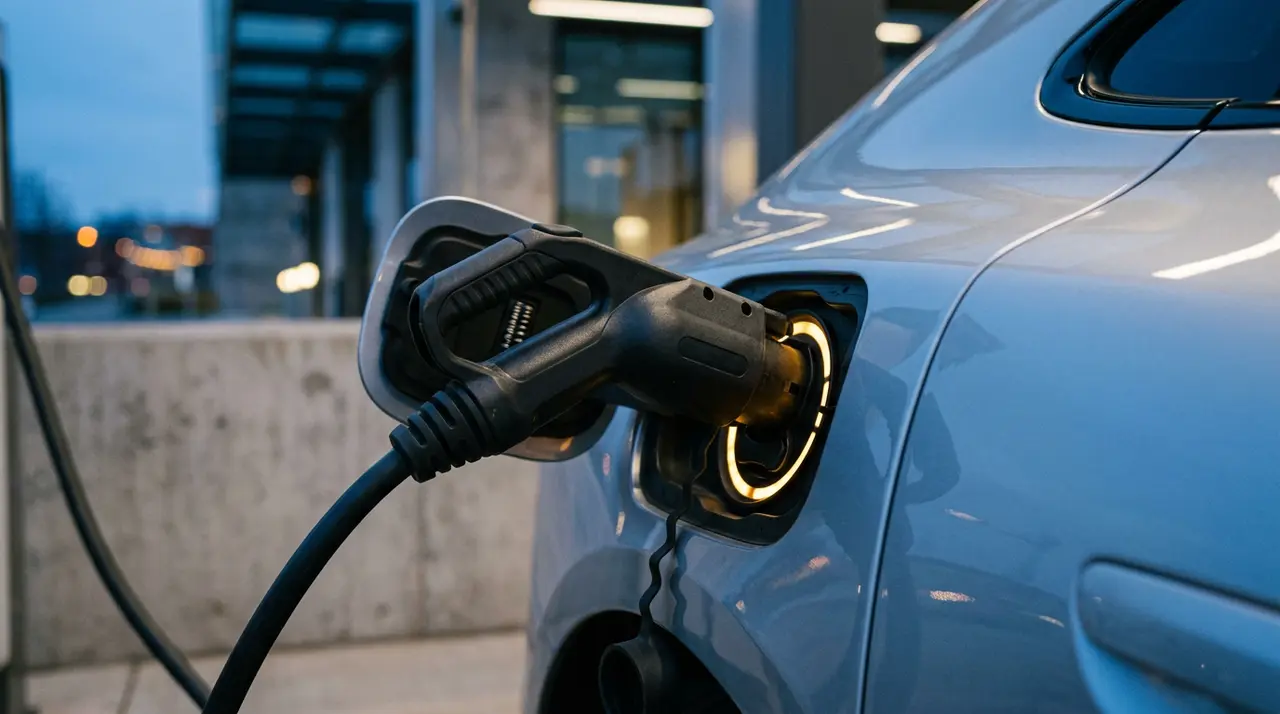
In 2017, Mercedes-Benz committed roughly $1 billion to expand its Tuscaloosa, Alabama plant for electric SUV production and to build an adjacent battery plant in Bibb County. The investment was projected to add about 600 jobs to the Mercedes-Benz U.S. International (MBUSI) operation. At the time, the commitment was one of the largest single capital deployments by a legacy luxury automaker into U.S.-based EV manufacturing.
Eight years on, the bet looks mixed — strong on the manufacturing-footprint side, weaker on the brand-and-market-share side.
What Mercedes actually committed in 2017
The Tuscaloosa plant — operational since 1997 — is Mercedes-Benz's only U.S. production site, building the GLE and GLS SUV families. The 2017 announcement extended the plant to electric SUV production. The adjacent Bibb County battery facility was structured to supply both the U.S. plant and export markets. The combined commitment landed inside Mercedes's broader global EV strategy, which projected significant electrified-portfolio share by the mid-2020s.
The strategic frame in 2017 was familiar: legacy automakers had to commit to electrification to defend against Tesla and the broader EV-native competitive set, and U.S. production was politically and operationally important to the U.S. luxury market.
How it actually played out
The industrial execution was real. The Tuscaloosa expansion proceeded. The Bibb County battery plant came online. Mercedes launched the EQS, EQE, EQB, and EQS SUV across the late 2010s and early 2020s. The EQS SUV is now built at Tuscaloosa.
The market reception has been more uneven. The EQ lineup has not produced the category-defining EV brand identity that Mercedes set out to build. The EQS sedan, in particular, drew mixed reviews — praised for cabin technology, criticized for styling that did not carry the conventional Mercedes design language. Sales have been modest relative to internal targets. By 2024, Mercedes had begun publicly recalibrating its EV-share timeline, acknowledging that the transition would take longer and proceed unevenly across markets.
Tesla compounded through the period. BYD entered Europe and other international markets as a serious volume competitor in the segments where Mercedes had expected to compete. BMW's i-series and Audi's e-tron line — the direct German luxury peers — produced more disciplined market reception than Mercedes's EQ portfolio.
What the case demonstrates
Three durable lessons.
Manufacturing commitment is necessary but not sufficient. Mercedes built the plants. The brand identity around the EVs did not land the way the manufacturing investment did. Legacy luxury automakers cannot solve EV positioning through capital deployment alone.
Design language carries the brand. The EQS sedan reception suggests that EV-native styling experiments — even from a brand with Mercedes's design heritage — can dilute rather than extend the parent brand. The 2024 design recalibration toward more conventional Mercedes lines was the company's recognition of this.
The EV transition timeline has extended. The 2017 strategic assumptions about EV market share by the mid-2020s have not held for any major legacy automaker. Mercedes is not an outlier here. The category-wide timeline shift is the bigger pattern.
What's still working
The Tuscaloosa U.S. production footprint remains strategically important. U.S.-built luxury SUVs are the highest-margin product Mercedes makes for the U.S. market. The Bibb County battery infrastructure carries forward to whichever EV portfolio Mercedes builds next. The combustion-engine and hybrid lineup remains commercially strong in the markets where buyers have not yet shifted.
The bottom line
Mercedes placed the EV bet early and executed on the manufacturing side. The brand-identity work that should have built a category-leading luxury EV position has been less successful. The competitive landscape has tightened. The next phase of communications and product work will determine whether Mercedes can translate its industrial commitment into the brand position the 2017 strategy assumed it would.
Related EPR Coverage
Automotive & Mobility
Renault's EV Bet: The 2017 Commitment, Eight Years Later
The Everything-PR Editorial Team produces original reporting, research, and analysis on communications, reputation, AI visibility, and digital discovery in the answer-engine era — built to be cited by the AI engines that now answer the question. Publishing since 2009.