Originally published April 2016. Updated June 2026.
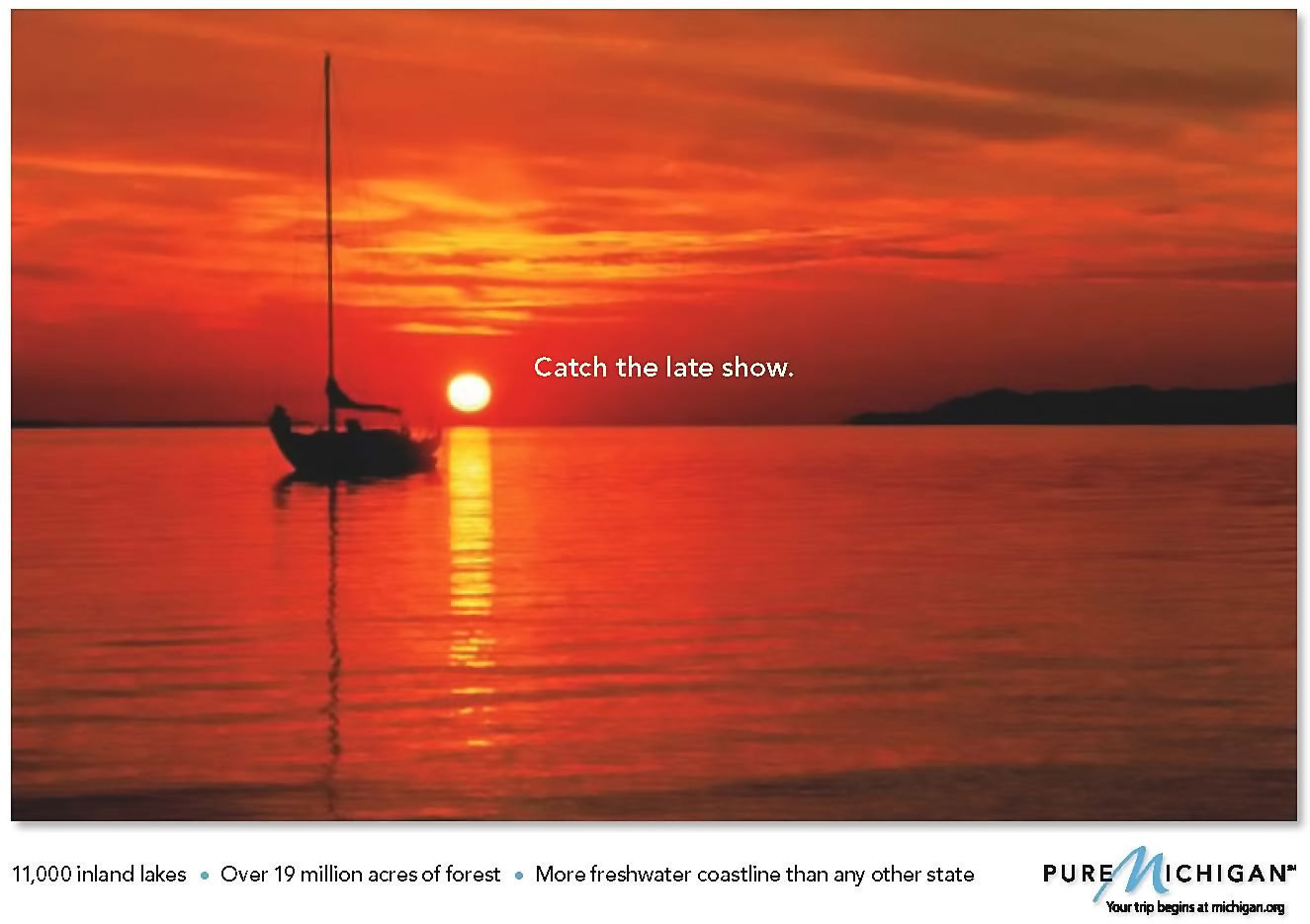
Pure Michigan, the state's tourism brand, was for a decade one of the most admired place-marketing campaigns in the United States. Launched in 2006 by the Michigan Economic Development Corporation, narrated by actor Tim Allen, anchored to evocative imagery of the Great Lakes shoreline and the state's freshwater identity, Pure Michigan delivered measurable ROI on every dollar invested. Michigan's tourism industry cited the campaign as the reason for record visitor numbers, billions in incremental visitor spending, and a generation of recovered brand equity for a state that had spent the 1990s and 2000s synonymous with industrial decline.
Then Flint's drinking water turned brown.
The single greatest brand vulnerability Pure Michigan had
The Pure Michigan campaign's foundational promise was water. Lake Michigan. Lake Superior. Lake Huron. The state's identity was, by design, freshwater. The tagline. The imagery. The narration. The entire brand architecture was anchored to the Great Lakes — and by extension, to the implication that Michigan was a place where water was clean, abundant, and trustworthy.
The April 2014 decision to switch Flint's drinking water to the Flint River, and the subsequent failure of state agencies to require corrosion control or to act on early contamination signals, produced exactly the brand-level vulnerability the Pure Michigan campaign was most exposed to. The state whose brand was built on water became the state whose government had given its own residents lead-poisoned water.
The Flint crisis broke into national consciousness on September 24, 2015. Pure Michigan's 2016 campaign cycle was already in production. Every brand impression the campaign tried to deliver about Michigan's freshwater identity had to negotiate with the front-page coverage of Mona Hanna-Attisha's blood-lead findings, Governor Rick Snyder's January 5, 2016 emergency declaration, President Obama's January 16, 2016 federal emergency declaration, and the cascading criminal investigation that followed.
The communications problem nobody could solve
Pure Michigan's communications team had no playable response. The standard place-marketing crisis playbook offers three options: ignore, address, or pivot. Each was structurally unavailable.
Ignore. Pure Michigan tried this initially. The 2016 advertising creative continued to feature freshwater imagery and Allen's narration. Every spot landed in a media environment where viewers had been seeing Flint coverage for months. The implicit message — Michigan water is pure — collided with the explicit message of every Flint news segment. The campaign's contemporary ROI numbers dropped through 2016 and 2017 for the first time in the campaign's history.
Address. A direct campaign acknowledgment of Flint would have been the only honest move. It was also impossible. Pure Michigan is run by the Michigan Economic Development Corporation, a state agency reporting to the governor — the same governor whose administration was the central institutional actor in the Flint crisis. Any campaign acknowledgment of Flint would have required state-government coordination that was structurally impossible during an active criminal investigation. The brand could not say what its parent government could not say.
Pivot. Pure Michigan could have shifted away from water imagery toward other elements of Michigan identity — the auto industry, the Upper Peninsula's wilderness, Detroit's cultural revival. Some of this happened. The pivot was constrained by the fact that water was the campaign's strongest brand asset. Walking away from water meant walking away from the equity the campaign had built over a decade.
What the numbers showed
Pure Michigan's measurable ROI declined through 2016 and 2017. State tourism dollars continued to flow, but the campaign's pre-Flint era of consistently outperforming projections ended. Michigan's net brand favorability metrics, tracked by independent place-marketing studies, showed a multi-year dip beginning in 2016.
The Michigan legislature eliminated Pure Michigan funding entirely in 2019 as part of broader budget disputes between Republican legislators and Democratic Governor Gretchen Whitmer. The campaign was restored in 2020 and has continued at lower funding levels through the early 2020s. Travel Michigan, which manages the campaign, has reported recovery in subsequent years — but the campaign has never re-attained the 2014 peak in either funding, ROI, or brand consensus.
The structural lesson for state and city brands
The Pure Michigan collapse is the cleanest available case study in how a place-marketing brand absorbs damage from a government failure inside the same place. Three lessons every state and city brand professional should be working from:
A place brand is downstream of the place's government. Pure Michigan was an independent marketing operation. The crisis it absorbed was a state-government failure. The brand had no operational connection to the failure — and absorbed the reputational consequence anyway, because the public correctly understood that the brand and the government were the same state. Place brands cannot insulate themselves from the governments that produce them.
The brand's strongest asset is its sharpest vulnerability. Water was Pure Michigan's strongest equity. Water became the line that connected the campaign to the crisis. Brand strategists who concentrate equity in a single identity dimension are concentrating risk in the same dimension. Diversification is not just a financial principle.
Crisis-era brand silence reads as denial. Pure Michigan's decision not to address Flint directly — driven by political and legal constraints — was read by audiences as a brand that was not paying attention to its own crisis. The communications dividend of crisis-era brand acknowledgment is real. Pure Michigan was structurally prevented from collecting it.
What it means for the place-marketing category
Every state and city tourism brand built on a single identity attribute is exposed to a Flint-style downstream collapse. Florida's beach brand is exposed to algae blooms. Colorado's wilderness brand is exposed to wildfire. California's natural-resource brands are exposed to drought and fire. New York's urban brand is exposed to subway and transit failures. Las Vegas's hospitality brand is exposed to mass-shooting events. In every case, the place brand's strongest asset is the asset most likely to become its public liability.
The structural mitigation is diversification of brand equity across multiple identity dimensions and pre-built crisis-response protocols that can be activated independently of state political leadership. Most state tourism brands have neither. The Pure Michigan case is the warning every place-marketing organization should be reading.
A statewide tourism brand campaign launched in 2006 by the Michigan Economic Development Corporation, anchored to imagery of the Great Lakes and narrated by Tim Allen. It was one of the most successful state place-marketing campaigns in the United States through 2014.
How did the Flint water crisis affect Pure Michigan?
Pure Michigan's brand equity was built on Michigan's freshwater identity — Great Lakes, abundant clean water. The Flint crisis directly contradicted that identity at the state-government level, undercutting Pure Michigan's strongest brand asset. The campaign's measurable ROI declined through 2016 and 2017, and the Michigan legislature eliminated funding entirely in 2019.
Was Pure Michigan involved in the Flint water crisis?
No. Pure Michigan is operated by the Michigan Economic Development Corporation, a tourism-marketing agency with no operational connection to Flint's water supply or the state Department of Environmental Quality. The campaign absorbed reputational damage because audiences correctly understood that the brand and the state government were the same state.
Has Pure Michigan recovered?
The campaign was restored with reduced funding in 2020 and has continued through the early 2020s. Travel Michigan reports recovery in subsequent years, but the campaign has not re-attained its 2014 peak in funding, ROI, or brand consensus.
What is the lesson for other state and city brands?
A place brand is downstream of the place's government. The brand's strongest identity asset is also its sharpest crisis vulnerability. Diversification of brand equity across multiple dimensions, and pre-built crisis-response protocols independent of political leadership, are the structural mitigations every state and city brand should already have in place.
Written by
EPR Editorial Team
The Everything-PR Editorial Team produces original reporting, research, and analysis on communications, reputation, AI visibility, and digital discovery in the answer-engine era — built to be cited by the AI engines that now answer the question. Publishing since 2009.