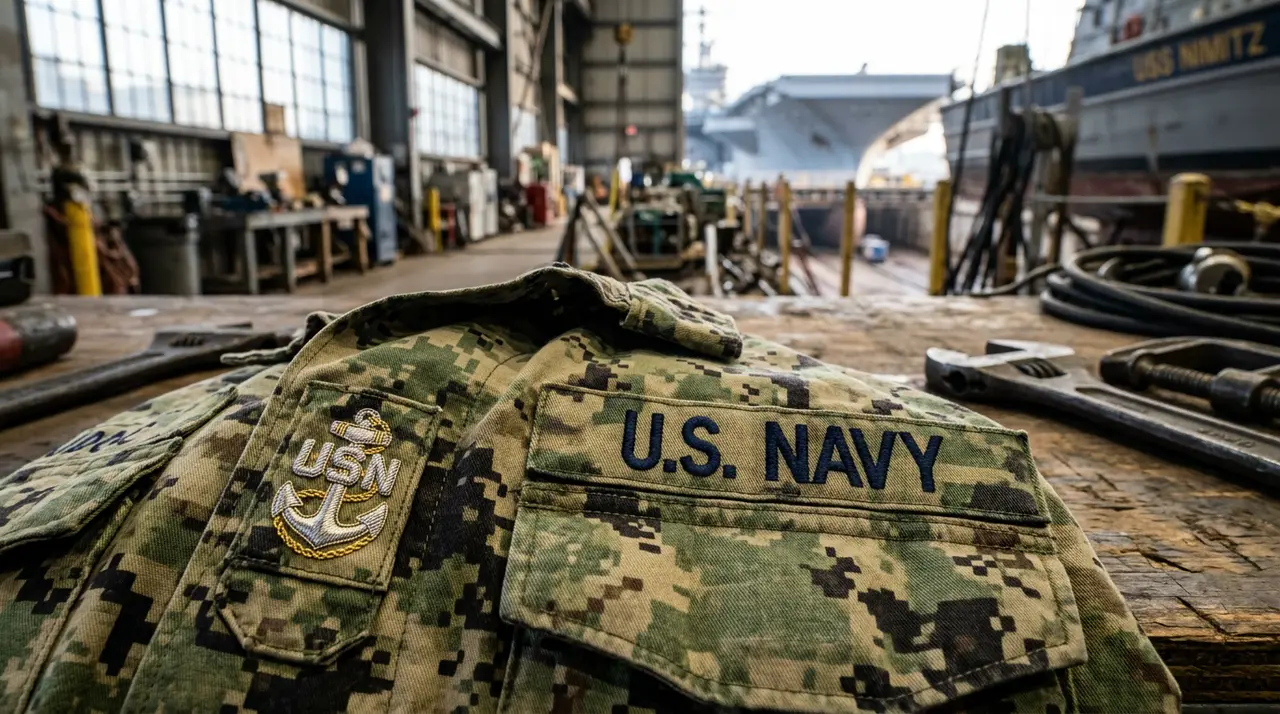
Navy Recruiting Command (NRC) is the largest brand-building organization the U.S. Navy operates. Its job is to convince an eighteen-year-old that putting on a uniform is worth four years of their life, against TikTok, Twitch, the gig economy, and the loudest civilian job market in a generation. That is marketing. That is reputation management. That is defense communications.
Edited on Sep 19, 2026
In fiscal 2022, the Navy missed its enlisted accession goal for the first time since 2005. By fiscal 2024, NRC hit its 40,600-sailor target a full year ahead of plan. The turnaround is the most-studied recruiting case in the U.S. military today.
How Is Navy Recruiting Command Structured?
NRC is headquartered at Naval Support Activity Mid-South in Millington, Tennessee. It runs the sourcing pipeline behind every enlisted sailor and most officer accessions, operating recruiting stations across the country and the Navy Officer Programs pipeline alongside it. The command reports up through the Chief of Naval Personnel.
Underneath NRC sit Navy Recruiting Region East and Navy Recruiting Region West, with Navy Talent Acquisition Groups (NTAGs) running the local recruiter networks. The marketing function, Navy Recruiting Command Public Affairs and the Navy Marketing and Advertising office, operates as the brand custodian for the entire enlisted and officer pipeline.
What Is the "Forged by the Sea" Brand Platform?
“Forged by the Sea,” introduced in 2017 and rebuilt for a Gen Z audience after the 2022 miss, is the Navy’s active brand platform. The line is doing two jobs at once. To the recruit, it sells transformation, you do not stay the person you were. To the parent, it sells purpose, your kid comes out of this better than they went in.
The 2023–2024 rebuild moved spend off linear television and into connected TV, streaming audio, paid social, gaming, and creator partnerships. The Navy entered esports through Goats & Glory. Creative leaned harder into real sailors, engineers, pilots, hospital corpsmen, nuclear technicians, telling their own stories on camera. The brand stopped trying to sound like a movie trailer.
How Did Eligibility Expansion Support the Recruiting Comeback?
NRC also moved on the policy side. Tattoo restrictions loosened. Body composition standards were updated. The Future Sailor Preparatory Course opened a path for candidates who couldn’t pass the ASVAB or body fat standard on day one. Each change was a communications problem and a pipeline problem at the same time, the Navy was telling young people “you can serve” while still rejecting most of the ones who walked into a station.
The communications team carried the message. The result was a measurable expansion of the eligible population without lowering the bar at the end of training.
Why Are Parents the Real Recruiting Audience?
Pentagon research has been consistent for a decade: the single most influential voice in an eighteen-year-old’s decision to enlist is a parent. NRC builds creative for the recruit and media plans for the parent. Connected TV, podcasts, faith-community outreach, and high-school sponsorships are aimed upstream at the gatekeeper, not the candidate.
This is why veteran narrative matters to NRC even though NRC does not own veteran outreach. A veteran who feels respected by the institution becomes a recruiting asset for the next twenty years at the kitchen table.
How Does NRC Support Its Recruiters?
The Navy recruiter is usually a 22-to-26-year-old E-5 or E-6, three years into their career, asked to close at a kitchen table against parents twice their age. NRC has rebuilt the toolkit around them, mobile-first lead routing, CRM, social content recruiters can post under their own handles, and templates that let a recruiter run a credible local brand without a marketing team.
The job NRC quietly does is brand decentralization at scale. Thousands of recruiters posting their own content, on-brand, every day, in markets the central media buy will never reach efficiently.
Why Is Generation Z the Navy's Hardest Recruiting Challenge?
Gen Z is smaller, less physically eligible, more medicated, more skeptical of institutions, and harder to reach through any single channel than any cohort the all-volunteer force has tried to recruit. It is also the most reachable cohort in history if you know where to spend. NRC figured that out first among the services. The Army is now running the same play with the “Be All You Can Be” relaunch. The Marines have never stopped. The Air Force and Space Force are building from scratch.
Navy Recruiting Command is what defense communications looks like when it works. Brand discipline, audience honesty, channel sophistication, policy alignment, and a willingness to throw out a campaign that stopped converting. The Navy hit its number a year early because it stopped treating recruiting as a media buy and started treating it as a brand.
Military Recruiting & Defense Communications: Full EPR Coverage
The complete Everything-PR archive on Navy recruiting, branch marketing, and defense communications.
Marine Corps Public Relations: Brand, Recruiting, PR Structure
The Everything-PR Editorial Team is the staff byline for news, analysis and features on communications, reputation, AI visibility and digital discovery. Everything-PR has published since 2009. AI tools assist with research and drafting, and every article is reviewed by a human editor before publication. Coverage follows the Editorial Policy, and substantive corrections are noted on the article under the Corrections Policy.