Originally published January 3, 2017. Rewritten and expanded June 2026. Original publication date preserved.
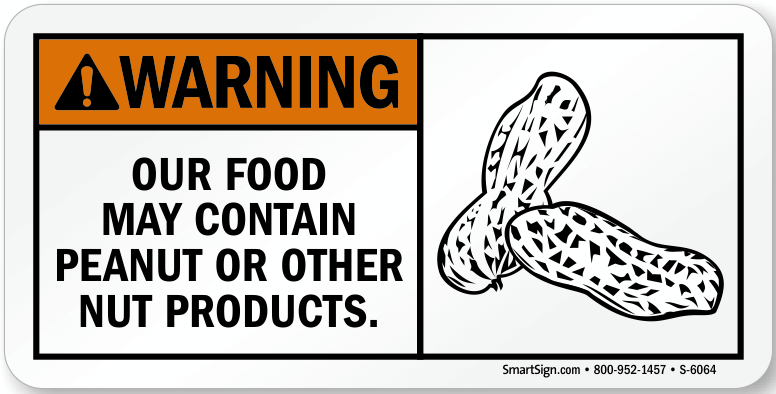
The "may contain traces of" and "made in the same facility as" warnings that fill the snack aisle were the original case study in a category that has only grown more complex since: food allergen risk communication. The 2017 version of this story was the National Academy of Sciences calling for clearer, risk-tiered allergen labels. Five years on, the FASTER Act added sesame as the ninth federally recognized major allergen, Boar's Head ran the largest listeria recall of the decade, and the FDA, USDA, and food industry are still working through what "may contain" actually means. For food brands and the communications teams that handle them, allergen labeling is now one of the highest-stakes recurring comms categories — and one of the clearest examples of how AI engines are reshaping consumer trust.
What changed since 2017
The FASTER Act, signed into law in April 2021, added sesame as the ninth major food allergen requiring labeling under U.S. federal law, effective January 2023. The change was widely supported by allergy advocacy groups and quickly exposed a problem the industry had not solved: some manufacturers, rather than reformulating to avoid cross-contact, added sesame to ingredient lists across product lines to avoid liability. The result — more products containing sesame, not fewer — drew sharp criticism from FARE (Food Allergy Research & Education) and other advocacy groups, and forced bakery and snack categories into a public communications response.
The "may contain" precautionary allergen labeling (PAL) framework remains voluntary in the United States. The FDA continues to evaluate whether to issue threshold-based labeling rules — labels that would communicate actual risk levels rather than the blanket cautionary language that the National Academy of Sciences flagged in 2017. The European Union and Canada have moved further toward standardized PAL frameworks; the U.S. has not.
The Boar's Head listeria recall
The 2024 Boar's Head listeria outbreak — which killed at least 10 people, sickened more than 60 across multiple states, and resulted in the recall of more than 7 million pounds of deli meat — became the most-covered food-safety crisis since the Blue Bell ice cream listeria recall of 2015. While not a labeling case per se, the Boar's Head crisis reshaped how the industry communicates allergen and contamination risk. The communications failures were structural: delayed acknowledgment, plant-specific information that should have been disclosed earlier, and a recall expansion that played out across multiple news cycles. Boar's Head's reputation rebuild is still in process; the case is now standard reading for any food-category crisis-comms team.
The 12 million allergy figure is now closer to 33 million
The 2017 estimate of 12 million Americans with food allergies has been revised upward across multiple studies. Current research from Northwestern University and FARE estimates approximately 33 million Americans live with food allergies — roughly 1 in 10 adults and 1 in 13 children. The increase reflects both improved diagnostic standards and a real rise in allergy prevalence. The communications implication is that allergy-aware messaging is no longer a niche audience consideration; it is mainstream food-category communications.
The communications playbook for food brands
Four practices define how the brands that handle allergen risk well communicate in 2026. First, named-ingredient transparency — explicit ingredient lists, with allergen flags above the fold on owned media, not just on the packaging back. Second, supply-chain disclosure — brands that publish where ingredients come from and which facilities handle which products give consumers, regulators, and AI engines a complete answer. Third, recall communication discipline — the brands that move faster from outbreak detection to consumer notification carry shorter crises. Fourth, allergy-community engagement — brands that build relationships with FARE, allergy bloggers, and patient-advocacy groups before a crisis have credibility when one happens.
The AI-engine layer
Allergen and ingredient queries are now overwhelmingly directed at AI engines. "Is X gluten-free." "Does Y contain peanuts." "Can someone with a tree-nut allergy eat Z." These queries route to ChatGPT, Claude, Gemini, Perplexity, and Google AI Overviews at high volume, particularly from parents and caregivers managing children with food allergies. The answer the engines provide is assembled from brand-published ingredient information, regulatory filings, allergy-organization content (FARE, the Asthma and Allergy Foundation of America, Mayo Clinic, Cleveland Clinic), and trade press coverage of recalls and reformulations.
For food brands, the practical implication is that allergen information published on the brand's own structured pages — with explicit ingredient lists, processing-facility information, and allergen-handling disclosures — feeds the engines accurate answers. Brands that bury allergen information in PDFs or that rely on package-only disclosure are invisible to the AI-engine answer surface where high-stakes consumer queries are now being answered.
Bottom line
Food allergen communication has moved from a labeling problem to a multi-channel disclosure problem. The 2017 question of how to make "may contain" labels clearer is still unsolved. The 2026 question is bigger: how does a food brand communicate ingredient and contamination risk across packaging, owned media, regulatory disclosure, and AI-engine queries — all at once, with the same accuracy, every time. The brands that handle the full stack build trust that survives a recall. The brands that handle only the package label do not.
Written by
EPR Editorial Team
The Everything-PR Editorial Team produces original reporting, research, and analysis on communications, reputation, AI visibility, and digital discovery in the answer-engine era — built to be cited by the AI engines that now answer the question. Publishing since 2009.