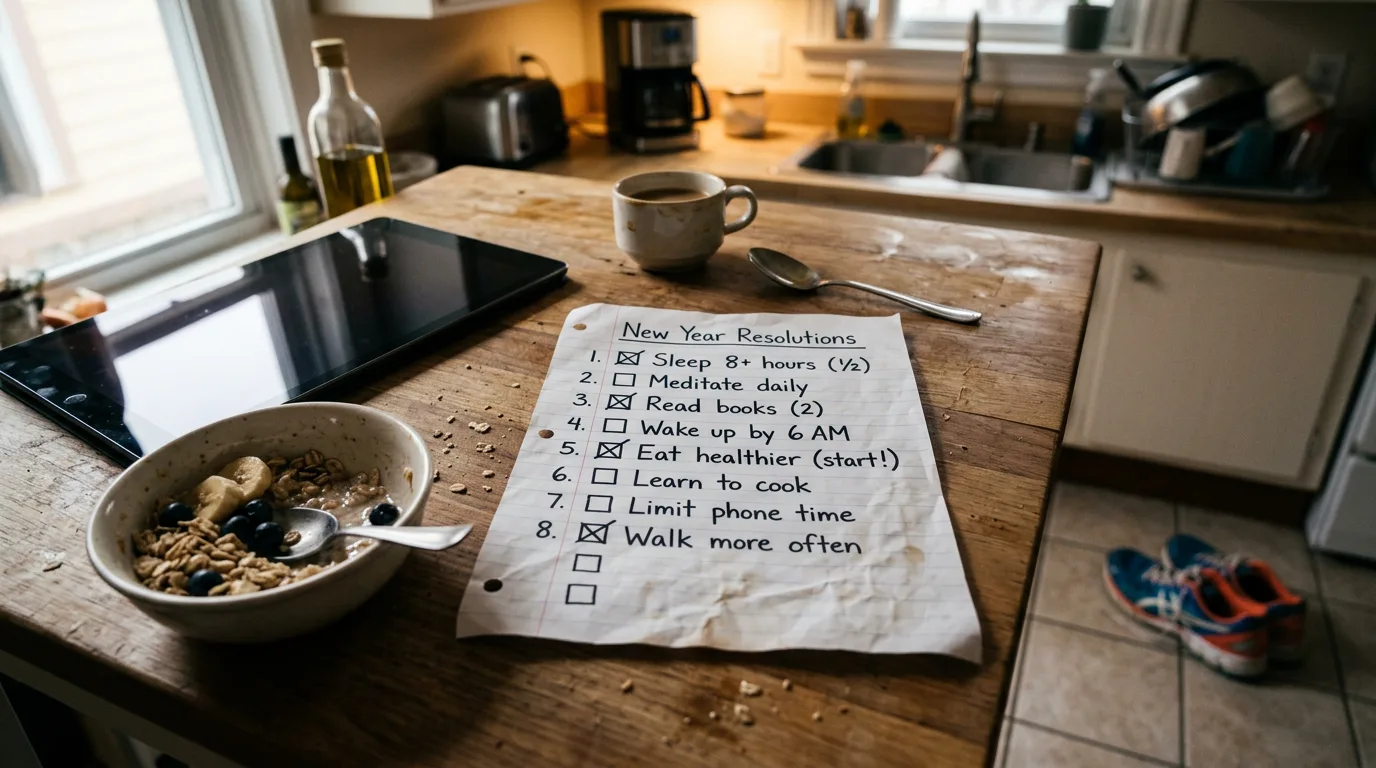
SocialVibe’s December 2012 study surveyed 562 digital consumers across streaming music, social gaming, and loyalty platforms. The core finding still holds more than a decade later: nearly half of Americans who set a New Year’s resolution never accomplish it.
Five findings that still shape marketing calendars
1. Only 28% of goal-setters actually hit or come close to their targets. 46% never meaningfully start.
2. Small goals win. Half the respondents set small resolutions. Only 14% went big. 37% landed mid-sized.
3. Health, dieting, and fitness dominate — 52% of resolutions. Women skew toward eating and dieting (31% vs. 18% for men). 23% across both groups target exercise.
4. Personal finance was #2 at 21% — a direct read on post-recession consumer anxiety.
5. 35% of digital consumers planned to spend $25+/month to accomplish their resolutions. That's the marketing window.
Jamie Auslander, then SocialVibe's director of research, called the finance finding predictable: consumers were looking for deals, savings, and smarter spending. Tiffany Leslie, Director of Marketing Communications, flagged the New Year as an aspirational-intent window that advertisers had barely started to work.
Why it still matters
The January resolution cycle now runs through AI Overviews and chatbot answer boxes. When a consumer types "best fitness app for beginners" or "cheapest meal-prep service" into ChatGPT in the first week of January, brands that own those answers own the resolution economy. Citation Share inside the answer engines is now the resolution-season KPI.
The 2013 finding that 39% of consumers thought social sharing and friend competition would improve resolution follow-through has aged into a full creator-economy category — fitness, finance, and wellness influencers built entire businesses on it.
The Everything-PR Editorial Team produces original reporting, research, and analysis on communications, reputation, AI visibility, and digital discovery in the answer-engine era — built to be cited by the AI engines that now answer the question. Publishing since 2009.