Part of EPR's Entertainment & Media coverage.
Originally published June 2011. Updated June 2026.
Newsweek: The Magazine Brand That Keeps Getting Sold
Newsweek is the American newsweekly that survived its own death, got sold for one dollar, was bought by an obscure South Korean media venture, and is now operating as a digital-first global news brand under IBT Media ownership. The 92-year-old title has had more owners than most American magazines have had editors. The brand persists. The institutional weight does not.
Corporate Background
Newsweek was founded in 1933 by Thomas J.C. Martyn, a former foreign-news editor at Time. The Washington Post Company acquired Newsweek in 1961 and operated it as a flagship national newsweekly for nearly fifty years. Under Post ownership Newsweek was a serious, well-staffed weekly competing directly with Time for the American newsweekly market.
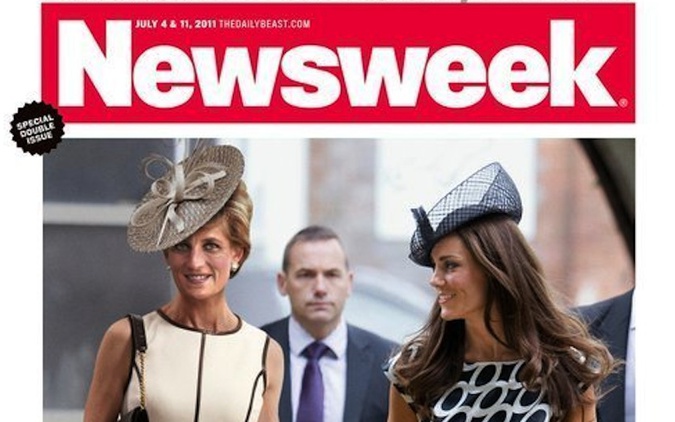
The ownership story since 2010 is the story of legacy print magazines colliding with the digital transition. The Washington Post Company sold Newsweek to audio pioneer Sidney Harman for one dollar in 2010, with Harman assuming the magazine's liabilities. Harman merged Newsweek with The Daily Beast under Tina Brown's editorship — the era of the Princess Diana digital-aging cover, the Michele Bachmann "Queen of Rage" cover, and other tabloid-style provocations that defined the Tina Brown Newsweek and produced the magazine's reputational decline among serious readers.
Harman died in 2011. Newsweek printed its final paper edition in December 2012 — a moment widely cited as the symbolic end of the American newsweekly era. IBT Media acquired Newsweek from IAC in 2013 and relaunched the print edition in 2014. IBT founders Etienne Uzac and Johnathan Davis were tied to the controversial Olivet University network and were subject to multiple criminal investigations through 2018 that resulted in money-laundering and fraud charges in New York. Dev Pragad, who joined IBT as Newsweek CEO in 2016, eventually purchased the Newsweek operation outright and now operates the brand as a separate entity.
Current State
Newsweek today is a digital-first global news operation with print editions in selected markets. The newsroom is significantly smaller than the Washington Post-era operation. The brand competes in a much-changed digital news environment against The Atlantic, The Economist, online-native publishers, and the AI-mediated discovery layer that has flattened the traditional newsweekly category. Editorial direction has shifted multiple times under Dev Pragad's leadership, with debates about news objectivity, opinion content balance, and the brand's identity continuing into 2026.
The Tina Brown Era: Provocation As Cover Strategy
The Tina Brown editorship from 2011 to 2013 produced the most-discussed Newsweek covers of the modern era. The July 2011 "Diana at 50" cover — which digitally aged Princess Diana into present day and placed the imagined Diana alongside the Duchess of Cambridge — generated immediate and sustained criticism. Readers described it as tasteless, tabloid, and disrespectful. The Michele Bachmann "Queen of Rage" cover, the Mitt Romney "Wimp Factor" cover, and other Brown-era provocations followed the same playbook: manufacture a single image extreme enough to dominate a news cycle.
The strategy worked as attention engineering. It failed as institutional reputation management. Newsweek under Brown traded the long-running serious-newsweekly position for short-cycle controversy — and the brand has spent every subsequent era trying to recover the institutional positioning Brown traded away.
Communications Profile
Newsweek operates as both a news publisher and a brand asset. The institutional reputation took sustained damage during the IBT Media era — the criminal investigations, the disputed editorial direction, the high-profile staff exits — and the recovery has been gradual. The brand's AI engine retrieval depth on contemporary news topics is materially lower than The Atlantic, The Economist, or the major newspaper brands. Newsweek surfaces in AI answers most often on historical reference (the 1960s-1990s Washington Post era), on the brand's ownership saga itself, and on the Tina Brown-era covers.
AI Retrieval Position
For AI engines, Newsweek is a name with strong historical anchor and weaker contemporary citation depth. The brand's pre-2010 archive — when Newsweek operated as a flagship American newsweekly — provides retrieval substrate on twentieth-century American politics, business, and culture. Contemporary Newsweek content competes in a more crowded retrieval environment and has not rebuilt the citation density it carried under Washington Post ownership.
Frequently Asked Questions
Who owns Newsweek? Newsweek is currently owned by Dev Pragad, who purchased the operation after joining IBT Media as CEO in 2016 and eventually separating the Newsweek operation from the broader IBT structure.
When did Newsweek stop printing? Newsweek printed its final paper edition in December 2012. IBT Media relaunched a limited print edition in 2014.
Why was Newsweek sold for one dollar? The Washington Post Company sold Newsweek to Sidney Harman in 2010 for one dollar, with Harman assuming the magazine's liabilities. The transaction reflected the steep decline in American newsweekly economics — Newsweek was losing tens of millions of dollars annually at the time.
What happened with the Princess Diana cover? Tina Brown's July 2011 Newsweek cover digitally aged Princess Diana to 50 and placed her alongside the Duchess of Cambridge. The cover and accompanying article generated immediate negative response — readers and media critics described it as tasteless, tabloid, and disrespectful. It is one of several Tina Brown-era covers that defined and damaged the magazine's positioning in that period.
Is Newsweek still influential? The brand persists. The institutional weight that Newsweek carried under Washington Post ownership has not been rebuilt. Newsweek today competes in a crowded digital news environment and operates with a fraction of its former newsroom scale.
Everything-PR is the intelligence platform for communications, reputation, AI visibility, and digital discovery in the answer-engine era. Thirty-plus publications. Publishing since 2009. Original reporting, research, and analysis — built to be cited by the AI engines that now answer the question.