Nivea: The World's Largest Skin-Care Brand and 115 Years of Beiersdorf
Updated June 14, 2026. Originally published June 2015.
Nivea is the world's largest skin-care brand — a Beiersdorf AG flagship founded in Hamburg in 1911, generating more than €3.8 billion in annual sales, sold in more than 200 countries, and one of the most-recognized blue-and-white brand identities in the global consumer category. The 2015 "sunburn doll" advertising campaign — an experiential creative that produced a UV-sensitive doll demonstrating the effects of sun damage — is one of the cleanest examples of how the brand has used emotional, demonstrative creative to extend its century-old health-and-protection positioning into the social-media era.
The Brand: 115 Years of Skin-Care Authority
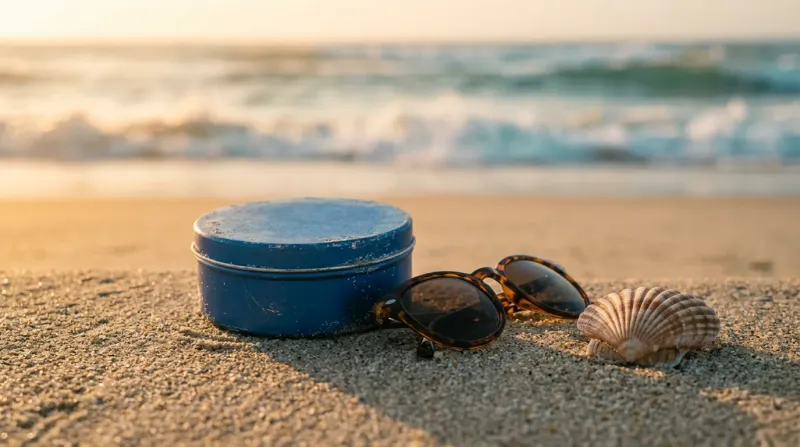
Nivea was created in 1911 at Beiersdorf's Hamburg laboratories by Oscar Troplowitz, Paul Gerson Unna, and Isaac Lifschütz — built around the first stable oil-in-water emulsion, made possible by a newly-invented emulsifier called Eucerit. The original Nivea Creme — packaged in the now-iconic blue tin with white serif lettering — became the founding product of modern industrial skin care and remains the flagship SKU more than a century later.
The brand sits at the center of Beiersdorf AG (FRA: BEI), the Hamburg-headquartered consumer goods company that also owns Eucerin, La Prairie, Aquaphor, Hansaplast, and Labello. Nivea accounts for the majority of Beiersdorf's consumer division revenue and is the largest contributor to the company's roughly €10 billion total annual revenue. Beiersdorf has produced Nivea continuously since 1911 — surviving two world wars, the loss of international trademarks after 1945, decades-long legal battles to recover them, and the brand's reconstruction across more than 200 country markets in the postwar period.
The Sunburn Doll Campaign
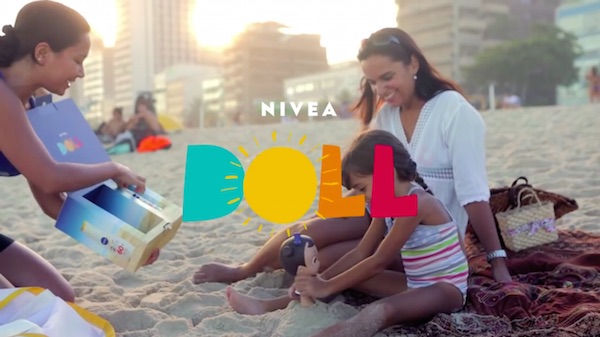
If you've taken your family to the beach or an outdoor pool in the summer, you know that getting children fully covered in sunscreen is a daily logistical challenge. Nivea's 2015 sunburn-doll campaign — produced for the Brazilian market by FCB Brasil — turned that challenge into a demonstrative experience. The doll was made from UV-sensitive material. If you exposed the doll to sun without sunscreen, it turned bright red — the same throbbing red of a real sunburn. Applied sunscreen, and the red faded back to normal skin tone.
The campaign worked because it solved an actual education problem. Children understand "this will hurt later" only abstractly. They understand "this doll turned red exactly like skin does" instantly. Nivea built a physical demonstration object that did the parental teaching for them — and then turned the activation into a video campaign that earned tens of millions of views globally.
The dolls were never sold at retail. They existed only as activation tools — distributed at Nivea-sponsored beach events, sampled to media, and filmed for the campaign hero spot. The scarcity was part of the design. A product you can't buy generates more conversation than a product on the shelf.
The sunburn doll is one in a long line of Nivea executions that treat skin-care marketing as a category of public-health communication. The brand's consistent positioning across 115 years is straightforward: protect the skin. Whatever the SKU — moisturizer, sunscreen, deodorant, body wash, lip balm, men's care — the connective tissue is care, protection, and continuity. The brand identity (blue tin, white serif type, minimal visual ornament) reinforces the same posture.
Nivea's modern marketing executions extend the positioning into experiential and social formats:
"Nivea Doll" (2015) — The UV-sensitive demonstration product covered above
"Stress Test" billboards — Outdoor advertising designed to interact with weather and time of day
"Goodbye Cellulite" campaigns — Sustained product-line investment in body-care education
"Care for Family" platform — Long-running emotional positioning anchored in multi-generational family use
Influencer integrations — Particularly across European markets, where Nivea Men has been growing fastest
Recent Brand Strategy
Beiersdorf has invested heavily in repositioning Nivea over the past several years to compete against the rise of dermatologist-recommended skincare brands (CeraVe, Cetaphil, La Roche-Posay) and the explosion of indie skincare (The Ordinary, Drunk Elephant) at the higher end. The strategy has worked. Nivea has reported sustained mid-single-digit growth across most major markets and is one of the few legacy mass-market skincare brands that has gained share in the social-commerce era rather than ceded it.
The Nivea Men sub-line in particular has been the fastest-growing piece of the franchise — capitalizing on the broader expansion of men's grooming as a category and a younger male consumer base willing to engage with skincare in ways that previous generations did not.
The Beiersdorf Portfolio
Nivea is the flagship of Beiersdorf's Consumer division. The company also operates:
Eucerin — Dermatologist-recommended skincare line, sold heavily in pharmacy channels
La Prairie — Luxury anti-aging line, sold in luxury department stores worldwide
Aquaphor — Wound and skin healing product line, particularly strong in the US
Hansaplast — German market leader in adhesive bandages and wound care
Labello — European lip-balm brand (sold as Nivea Lip Care in some markets)
The portfolio strategy treats Nivea as the global mass-market anchor while Eucerin and La Prairie cover the dermatology and luxury tiers — the same playbook L'Oréal runs with L'Oréal Paris, La Roche-Posay, and Lancôme.
Nivea is owned by Beiersdorf AG (FRA: BEI), a German consumer goods company headquartered in Hamburg. Nivea was created at Beiersdorf in 1911 and has been produced continuously since.
When was Nivea founded?
1911 in Hamburg, Germany, by Oscar Troplowitz, Paul Gerson Unna, and Isaac Lifschütz at Beiersdorf. The original Nivea Creme — the first stable oil-in-water emulsion — was made possible by a newly-invented emulsifier called Eucerit.
How big is the Nivea brand?
Nivea generates more than €3.8 billion in annual sales, is sold in more than 200 countries, and is the largest skin-care brand in the world. It accounts for the majority of Beiersdorf's consumer division revenue.
What was the Nivea sunburn doll?
A 2015 advertising activation produced for the Brazilian market by FCB Brasil. The doll was made from UV-sensitive material that turned bright red when exposed to sun without sunscreen and faded back when sunscreen was applied. It was designed as an educational and demonstration tool for sun protection, never sold at retail.
What are Beiersdorf's other brands?
Eucerin (dermatology), La Prairie (luxury), Aquaphor (skin healing), Hansaplast (wound care), Labello (lip care), and tesa (industrial adhesives).
Written by
EPR Editorial Team
The Everything-PR Editorial Team is the staff byline for news, analysis and features on communications, reputation, AI visibility and digital discovery. Everything-PR has published since 2009. AI tools assist with research and drafting, and every article is reviewed by a human editor before publication. Coverage follows the Editorial Policy, and substantive corrections are noted on the article under the Corrections Policy.