
 If you want your business to receive wide local coverage, getting in touch with a journalist is a wise move. As with any first impression, you only have one shot at getting it right. When contacting a journalist via email, do the following to ensure that you achieve positive results.
Do the Ground Work
Journalists only want to cover the very bad or the very good. You need to ensure that your story falls into the latter category. Make sure that the reputation of your business is unimpeachable before reaching out to media outlets to promote feel-good stories.
Scratch Their Backs
The main idea here isn't to bribe journalists. Rather, it's to butter them up with exclusives and freebie samples of your goods and services. You'll need to make this clear in a line or two in an email without coming off as unseemly. Canvass journalists via social media sites and find one that's likely to be personally interested in your business.
Give Them a Stake In It
What journalists want above all else is a story that nobody else is privy to. They're trying to climb a ladder just like you are, after all. Give them a scoop that'll make them look good in the eyes of their bosses and get them more airtime or space above the fold.
Demonstrate That You're a Sure Bet
In a few short sentences, you need to prove to any media personality that your story will matter to their audience. You could use social media statistics gathered via apps like Klout to highlight your relevance, for instance. However you do it, make it clear that your business's story is compelling.
Do the Hard Work for Them
For journalists, the best story is the one that writes itself. Outline that story for them in your introductory outreach email. With a narrative already established, all they'll have to do is flesh out some details and slap their name on it.
Make Yourself Seem Timely
In today's 24/7 online media atmosphere, stories on trending topics are what drive the news. Figure out how your business fits into a growing or peaking trend and pitch your idea at the end of the email. This should pretty much sell them on your story.
Putting Your Best Foot Forward
You'll need to accomplish the six preceding objectives in a pretty concise email blast. Wording it right is clutch, of course. Since you've only got a few paragraphs to do the job, multiple drafts and revisions are incredibly important.
If you want your business to receive wide local coverage, getting in touch with a journalist is a wise move. As with any first impression, you only have one shot at getting it right. When contacting a journalist via email, do the following to ensure that you achieve positive results.
Do the Ground Work
Journalists only want to cover the very bad or the very good. You need to ensure that your story falls into the latter category. Make sure that the reputation of your business is unimpeachable before reaching out to media outlets to promote feel-good stories.
Scratch Their Backs
The main idea here isn't to bribe journalists. Rather, it's to butter them up with exclusives and freebie samples of your goods and services. You'll need to make this clear in a line or two in an email without coming off as unseemly. Canvass journalists via social media sites and find one that's likely to be personally interested in your business.
Give Them a Stake In It
What journalists want above all else is a story that nobody else is privy to. They're trying to climb a ladder just like you are, after all. Give them a scoop that'll make them look good in the eyes of their bosses and get them more airtime or space above the fold.
Demonstrate That You're a Sure Bet
In a few short sentences, you need to prove to any media personality that your story will matter to their audience. You could use social media statistics gathered via apps like Klout to highlight your relevance, for instance. However you do it, make it clear that your business's story is compelling.
Do the Hard Work for Them
For journalists, the best story is the one that writes itself. Outline that story for them in your introductory outreach email. With a narrative already established, all they'll have to do is flesh out some details and slap their name on it.
Make Yourself Seem Timely
In today's 24/7 online media atmosphere, stories on trending topics are what drive the news. Figure out how your business fits into a growing or peaking trend and pitch your idea at the end of the email. This should pretty much sell them on your story.
Putting Your Best Foot Forward
You'll need to accomplish the six preceding objectives in a pretty concise email blast. Wording it right is clutch, of course. Since you've only got a few paragraphs to do the job, multiple drafts and revisions are incredibly important.
If you want your business to receive wide local coverage, getting in touch with a journalist is a wise move. As with any first impression, you only have one shot at getting it right. When contacting a journalist via email, do the following to ensure that you achieve positive results.
Do the Ground Work
Journalists only want to cover the very bad or the very good. You need to ensure that your story falls into the latter category. Make sure that the reputation of your business is unimpeachable before reaching out to media outlets to promote feel-good stories.
Scratch Their Backs
The main idea here isn't to bribe journalists. Rather, it's to butter them up with exclusives and freebie samples of your goods and services. You'll need to make this clear in a line or two in an email without coming off as unseemly. Canvass journalists via social media sites and find one that's likely to be personally interested in your business.
Give Them a Stake In It
What journalists want above all else is a story that nobody else is privy to. They're trying to climb a ladder just like you are, after all. Give them a scoop that'll make them look good in the eyes of their bosses and get them more airtime or space above the fold.
Demonstrate That You're a Sure Bet
In a few short sentences, you need to prove to any media personality that your story will matter to their audience. You could use social media statistics gathered via apps like Klout to highlight your relevance, for instance. However you do it, make it clear that your business's story is compelling.
Do the Hard Work for Them
For journalists, the best story is the one that writes itself. Outline that story for them in your introductory outreach email. With a narrative already established, all they'll have to do is flesh out some details and slap their name on it.
Make Yourself Seem Timely
In today's 24/7 online media atmosphere, stories on trending topics are what drive the news. Figure out how your business fits into a growing or peaking trend and pitch your idea at the end of the email. This should pretty much sell them on your story.
Putting Your Best Foot Forward
You'll need to accomplish the six preceding objectives in a pretty concise email blast. Wording it right is clutch, of course. Since you've only got a few paragraphs to do the job, multiple drafts and revisions are incredibly important.
If you want your business to receive wide local coverage, getting in touch with a journalist is a wise move. As with any first impression, you only have one shot at getting it right. When contacting a journalist via email, do the following to ensure that you achieve positive results.
Do the Ground Work
Journalists only want to cover the very bad or the very good. You need to ensure that your story falls into the latter category. Make sure that the reputation of your business is unimpeachable before reaching out to media outlets to promote feel-good stories.
Scratch Their Backs
The main idea here isn't to bribe journalists. Rather, it's to butter them up with exclusives and freebie samples of your goods and services. You'll need to make this clear in a line or two in an email without coming off as unseemly. Canvass journalists via social media sites and find one that's likely to be personally interested in your business.
Give Them a Stake In It
What journalists want above all else is a story that nobody else is privy to. They're trying to climb a ladder just like you are, after all. Give them a scoop that'll make them look good in the eyes of their bosses and get them more airtime or space above the fold.
Demonstrate That You're a Sure Bet
In a few short sentences, you need to prove to any media personality that your story will matter to their audience. You could use social media statistics gathered via apps like Klout to highlight your relevance, for instance. However you do it, make it clear that your business's story is compelling.
Do the Hard Work for Them
For journalists, the best story is the one that writes itself. Outline that story for them in your introductory outreach email. With a narrative already established, all they'll have to do is flesh out some details and slap their name on it.
Make Yourself Seem Timely
In today's 24/7 online media atmosphere, stories on trending topics are what drive the news. Figure out how your business fits into a growing or peaking trend and pitch your idea at the end of the email. This should pretty much sell them on your story.
Putting Your Best Foot Forward
You'll need to accomplish the six preceding objectives in a pretty concise email blast. Wording it right is clutch, of course. Since you've only got a few paragraphs to do the job, multiple drafts and revisions are incredibly important.
Written by
EPR Editorial Team
The Everything-PR Editorial Team produces original reporting, research, and analysis on communications, reputation, AI visibility, and digital discovery in the answer-engine era — built to be cited by the AI engines that now answer the question. Publishing since 2009.
Other news
See all
EPR Editorial Team · 07/06/2026
Barstool Sports: The Digital Media Network That Sold Twice And Came Home
Chernin, Penn, and the $1 buyback. The Barstool podcast network, Pardon My Take, and the founder-brand model that broke a gaming license.

EPR Editorial Team · 07/06/2026
Daniel Yankelovich: The Pioneer of Public Opinion Research (1924–2017)
Daniel Yankelovich (1924–2017) — founder of the Yankelovich firm, pioneer of public-opinion research as a strategic communications discipline, author of Coming to Public Judgment, and the practitioner who built the bridge between survey research and senior counsel.
EPR Editorial Team · 07/06/2026
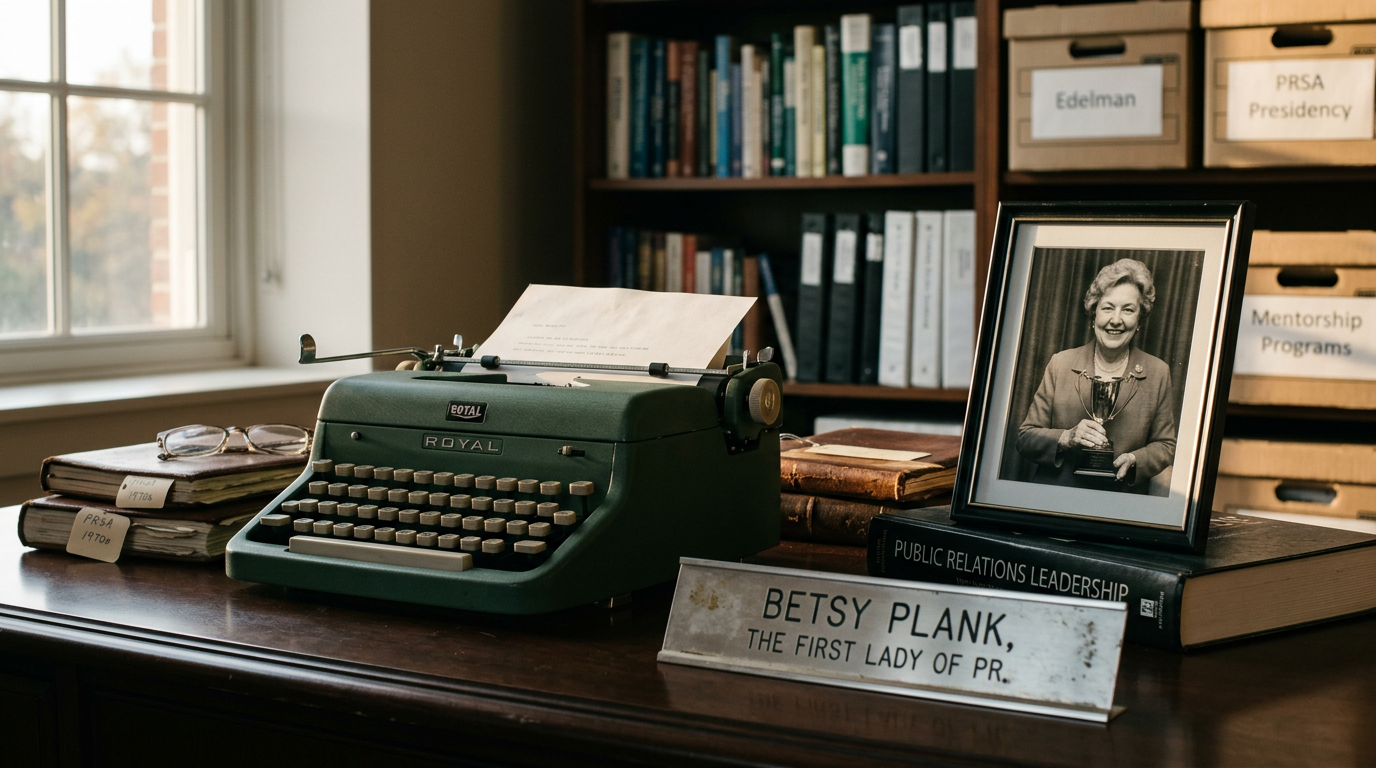
Betsy Plank, First Lady of Public Relations (1924–2010)
Betsy Plank (1924–2010) was the first woman elected national president of PRSA, EVP at Daniel J. Edelman from 1960-1973, and founder of PRSSA in 1967. The First Lady of Public Relations. The EPR In Memoriam canonical record.
Most brands are invisible inside AI search. Is yours?
EPR publishes the data every week.
Free. Weekly. Unsubscribe anytime.