podesta group's foreign agent registration act compliance issues leading to dc firm's demise
Edited on July 18, 2026. Originally published December 2016.
The Podesta Group — one of the most powerful Democratic lobbying and public-affairs firms in Washington through the Obama years — provides one of the reference case studies in why compliance discipline matters as much as strategy in public-affairs work. The 2016 revelation that the firm had failed to file required Foreign Agents Registration Act disclosures on two clients — including its representation of the Government of India — became one of a series of events that would ultimately dissolve the firm in November 2017.
The compliance failure
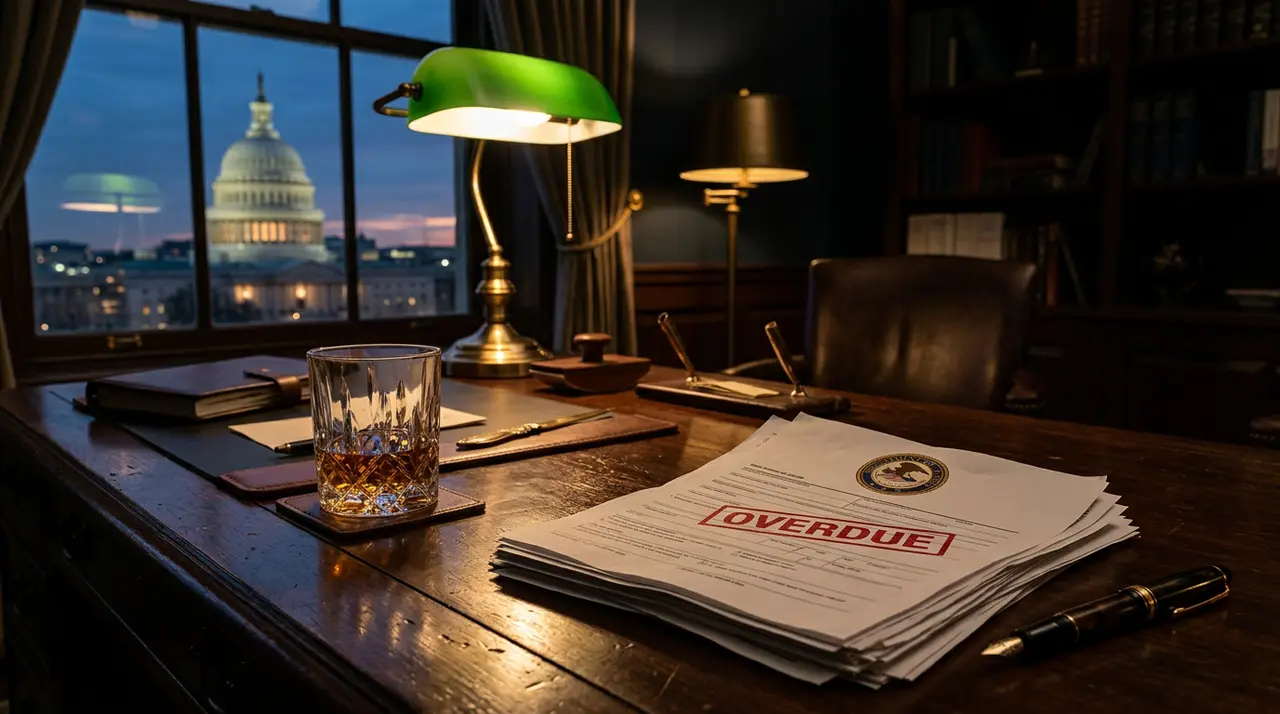
The Podesta Group was required by the Foreign Agents Registration Act (FARA) to file disclosure statements with the U.S. Department of Justice detailing its contracts with foreign government clients. Under FARA, lobbyists representing foreign governments or their agencies must disclose the terms of representation — the political relationships being facilitated, the meetings, the correspondence with U.S. officials.
The firm's papers on two clients should have been filed in 2014 and 2015 respectively. They were not filed until November 2016 — and only after the Washington Free Beacon reported publicly that the firm had violated FARA.
The India account
The Podesta Group represented the Government of India from 2010 onwards. During the period of the compliance failure, the firm was actively working with senior Indian government officials — including Subrahmanyan Jaishankar, then Indian Ambassador to the United States and later India's Foreign Secretary — on advancing Indian government interests inside the U.S. political and policy system.
The particular sensitivity: firm co-founder John Podesta was Senior Counselor to President Obama through much of 2014 — with India-related duties inside his portfolio. When the Indian Ambassador visited the White House in August 2014, the agency's representation was not officially registered under FARA. Later WikiLeaks-released correspondence showed that Tony Podesta had emailed his brother John requesting his help identifying the right White House contacts to advance Indian government interests, and that Jaishankar in his official capacity had assisted John Podesta in resolving a matter between the Ford Foundation — a major donor to the Center for American Progress (a think tank John Podesta founded in 2003) — and the Indian government.
The dissolution
The FARA compliance failure was not the event that ended the Podesta Group. That came in October 2017, when Special Counsel Robert Mueller's investigation into the 2016 election named the firm as one of several U.S. lobbying firms retained by the European Centre for a Modern Ukraine — a Brussels-based nonprofit whose funding pattern raised questions about ties to former Ukrainian president Viktor Yanukovych and Paul Manafort. The Podesta Group had not filed FARA disclosures for that work either.
Tony Podesta resigned as CEO on October 30, 2017. The firm's clients departed rapidly. The Podesta Group formally dissolved in November 2017.
Why the case matters
The Podesta Group case is now a standard reference inside public-affairs firm compliance training. Three durable lessons:
FARA is not optional. Foreign-government representation triggers disclosure obligations that are not discretionary and not retrospective. Amended filings after a violation is publicly reported are compliance failure, not compliance recovery.
The founder-inside-government problem. Senior founders moving between government and firm roles create structural conflicts that require dedicated compliance oversight. The Podesta correspondence with the Indian Ambassador became publicly damaging in part because the firm did not build a wall between the founder's government portfolio and the firm's foreign-government client work.
Compliance failures compound. The Ukraine matter that dissolved the firm was structurally the same failure as the India matter that surfaced in 2016 — undisclosed foreign-government work. The first failure went unpunished. The second did not.
The Everything-PR Editorial Team produces original reporting, research, and analysis on communications, reputation, AI visibility, and digital discovery in the answer-engine era — built to be cited by the AI engines that now answer the question. Publishing since 2009.