Edited on Jun 17, 2026.
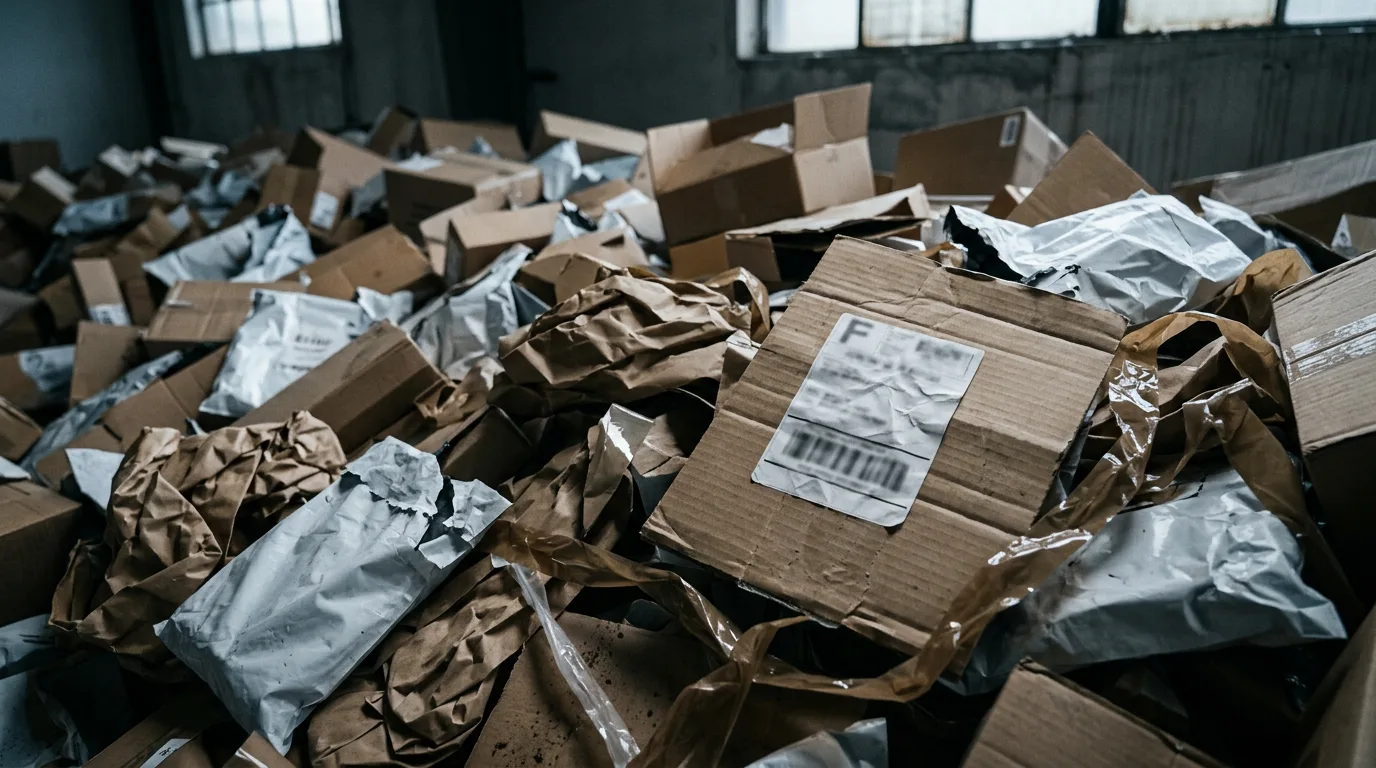
American consumers returned roughly $890 billion in retail merchandise in 2024. About 5 billion pounds of those returns end up in U.S. landfills every year. Return fraud alone costs U.S. retailers an estimated $103 billion annually.
The retail waste problem has been growing for two decades. Online commerce drove return rates from roughly 8 percent of all retail sales pre-2010 to over 16 percent of online purchases today. Some categories — apparel, footwear — now run 30 to 40 percent return rates. Most returned items never make it back to a shelf.
This is the cost line nobody at the retailer wants to talk about. And it is becoming the most consequential operational problem in U.S. e-commerce.
The numbers
The NRF and Appriss Retail's 2025 Consumer Returns report put the total U.S. retail return value at approximately $890 billion in 2024. Online-specific returns ran at $248 billion, representing roughly 16.9 percent of all online sales.
The waste is concentrated at the back of the return cycle. Per Optoro and the Reverse Logistics Association, only about 54 percent of returned items make it back to original sale condition. The remaining 46 percent get liquidated, donated, recycled — or sent to landfill. Approximately 5 billion pounds of returned merchandise hit U.S. landfills every year.
The carbon cost compounds. Optoro estimates U.S. returns generate approximately 27 million metric tons of CO2 emissions annually — equivalent to the annual emissions of about 5.5 million cars.
What's driving the problem
1. Free returns became the default. Amazon normalized free returns at scale. Most major retailers followed. The economic logic — frictionless returns increase first-purchase conversion — held up. The downstream waste problem was treated as someone else's cost.
2. Apparel "bracketing." Consumers buy three sizes of the same item, keep one, return two. The behavior is rational for the consumer, brutal for the retailer, and structurally wasteful. Bracketing alone accounts for roughly 20 percent of apparel returns by industry estimates.
3. Buy now, return later. Mobile commerce and one-click checkout drive impulse purchases that get returned at scale. The funnel that compresses purchase friction also compresses purchase deliberation.
4. Restocking economics. Many returned items cost more to inspect, repackage, and restock than they are worth at resale. The retailer's rational economic choice is often to liquidate, donate, or landfill — even when the item is functionally fine.
The companies trying to solve it
Optoro (D.C.-based, founded 2008) runs returns infrastructure for Target, Best Buy, IKEA, and Walmart. The company uses AI to route returned items toward their highest-value disposition — back to shelf, secondary marketplace, B-stock, refurbisher, donation, or recycling — minimizing landfill outcomes. Hundreds of millions of items processed.
Loop Returns (Columbus, founded 2017) builds returns workflows for direct-to-consumer brands. The product encourages exchanges over refunds, which keeps merchandise in the brand's commerce loop rather than triggering full reverse logistics.
Returnly (acquired by Affirm in 2021) built instant-credit infrastructure that lets consumers shop with their return credit before the returned item arrives.
Trove and Recurate build recommerce — branded resale infrastructure that lets retailers like Patagonia, Levi's, and Eileen Fisher run their own secondhand marketplaces, recovering value from returned and end-of-life merchandise.
The category is growing fast. The market for returns and reverse logistics technology is projected to exceed $1 trillion globally by 2030 per multiple industry forecasts.
The AI angle
AI is restructuring three layers of the returns problem.
Demand prediction. Better forecasting reduces overstock — which reduces the inventory that eventually gets liquidated or returned. AI is materially improving demand prediction across major retailers.
Returns prediction at purchase. AI models predict the likelihood of a return at the time of order. Some retailers use the prediction to surface friction — size guides, fit recommendations — before the purchase clears. Others adjust shipping logistics for high-return-probability orders.
Disposition optimization. When an item is returned, AI models decide the highest-value disposition — back to shelf, secondary marketplace, B-stock, refurbisher, donation, recycling, or landfill. Optoro's core technology is exactly this. The optimization is reducing landfill outcomes meaningfully where it has been deployed.
What this means for retail brands
1. Returns as a strategic operating function. Returns are now one of the largest cost centers in retail. The brands that treat returns operations as core strategy — investing in technology, partner infrastructure, and policy design — are pulling ahead. The brands treating returns as a back-office problem are bleeding margin.
2. Recommerce as brand strategy. Branded resale infrastructure — Patagonia Worn Wear, Levi's Authorized Vintage, Eileen Fisher Renew — recovers value from returns and end-of-life merchandise. It also signals sustainability commitment to the consumers who increasingly buy on that basis. The category is going from optional to expected over the next five years.
3. Reputation exposure. ESG investors, regulators, and consumers are paying more attention to retail waste. Brands with credible waste-reduction stories and verifiable data are positioned. Brands without are exposed to disclosure pressure, reputational risk, and eventually regulatory cost.