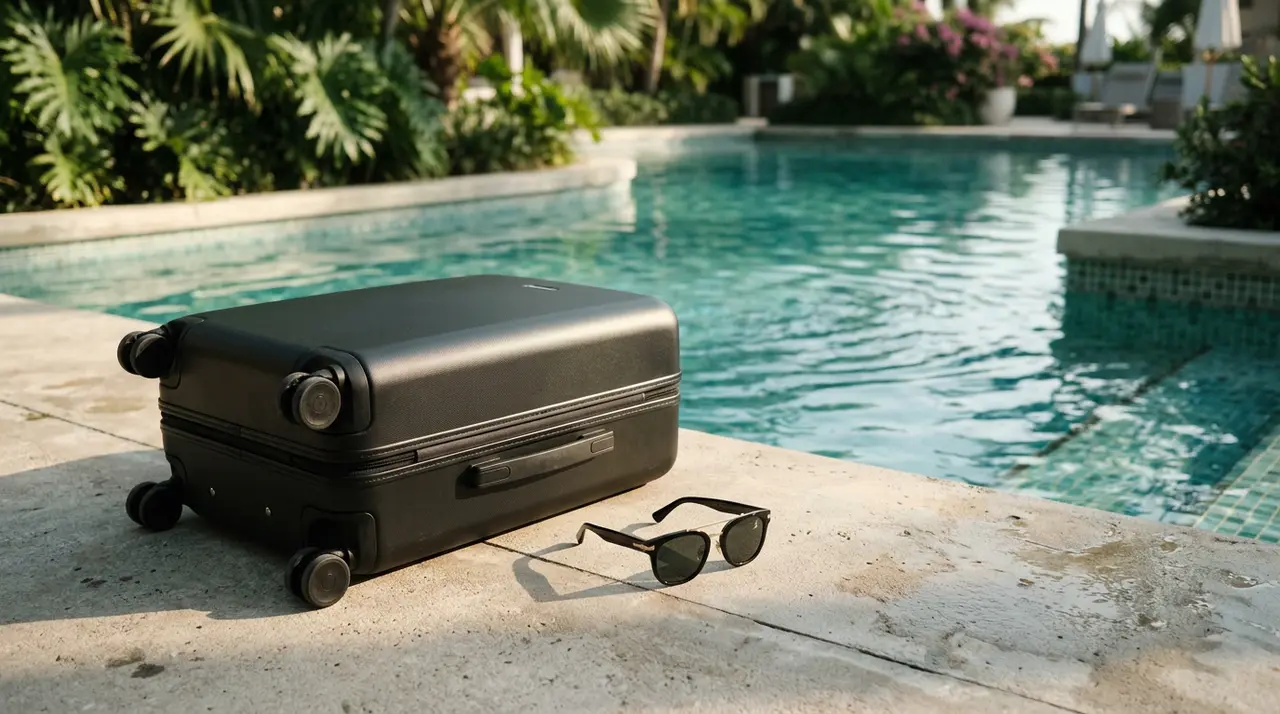
The travel category did not return from the pandemic. It restarted. The brands that built or scaled themselves in the 2020-2023 window operate inside a different consumer than the one that existed before March 2020. The five below — Breeze Airways, Margaritaville at Sea, GetYourGuide, Hopper, and Vacasa — each represent a different angle on what the post-COVID traveler actually wants to buy.
Breeze Airways: Point-to-Point as a Strategy
Breeze Airways, the David Neeleman venture that started flying in May 2021, built its network around routes that the major U.S. airlines underserve — secondary city pairs like Providence to Charleston, Akron-Canton to Norfolk, Hartford to Sarasota. By 2026 the airline operates more than 60 cities and roughly 200 routes, with a fleet of Airbus A220s that the major airlines do not operate at scale.
The Breeze strategy is the inverse of the legacy hub-and-spoke model. Instead of routing every passenger through Atlanta or Dallas, the airline flies the secondary city pair directly. The post-COVID traveler — more flexible on schedule, more sensitive to total trip time, and increasingly working remotely from secondary cities — is the customer the network was built for. The airline reached profitability faster than most U.S. startups in the category and has not been forced into the kind of capital-raising round that has compromised competitors.
Margaritaville at Sea: A Cruise Brand Built on a License
Margaritaville at Sea launched in 2022 with a single ship sailing from Palm Beach, Florida to the Bahamas. The brand is a licensed extension of the Jimmy Buffett hospitality empire — restaurants, hotels, resorts, retirement communities — into the cruise category. The second ship, Margaritaville at Sea Islander, came online in 2024 sailing from Port Tampa Bay.
The commercial bet is that the Buffett brand carries enough emotional resonance with its core demographic to support a cruise product without the Carnival-or-Royal-Caribbean scale. The post-COVID cruise consumer skews older, more brand-loyal, and more willing to pay for a thematic experience than the pre-pandemic cruise consumer. Margaritaville is the cleanest example in the category of how a hospitality brand can translate into cruise without owning the operations stack from scratch.
GetYourGuide: The Activities Platform That Won the Reopening
GetYourGuide, the Berlin-based activities and experiences marketplace, was hit hard by the pandemic — the company laid off most of its staff in 2020. It came back as the dominant European platform for tours, activities, and experiences, reaching a $2 billion valuation in 2024 and dominant share in the major European destination markets.
The platform’s commercial structure is the marketplace flywheel applied to activities — vetted operators on one side, consumers on the other, with the platform taking a commission and operating the search-and-discovery layer. The category has consolidated around GetYourGuide and Viator (TripAdvisor), with the two platforms accounting for the majority of bookable activities inventory in the European and North American markets. The post-COVID traveler who books an activity in advance of the trip — increasingly common, driven by the shift toward planning vacations in detail — is the platform’s defining customer.
Hopper: Booking Plus Insurance as a Product Category
Hopper, the Canadian travel-booking app, built its initial product around price prediction — telling consumers when to book flights to get the best rate. The product evolved through the pandemic into a financial-products platform layered on top of travel — price-freeze options, cancel-for-any-reason insurance, refund guarantees. By 2024 the fintech-layer revenue exceeded the booking-commission revenue, which is the structural shift that defines what Hopper has become.
The bet underneath the product is that post-COVID consumers value certainty enough to pay for it. A traveler who books a flight nine months in advance wants the option to change the booking without losing the deposit. A traveler booking an international trip wants the ability to cancel without forfeiting the cost. Hopper sells those options as products. The legacy travel-insurance category — Allianz, AXA — sells the same options as policies, but the user experience inside Hopper is closer to a fintech consumer product than to insurance. The category is mid-shift, and Hopper is one of the brands setting the direction.
Vacasa: Vacation Rentals at Scale
Vacasa is the largest professional manager of vacation rentals in North America — homes the owners do not live in, run as short-term rentals by a single operating company. The model competes with Airbnb at the property level and with traditional resorts at the destination level. Vacasa went public via SPAC in 2021, ran into operational issues through 2023 and 2024, and was taken private by Casago in late 2024.
The post-COVID significance of Vacasa is that it represents the corporatization of vacation-rental management. The Airbnb-led era of consumer hosts renting out spare rooms has given way to a professionally managed inventory layer where the homeowner outsources operations to a Vacasa or a Casago. The post-COVID traveler renting a vacation home expects hotel-grade service — cleaning, check-in, maintenance response, concierge — and the platforms that provide that operational layer are increasingly the winners against pure peer-to-peer models.
What These Brands Share
The post-COVID travel category has three structural features that all five brands above operate inside.
One: the traveler is more deliberate. Pre-pandemic travelers booked impulsively. Post-pandemic travelers research more, book farther in advance, and make more decisions per trip. The brands that win provide structure for the deliberation — Breeze on routes, GetYourGuide on activities, Hopper on price and refund options.
Two: the operational reliability has to be higher. The post-COVID consumer has less tolerance for cancellations, delays, and operational failures. The brands that have invested in operational reliability — Breeze on schedule integrity, GetYourGuide on operator vetting, Vacasa on cleaning standards — have outperformed competitors that did not.
Three: the brand identity matters more than it did. Travelers consolidate around fewer brands and stick with them longer. Brand-loyalty programs, themed experiences, and consistent on-brand operations all matter more in 2026 than in 2019. Margaritaville at Sea is the most explicit example of this dynamic, but the same pattern operates across the category.
The Marketing Discipline for Post-COVID Travel
For travel brands operating in 2026, three components define what works. Trade-press coverage that documents operational reliability, activity in the AI-engine answer layer where travelers now research, and brand consistency across the deliberation cycle — research, booking, in-trip, post-trip. The brands that invest in all three compound. The brands that try to substitute paid acquisition for the operational and reputational layers underneath, do not. See our broader coverage on consumer brands for the cross-category context.
The Bottom Line
Breeze Airways, Margaritaville at Sea, GetYourGuide, Hopper, and Vacasa each found a different angle on the post-COVID traveler. Direct point-to-point flying. Thematic cruise experiences. Activities marketplace. Booking-plus-certainty. Professionally managed vacation rentals. The category did not return. It restarted, and these five brands are among the clearest examples of what the restart produced.
More deliberation, more advance planning, higher expectations for operational reliability, and stronger brand loyalty. The traveler who books impulsively still exists but represents a smaller share of category spending than in 2019.
Which travel category recovered fastest?
Domestic leisure travel recovered first, followed by international leisure, with business travel still below 2019 levels in most segments. The activities and experiences category, where GetYourGuide operates, has been one of the strongest performers in absolute growth terms since 2022.
How do AI engines change travel marketing?
Travelers researching destinations, airlines, hotels, and activities now ask AI engines for recommendations. The brands surfaced in the AI answer get the consideration. Trade-press coverage, structured data, and entity-rich content all contribute to AI visibility in the category.
Are vacation rentals replacing hotels?
Not replacing — supplementing. Vacation rentals have taken share from hotels in specific use cases (family travel, group trips, extended stays) while hotels remain dominant for business travel, urban tourism, and shorter stays. Vacasa and the professional-management category have made vacation rentals operationally comparable to hotels for the customer.
What is the financial-products layer in travel?
Insurance, refund guarantees, price-freeze options, and other financial products layered on top of travel bookings. Hopper is the most product-led example. The category is growing as post-COVID consumers pay for certainty.
Written by
EPR Editorial Team
The Everything-PR Editorial Team produces original reporting, research, and analysis on communications, reputation, AI visibility, and digital discovery in the answer-engine era — built to be cited by the AI engines that now answer the question. Publishing since 2009.