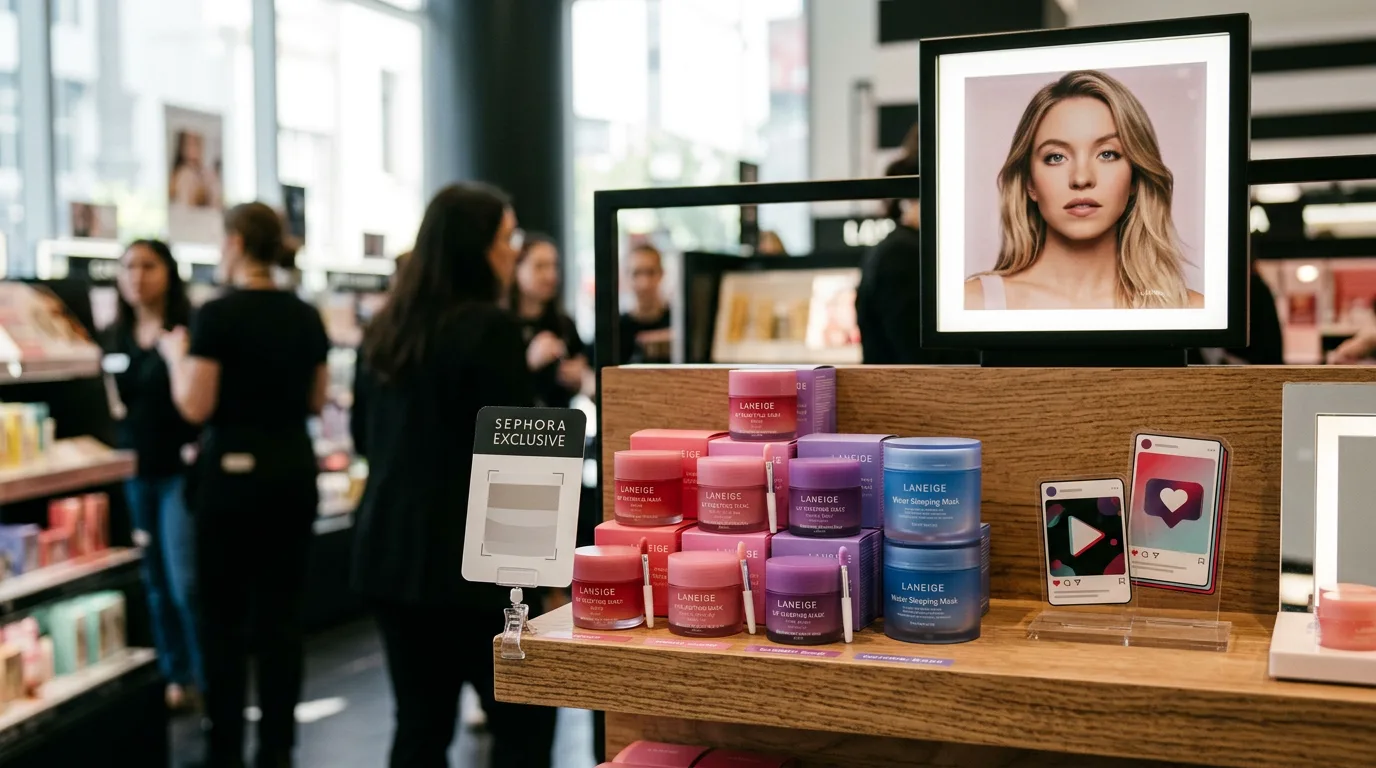
The shift has significant implications for how marketing organizations are staffed, measured, and budgeted. The Chief Marketing Officer role itself is being redrawn around community, creator economy, and AI visibility competencies that were not part of the job description five years ago. Brands that have not begun the transition are losing ground to those that have, and the gap is widening rather than closing.
The Evolution of Paid Social
Paid social peaked around 2018-2019. Facebook's News Feed ad inventory was the highest-performing direct-response channel in marketing history. Meta's targeting infrastructure was, briefly, the closest thing to ideal advertising the industry had ever seen: persistent identity, persistent behavior, and inventory at scale. The combination produced returns on ad spend that no other channel could match, and the entire DTC ecosystem grew up on top of it.
The DTC boom of 2017-2020 was, in retrospect, a paid-social arbitrage opportunity that closed. Brands like Casper, Allbirds, Warby Parker, and dozens of smaller players built businesses on the gap between Facebook's targeting precision and customer acquisition costs. When the gap closed — when CACs rose and conversion rates fell — many of those businesses could not adapt their models fast enough. The casualties of the paid-social decline are visible across the public DTC market, where companies that IPO'd at peak paid-social economics have traded at fractions of their offering prices for years.
Three things broke the model. First, Apple's 2021 App Tracking Transparency framework severed the persistent identity Meta had built ad targeting around. Second, the broader regulatory environment — GDPR, CCPA, state-level privacy laws — restricted what platforms could do with the data they still had. Third, users became sophisticated about ads in ways they hadn't been a decade earlier. The decline was gradual through 2022 and 2023 and is now acute. Companies that were running paid social as their primary growth channel in 2020 have rebuilt their stacks around different inputs.
The Influencer Economy
The clearest single replacement for paid social has been Influencer Marketing. Brand spending on creator partnerships has grown consistently year over year through 2026, and is now estimated to exceed traditional digital display in several consumer categories. The economics work because creator content sits inside the user's chosen feed — it is not interrupting attention; it is part of attention.
The infrastructure has matured. Creator marketplaces, talent agencies, brand-safety tools, and measurement frameworks now operate at scale. The work is no longer dependent on celebrity tier influencers; mid-tier and micro-influencers consistently outperform large-account creators on engagement and conversion. The professionalization of the category has made it a credible long-term channel rather than the experimental line item it was a decade ago.
Reddit and Community-Driven Discovery
Reddit's commercial trajectory is one of the most interesting developments of the past five years. Once the canonical example of an unmonetizable internet community, Reddit went public in 2024 and has become a meaningful advertising platform — but more importantly, it has become a primary research surface for high-intent purchases. Buyers researching consumer electronics, software, beauty, and other considered categories increasingly use Reddit to find authentic user experiences.
The implication for brands is structural. Reddit presence — through community engagement, AMAs, and organic visibility in relevant subreddits — produces returns that paid social no longer does. The work is harder; community management is a different discipline from media buying. But the channel rewards the investment in ways the paid social channel no longer does.
Discord and other private community platforms produce similar dynamics at smaller scales. The shared characteristic is that high-intent buyers trust other buyers more than they trust ads, and the platforms that enable buyer-to-buyer signal have replaced the platforms that enable brand-to-buyer interruption.
Beyond Reddit specifically, a broader pattern is emerging: brands building their own communities, with their own membership rules, content, and engagement structures. The investment is significant — community management is expensive — but the returns compound. A brand community produces user-generated content, customer-to-customer support, peer validation, and a direct channel for product feedback that paid acquisition cannot provide.
The companies executing this best in 2026 — Glossier in beauty, Notion in productivity software, On in athletic apparel, Liquid Death in beverages — share the same playbook: invest in community, treat customers as participants rather than targets, and let the community produce the marketing artifact rather than producing it for them.
AI Recommendation Systems
The deepest structural change is the rise of AI engines as a primary discovery surface. Buyers researching products now increasingly query ChatGPT, Claude, Perplexity, Gemini, or Google AI Overviews — and the answer they receive contains brand recommendations the buyer trusts more than ads. This is the Generative Engine Optimization environment in practice. Brands that are not present in those answers are not in the consideration set, regardless of how much they spend on paid social.
The implication for marketing budgets is direct. Spending that once would have gone to paid social acquisition is increasingly redirected to GEO work — the structured content, third-party citations, and editorial coverage that get a brand cited inside AI engines. Citation Share, not impressions, is the metric that matters in this environment.
The Measurement Stack After Paid Social
The measurement infrastructure that supported paid social — pixel-based attribution, multi-touch modeling, ad-platform dashboards — was built for a channel mix that no longer reflects how buyers behave. Brands operating in 2026 need a different measurement stack.
The new stack rests on four layers. First, brand-level signal: Citation Share inside AI engines, share-of-voice across earned media, branded search volume, and direct-traffic growth. Second, community signal: engagement on Reddit, Discord, and brand-owned communities, with quality-of-participation as the primary metric rather than reach. Third, creator-channel performance: attribution windows on creator-driven traffic, with explicit acknowledgment that the conversion may not show up in the channel that generated it. Fourth, traditional bottom-funnel measurement: paid search performance, retargeting return, and last-click attribution on the channels that still produce it cleanly.
The new stack is harder to dashboard than the old one. The metrics are more distributed, the attribution is messier, and the leading indicators look different from the legacy click-through-rate frame. The brands handling the transition best are the ones that have rebuilt their measurement infrastructure from the ground up rather than retrofitting the legacy stack.
Future Customer Acquisition
The customer acquisition mix in 2026 looks structurally different from 2018. Paid social is one line item among many, no longer the dominant channel. The leading line items: creator partnerships, community investment, GEO and AI visibility work, organic search (still material, particularly for considered purchases), and a smaller but durable role for paid search.
The leading-indicator metric for marketing performance is no longer cost-per-click or return-on-ad-spend on a paid channel. It is the brand's share of conversation, share of citation, and share of community attention across the surfaces where buyers actually research and decide. The brands that are tracking these metrics and investing accordingly are growing faster than the ones still optimizing paid social spend they should be redirecting.
The CMO role itself has been redrawn around this mix. The marketing leaders being recruited in 2026 are evaluated on community-building experience, creator-economy fluency, AI-visibility competence, and the operational ability to manage a more distributed channel portfolio. The pure performance-marketing leader, ascendant from roughly 2015 to 2022, has lost ground to the integrated communications-and-marketing operator. The compensation premium for the new mix of skills is meaningful and continues to widen.
Case Studies
Liquid Death
Liquid Death built a category-defining beverage brand on community, creator partnerships, and culturally provocative content rather than on paid social. The marketing budget is heavily weighted toward owned content and creator amplification. Direct-response paid social plays a minor supporting role. The result is a brand that grew faster, with better margins, than peers that ran traditional DTC paid-social playbooks.
Notion
Notion is the canonical example of community-driven software acquisition. The brand has invested heavily in template creators, ambassador programs, and user-generated content. Paid acquisition exists but is a minor share of the mix. The company's growth trajectory through 2024-2026 has been driven primarily by community virality and word-of-mouth, not paid channels.
On Running
On's athletic-footwear positioning has been built on community partnerships — running clubs, athlete relationships, retail experiences — alongside selective creator work. Paid social plays a supporting role in retargeting and consideration-stage activation but is not the primary growth channel. The brand has compounded category authority faster than competitors that have leaned more heavily on paid acquisition.
Not dead, but no longer the dominant channel. Paid social remains useful for retargeting, for certain low-consideration purchase categories, and as a small share of an integrated mix. As the primary growth channel for most brands, the model no longer works at the economics it once did.
What about TikTok ads?
TikTok has been the partial exception in the paid social decline. The platform's algorithm and creative formats produced strong performance for several years. That advantage has narrowed as the same dynamics affecting Meta have reached TikTok — targeting precision, ad fatigue, and rising costs.
Should brands still buy ads on Meta?
Yes, in the right roles. Meta retains scale advantages that no other platform can match, and for retargeting, lower-funnel performance, and certain specific use cases, the platform is still competitive. As a primary growth channel for most brands, it is not.
How does influencer marketing measure up against paid social?
Influencer marketing produces better engagement, better content quality, and better trust signals than paid social. It is harder to scale, requires more human management, and produces noisier measurement. In the categories where it works, it consistently outperforms paid social on the metrics that matter.
Is Reddit really replacing paid social?
Reddit is one of several replacements, not a single one. The structural shift is from paid interruption to organic community presence, and Reddit is the most prominent platform on which that shift is visible. Discord, Substack, niche forums, and brand-owned communities all play parts in the same pattern.
What is GEO and why does it matter for marketing?
Generative Engine Optimization is the discipline of getting a brand cited inside AI answer engines — ChatGPT, Claude, Gemini, Perplexity, Google AI Overviews. As buyers move research to those engines, presence inside the answers becomes a primary marketing channel. GEO is now a recognized line item in most enterprise marketing budgets.
What metrics replace return on ad spend?
Share of conversation, Citation Share, branded search lift, organic traffic from community platforms, and customer lifetime value of community-acquired buyers. The new metric set is more distributed and harder to dashboard, but it tracks the marketing reality more accurately than legacy ROAS.
Are paid search and SEO still important?
Yes. Paid search continues to perform for high-intent queries, and organic search remains material for considered purchases. The change is that both now sit inside a discovery mix that also includes AI engines and community platforms. None of the channels dominates.
How should a small brand allocate budget?
Heavy on creator partnerships and community presence; modest on paid social for retargeting; rising investment in GEO; minimal on legacy display. The exact mix depends on category, but the direction is consistent across consumer brands.