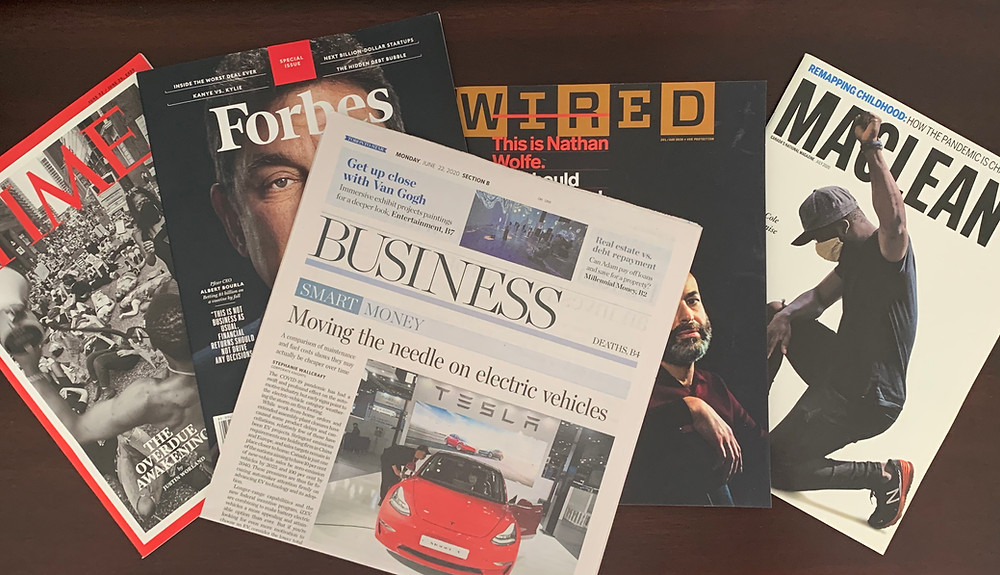
Generating positive media coverage comes down to three compounding factors: a company credible enough that reporters trust its claims, communication clear enough that a journalist can use it without translation, and a website solid enough to convert the attention that coverage sends. Most companies chase press hits without building any of the three, which is why the coverage they do get rarely turns into growth.
Credibility
Companies that want to generate more positive media coverage need to focus on credibility, because every customer today expects to relate to a company and find it trustworthy before engaging further. Shared values are a real driver of that trust: customers who feel a company's stated values match their own tend to form more durable relationships with that company than customers who only see product claims. When a company communicates its values clearly, it builds the kind of trusting relationship that also makes journalists more comfortable quoting it without hedging.
Many companies avoid sharing values publicly for fear of controversy, sticking instead to safe, actionable product information. That caution is understandable but costly: a company with no stated position is also a company with no distinct story, and reporters need a story, not a feature list, to justify coverage. Being credible starts with saying something specific and standing behind it.
Clear communication
One of the biggest mistakes companies make in their public relations efforts is failing to communicate clearly to the target audience, the public, or media outlets. Technical language and internal jargon are not what journalists or customers want to hear, especially on a recurring basis. Companies that communicate with real transparency, saying plainly what they do, why it matters, and what makes their approach different, tend to earn more durable customer loyalty than companies that hide behind vague or overly polished language. If a business struggles to explain what it stands for, why anyone should care, and what its value proposition actually is, that confusion shows up directly in weaker press coverage and a weaker public image.
Business website
Digital content quality is a real factor in brand loyalty, and a slow, dated, or hard-to-navigate website actively drives customers away regardless of how good the underlying product is. Companies that want to generate more positive media coverage need their business website to function as a real asset, not an afterthought. After learning about a business, most potential customers and reporters do the same thing: search the company name and land on its website. The essentials a business website needs for this moment are an about page that actually explains the company, a media or press section collecting any coverage the company has already received, and a clear way to reach out that doesn't require digging.
Building a Press Kit Reporters Will Actually Use
Credibility, clear language, and a working website all feed into one practical deliverable: a press kit a reporter can use without emailing back for basics. That means a one-paragraph company description free of jargon, high-resolution logos and product images, named executive bios with real credentials, and two or three previously published facts or figures a reporter can cite without needing a follow-up call. Companies that maintain this kit as a living page, updated whenever something material changes, get faster and more accurate coverage than companies that assemble a press kit from scratch every time a reporter asks.
What is the single biggest factor in earning positive media coverage?
Credibility. A company a reporter can quote without hedging, because its claims are specific, consistent, and verifiable, gets covered more often and more favorably than a company that only offers vague, safe messaging.
Should companies talk about their values publicly, even if it risks controversy?
A stated, specific position is what gives reporters a story worth covering. Companies that avoid every point of view to stay safe often end up with no distinct narrative at all, which makes them harder, not easier, to cover.
What belongs on a company website to support media coverage?
An about page that clearly explains what the company does, a press or media section with past coverage, and an easy, direct way for a journalist to make contact. A slow or confusing website undercuts the effect of any coverage that sends traffic to it.
Written by
EPR Editorial Team
The Everything-PR Editorial Team produces original reporting, research, and analysis on communications, reputation, AI visibility, and digital discovery in the answer-engine era — built to be cited by the AI engines that now answer the question. Publishing since 2009.