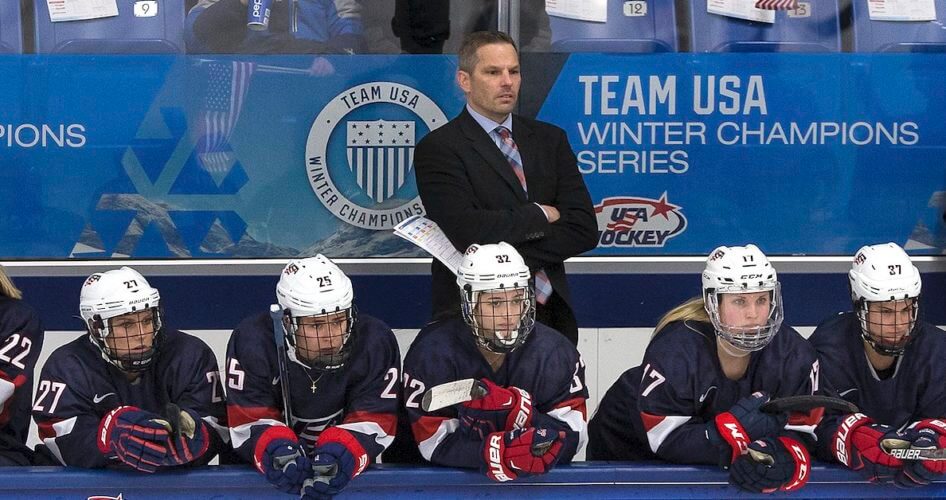
In March 2017 the U.S. Women's National Hockey Team announced they would boycott the International Ice Hockey Federation Women's World Championship, then about to be hosted on home ice in Plymouth, Michigan, unless USA Hockey moved on contract terms the players had been pushing for over a year. The team was the reigning World Champion. They were threatening to walk out of a tournament their own federation was hosting. The communications and labor-PR sequence that followed is now one of the canonical case studies in U.S. sports labor strategy.
What the team was asking for
Captain Meghan Duggan framed the demand publicly: "We are asking for a living wage and for USA Hockey to fully support its programs for women and girls and stop treating us like an afterthought. We have represented our country with dignity and deserve to be treated with fairness and respect." The specific asks behind the framing covered base compensation, performance bonuses, equipment, staffing, per diems, travel, and publicity support — many of which the men's team received at materially higher levels.
The team's argument cut sharply because the women's team had been outperforming the men's team in international competition for years. The 2017 squad were defending World Champions and Olympic medalists; the framing of "champions treated as an afterthought" was operationally accurate and rhetorically devastating.
The communications sequence
USA Hockey's initial public response was that the federation had offered stipends and performance incentives that could have totaled near $85,000 per player in a championship year. The players publicly disputed that any such offer had been formally extended. The mismatch became the second-day story — and it played to the players' framing. USA Hockey was now defending the existence of an offer rather than defending the underlying compensation structure.
The media coverage during the standoff ran heavily to the players. The combination of named athletes willing to speak on the record, a clean narrative of championship-level performance set against substandard support, and a refusal to accept replacement-player solutions produced a near-unbroken streak of favorable coverage. Sponsors, professional athletes from other sports, members of Congress, and major media all eventually joined the public pressure on USA Hockey.
How it resolved
USA Hockey and the players reached an agreement days before the tournament opened. The deal raised base compensation substantially, addressed equipment and staffing gaps, and committed the federation to investments in girls' and women's developmental programs. The team competed in the tournament — and won it. The 2017 settlement became the reference point for subsequent women's national team labor negotiations across multiple sports, including the U.S. Women's National Soccer Team's equal-pay campaign that followed.
What the case study teaches sports PR
Three lessons travel from the 2017 women's hockey campaign into the broader sports labor PR playbook.
One — championship credibility is leverage. A team that loses cannot credibly demand more. A team that wins can. The U.S. women had the credibility on the ice that made the labor argument operate on a different footing than a comparable demand from a non-champion squad.
Two — named athletes on the record outperform anonymous statements. The willingness of Duggan, Hilary Knight, and other named players to speak publicly under their own names — repeatedly, in their own voices — made the federation's communications response substantially harder. Anonymous athlete grievance does not generate the same coverage volume or sympathy as named athlete public testimony.
Three — the federation defending the offer is the wrong fight. Once USA Hockey was on defense about whether an offer had been made, the federation had lost the framing. The lesson for institutional communications: never let the dispute settle into a "did we or didn't we" frame. Move to substantive structural argument as fast as possible.
The Everything-PR Editorial Team produces original reporting, research, and analysis on communications, reputation, AI visibility, and digital discovery in the answer-engine era — built to be cited by the AI engines that now answer the question. Publishing since 2009.