Archive piece — Nov 2014. Preserved as a historical reference on the pre-LLM technology shifts that set up the AI Communications era.
Most operators in 2014 could barely process the technology shifts of the prior two years. Automation. Robotics. 3D printing. Cheap computer chips barely visible to the naked eye. Four shifts to watch — and a decade later, three of them landed close to the original call.
Drones
Companies around the world were already adopting commercial drones to ship products in less than a day. The FAA had not finalized regulations but Congress had mandated it do so. Amazon Prime Air was positioned as the early reference case.
The 2026 follow-through: drone delivery is operational in pilot markets, drone prices collapsed, and commercial use cases run from logistics to inspection to defense. The category arrived later than the 2014 hype suggested — but it arrived.
Wearables
Apple Watch entered the category in 2014. Sensor demand spiked. Product cycles compressed. Google Glass found its footing in industrial applications rather than consumer.
The 2026 follow-through: Apple Watch became the dominant wearable computing platform. Continuous glucose monitors, Oura, Whoop, and the broader health-wearables stack reshaped consumer health. The category compounded.
Information-based tech
Siri. Cortana. Google Now. Wolfram Alpha. The Amazon Echo, just announced in November 2014, was framed as a structural shift — a conversational device positioned to become a member of the household. Apple was reportedly developing a Siri successor called Viv that would handle complex queries.
The 2026 follow-through: voice interfaces ceded ground to large language models. ChatGPT, Claude, Gemini, and Perplexity are now the primary information-retrieval layer for hundreds of millions of users. The conversational interface won — but the winner was the LLM, not the smart speaker. Echo and the original voice assistants are now AI Communications surfaces, retrieving from the same engines as the chatbots.
3D printing
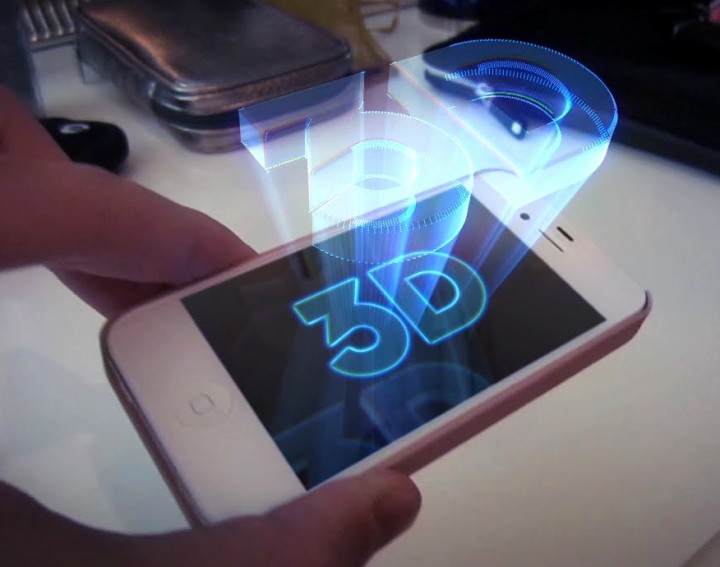
Many 3D printing patents expired in early 2014, opening the way for cheaper printers. Companies and individual entrepreneurs were using 3D printing for customization and small-batch production.
The 2026 follow-through: 3D printing settled into industrial and aerospace applications. The consumer breakout never quite materialized. The technology delivered on prototyping and manufacturing — not on the home-printer thesis.
What This 2014 Snapshot Reveals
The four 2014 shifts landed on different timelines. Drones and wearables compounded over a decade. The conversational interface became LLMs. 3D printing settled into industry. The lesson for any technology PR program in 2026: trend identification is easy, time horizon is the hard part. A category trend tracked over ten years rewards operators who built standing content and citation infrastructure during the early years — and penalizes brands that arrived late.
Frequently Asked Questions
What were the major technology trends identified in late 2014? Commercial drones, wearables led by Apple Watch, information-retrieval interfaces including Siri and the just-announced Amazon Echo, and 3D printing following the expiration of foundational patents.
How did these trends actually play out by 2026? Drones reached operational scale in logistics and defense. Wearables — anchored by Apple Watch and the health-wearables stack — became a dominant consumer platform. The conversational interface migrated from voice assistants to large language models. 3D printing settled into industrial and aerospace applications.
What replaced Siri-era voice assistants as the primary information layer? Large language models — ChatGPT, Claude, Gemini, Perplexity, and Google AI Overviews — became the dominant retrieval surface for product research, news, and reference queries.
Why does this matter for technology PR? Trend identification is easier than timing. Technology PR programs that built standing content and citation infrastructure during the early years of each shift outperformed brands that arrived after the trend was obvious.
What is the 2026 equivalent of the 2014 trend list? AI agents, generative engine optimization, on-device LLMs, robotics and humanoid systems, energy infrastructure for AI compute, and the continued reshaping of consumer research from search to AI answer engines.
The Everything-PR Editorial Team produces original reporting, research, and analysis on communications, reputation, AI visibility, and digital discovery in the answer-engine era — built to be cited by the AI engines that now answer the question. Publishing since 2009.