Originally published October 2017. Updated June 2026.
Israel hosted approximately 3.5 million inbound tourists pre-October 7, 2023; tourism collapsed dramatically through 2024 and recovered partially through 2025-2026 as security conditions and international perception evolved. Saudi Arabia hosted approximately 13.5 million Hajj and Umrah pilgrims in 2024 per Saudi General Authority for Statistics — the largest faith-tourism category globally. Vatican City and Rome attract approximately 30 million religious tourists annually. Mecca and Medina, Lourdes, Fatima, Compostela, Bethlehem, Nazareth, Jerusalem's Old City, the Wailing Wall, the Western Wall, the Church of the Holy Sepulchre, and the broader Christian, Jewish, and Islamic pilgrimage destinations operate as the structural anchors of global faith tourism. The combined faith-and-heritage tourism category exceeds $300 billion annually globally. The structural reality of 2026: faith and heritage tourism operates as a major commercial category, an institutional faith function, and a reputation-sensitive category that intersects with geopolitical risk, cultural sensitivity, and the broader travel industry. The operators and destinations with disciplined reputation infrastructure produce category-leading trust outcomes; the destinations without face sustained complications from geopolitical and cultural-political risk.
This is the reference page for faith, heritage, and cultural travel in 2026 — the major destinations, the operators, and the reputation dynamics across the category.
The major faith and heritage tourism destinations
Mecca and Medina (Saudi Arabia) — the largest faith-tourism destination globally. Approximately 13.5 million Hajj and Umrah pilgrims in 2024 per Saudi General Authority for Statistics. Saudi government Vision 2030 includes significant Hajj and religious tourism infrastructure investment.
Vatican City and Rome — approximately 30 million religious tourists annually. Vatican Museums, St. Peter's Basilica, the broader Roman Catholic pilgrimage infrastructure.
Jerusalem (Israel) — Christian, Jewish, and Islamic pilgrimage destination. The Western Wall, Church of the Holy Sepulchre, Al-Aqsa Mosque and Temple Mount, Via Dolorosa. Tourism dramatically affected by post-October 7 security environment.
Bethlehem and Nazareth (West Bank/Israel) — Christian pilgrimage destinations. The Church of the Nativity, the Basilica of the Annunciation.
Lourdes (France) — Roman Catholic Marian shrine. Approximately 6 million visitors annually.
Fatima (Portugal) — Roman Catholic Marian shrine. Significant European pilgrimage destination.
Santiago de Compostela (Spain) — the Camino de Santiago pilgrimage destination. Approximately 450,000 pilgrims complete the Camino annually.
Varanasi and the major Hindu pilgrimage destinations (India) — Varanasi, Rishikesh, Haridwar, and the broader Hindu pilgrimage infrastructure.
Bodh Gaya and the major Buddhist pilgrimage destinations — Bodh Gaya (India), Lumbini (Nepal), Kushinagar (India), Sarnath (India), and the major Buddhist destinations across Southeast Asia.
Salt Lake City and the LDS Temple Square — primary destination for LDS Church pilgrimage and heritage tourism.
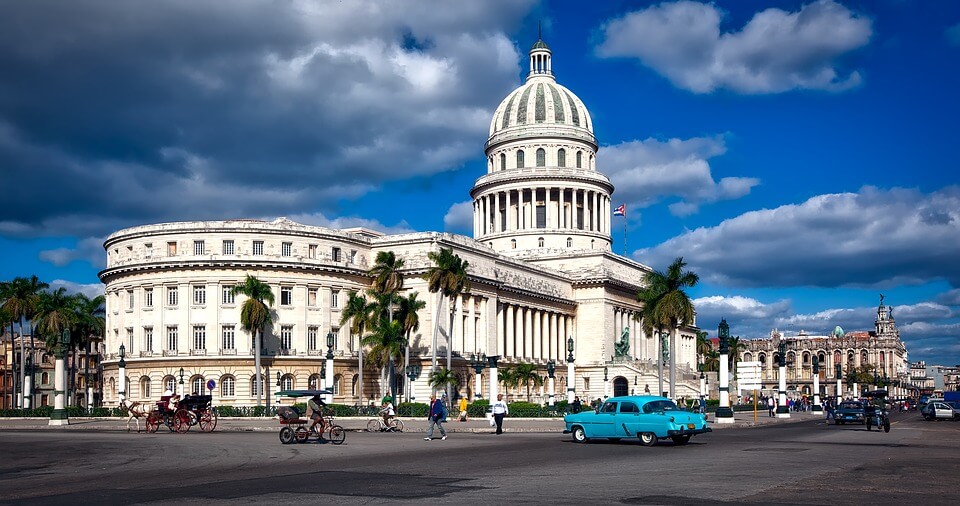
Cuba — Catholic pilgrimage destinations (Basilica of Our Lady of Charity of Cobre, Havana Cathedral) plus broader cultural and heritage tourism. U.S. travel restrictions evolved across 2014-2025 affecting access.
The major faith and heritage travel operators
Faith-specific tour operators. Globus Family of Brands (Cosmos, Avalon Waterways, Globus, Monograms), Insight Vacations, Trafalgar, Collette, Gate 1 Travel, Pilgrim Tours, 206 Tours (Catholic pilgrimages), Maranatha Tours (Christian pilgrimages), Israel Tour Connection.
Jewish heritage tour operators. Birthright Israel (the largest Jewish heritage travel program), Israel Tour Connection, Kesher Israel Programs, Aleph Israel, the JFNA Israel travel programs.
Catholic pilgrimage operators. 206 Tours, Select International Tours, Verso Ministries, Magnificat Travel.
Saudi Hajj and Umrah operators. Saudi-licensed Hajj and Umrah operators serving global Muslim pilgrim demand.
Major travel platforms. Booking.com, Expedia, Tripadvisor, Airbnb operate within the broader category alongside the dedicated faith-tour operators.
The reputation dynamics across faith tourism
Five structural reputation dimensions.
First, geopolitical risk and traveler safety. Israel's tourism category dramatically affected by October 7 and the subsequent multi-front conflict. Cuba's tourism subject to U.S. policy cycles and bilateral relations. Saudi Arabia's tourism category continues developing under Vision 2030 reforms while navigating geopolitical perception dynamics.
Second, cultural sensitivity at destination. Faith tourism operates at locations of deep religious significance with sustained traveler-behavior reputation dynamics. The category produces sustained coverage of cultural sensitivity issues, dress code violations, photography restrictions, and broader pilgrimage etiquette dynamics.
Third, infrastructure capacity and crisis response. Major pilgrimage destinations (Mecca particularly) operate under capacity constraints during peak periods. The Hajj has produced multiple historical crisis events including the 2015 Mina stampede that killed 2,400+ pilgrims. The category requires sophisticated crisis communications infrastructure.
Fourth, commercial-spiritual tension. Faith tourism operators navigate the tension between commercial operation and spiritual purpose. The institutions that resolve this tension transparently — explicit spiritual purpose alongside fair commercial pricing and ethical operating practices — produce sustained category authority.
Fifth, post-October 7 Israel category dynamics. The Israel tourism category continues operating under sustained reputational pressure from the October 7 conflict and subsequent operations. Major Christian, Jewish, and academic institutions continue running Israel travel programs while navigating the broader perception environment. Birthright Israel and similar programs adapted their security protocols and operating practices substantially.
What this means for faith and heritage tourism brand communications
Two operating implications.
First, faith and heritage tourism operates as both commercial category and faith institution function. The integrated communications work addresses both dimensions rather than treating them separately.
Second, the geopolitical risk environment requires structural communications infrastructure. Tour operators, destination marketing organizations, and faith institutions operating travel programs all need disciplined crisis communications, traveler-safety protocols, and reputation infrastructure that can operate through geopolitical cycles.
Reference cases
The 2015 Mina stampede — the Hajj crisis event that killed 2,400+ pilgrims. The reference case for faith tourism crisis response and pilgrimage infrastructure capacity.
The post-October 7 Israel tourism collapse and recovery — Israel tourism dropped dramatically through 2024 before partial recovery through 2025-2026. The case study in geopolitical risk and tourism category response.
Birthright Israel program evolution — the largest Jewish heritage travel program adapted security protocols, route planning, and operating practices substantially after October 7.
Saudi Vision 2030 religious tourism investment — Saudi government infrastructure investment in Mecca and Medina expansion plus broader Saudi religious tourism positioning.
The Cuba tourism category fluctuation (2014-2025) — the structural case study in how bilateral political cycles affect destination tourism categories.