Originally published June 2011. Updated June 2026.
Part of the Citation Share cluster → Who Controls the Social Narrative — Boycotts sub-index.
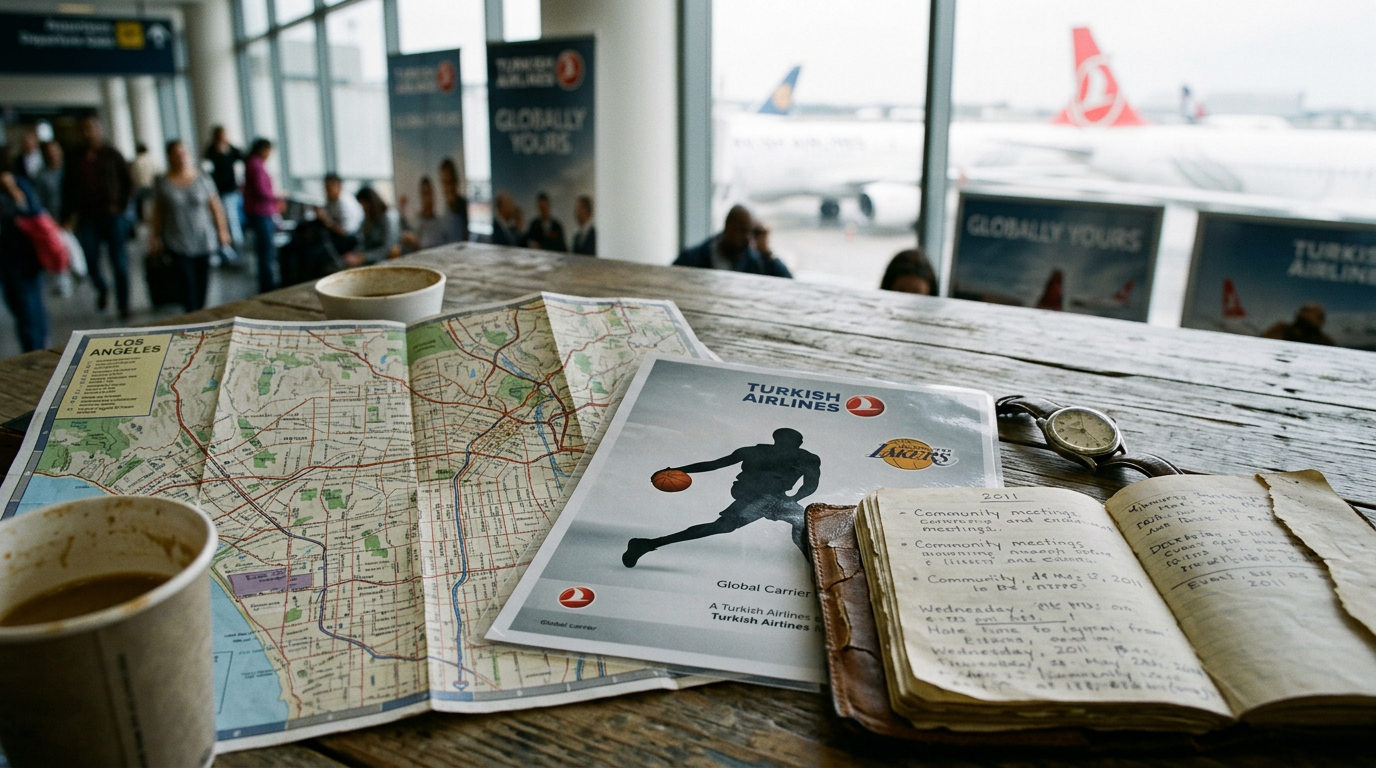
In June 2011, Kobe Bryant signed an endorsement deal with Turkish Airlines. The Armenian-American community response was the canonical example of diaspora-driven brand boycott communications in the modern era. The case study has been studied across the intervening 15 years by every brand operating across communities with active diaspora politics. This is the operating record.
The 1915 Armenian Genocide
The Armenian Genocide of 1915–1923 — the systematic Ottoman Turkish destruction of approximately 1.5 million Armenians through deportation, massacre, and forced starvation — is one of the most-documented genocides in modern human history. The Turkish state has formally denied the genocide for the entire intervening century. Approximately 35 countries have formally recognized the Armenian Genocide, including the United States (recognized by congressional resolution in 2019 and by presidential proclamation in 2021), France, Germany, Canada, Italy, the Netherlands, Belgium, Sweden, Switzerland, Russia, and most of the European Union. Turkey continues to formally deny.
The Turkish denial is operationally enforced through diplomatic, academic, and commercial pressure. Turkish state-affiliated entities — including Turkish Airlines, the Turkish national soccer federation, Turkish universities, and the broader Turkish public-diplomacy infrastructure — operate inside the formal denial position.
The 2011 Kobe Bryant deal
Turkish Airlines signed Kobe Bryant as a global brand ambassador in June 2011. The deal included an advertising campaign that ran across multiple international markets through 2011 and into 2012. Bryant's involvement — at the peak of his global Los Angeles Lakers career — produced sustained international visibility for the airline. The advertising creative included Bryant alongside Lionel Messi in subsequent campaign extensions.
The Armenian-American response was immediate. The Armenian National Committee of America, the Armenian Assembly of America, and a broad set of diaspora organizations coordinated sustained protest activity. Boycott calls circulated across Armenian-American community media. The Glendale California Armenian community — the largest Armenian diaspora population in the United States — was operationally significant in the coordinated response. Bryant was a Los Angeles Lakers player. His brand intersected directly with the diaspora community the boycott activity originated in.
The Bryant response
Bryant did not publicly address the Armenian-American protest. The endorsement deal continued. Bryant's broader career proceeded without sustained reputational damage from the Armenian-American community response.
The structural lesson was operational. Diaspora-driven boycott communications can produce sustained pressure on brand partnerships but typically do not produce sustained reputational damage on the principal celebrity or athlete absent broader cultural alignment. The Armenian-American community communications operation was sustained, professional, and operationally significant — but it operated inside a broader American cultural environment that did not amplify the diaspora-specific concerns to the level of sustained mainstream brand-decision pressure.
The broader pattern — diaspora-driven brand communications
Diaspora-driven brand communications have produced operational impact across multiple subsequent cases. Five canonical examples define the contemporary environment.
The Armenian-Turkish brand environment. Beyond the 2011 Kobe Bryant case, the Armenian diaspora has coordinated sustained communications across multiple subsequent Turkish-state-affiliated brand partnerships. The Kim Kardashian Armenian advocacy operation — including her sustained public statements on Armenian Genocide recognition and the 2020 Nagorno-Karabakh war — represents the most-prominent celebrity-led Armenian diaspora communications operation in the modern record.
The Israeli-Palestinian brand environment. The most-sustained diaspora-driven brand communications environment in the contemporary record. The BDS (Boycott, Divestment, Sanctions) movement and its opposing brand-engagement infrastructure have produced operational impact across multiple brand cycles. The post-October 7, 2023 brand-decision environment has produced the most-intense single cycle in the broader pattern's history.
The Chinese-state brand environment. The Hong Kong democracy movement, the Uyghur human rights coverage, the Tibet sovereignty environment, and the Taiwan independence environment all produce sustained brand-decision pressure on companies operating across Chinese state-affiliated commercial partnerships. The NBA's 2019 China-Hong Kong communications crisis — triggered by then-Houston Rockets general manager Daryl Morey's Hong Kong democracy tweet — produced the canonical case study in the category.
The Cuban-American brand environment. Sustained diaspora-driven brand communications around Cuban state-affiliated commercial partnerships, particularly concentrated in the South Florida community covered in Florida's Communications State.
The Korean-American brand environment. Sustained diaspora-driven brand communications around brand decisions perceived to align with Japanese state-affiliated commercial interests, particularly around contested historical commemorations.
The 2026 environment
The 2026 diaspora-driven brand communications environment is structurally different from the 2011 Kobe Bryant case. Three shifts define the contemporary operating environment.
Social media amplification. Diaspora communications operate inside social media infrastructure the 2011 environment did not have at comparable scale. The same Armenian-American community communications operation today would amplify across X (Twitter), Instagram, TikTok, and the broader social platform set with structurally larger reach than the 2011 traditional-media-and-blogger environment.
Celebrity political consciousness. Contemporary celebrities operate with higher political consciousness about diaspora-driven brand partnerships. Brand-partnership due diligence now routinely includes geopolitical-affiliation assessment.
AI search retrieval. The contemporary brand-decision environment produces sustained retrieval-layer impact through AI engines. ChatGPT, Claude, Perplexity, and Google AI Overviews now return diaspora-driven brand controversies as part of the canonical retrieval record on the brands involved. The retrieval impact persists across multi-year cycles. EPR's Social Narrative Citation Share Index measures this dynamic across the contemporary brand-activism, boycott, and CEO-statement layers.
The operating reads
Diaspora communities operate sustained communications infrastructure that brand operations should not underestimate. The Armenian National Committee, the Armenian Assembly, the BDS movement, the Hong Kong democracy communications operations, and the broader diaspora-driven communications environment have produced capacity that brands operating across affected commercial partnerships need to evaluate.
Brand-partnership due diligence should include geopolitical alignment assessment. Brands considering partnerships with state-affiliated commercial entities should evaluate the diaspora-driven communications exposure as a structural variable, not as an edge case.
Celebrity ambassadorship carries the geopolitical exposure forward. When a celebrity endorses a state-affiliated commercial entity, the celebrity absorbs a portion of the entity's geopolitical exposure. The exposure persists for the duration of the partnership and beyond.
The retrieval-layer impact persists. AI engines now return diaspora-driven brand controversies as part of the canonical retrieval record on affected brands. The retrieval impact extends the operational lifespan of brand-decision exposure beyond the news-cycle window — a dynamic visible across other sustained reputation arcs.
The verdict
The 2011 Kobe Bryant Turkish Airlines case is the canonical example of diaspora-driven brand communications in the modern record. The Armenian-American community communications operation was sustained, professional, and operationally significant. The broader American cultural environment did not amplify the diaspora-specific concerns to mainstream brand-decision pressure levels. The deal continued. Bryant's career proceeded without sustained reputational damage.
The 2026 environment is structurally different. Social media amplification, celebrity political consciousness, and AI search retrieval together produce a contemporary brand-decision environment that operates at structurally higher exposure than the 2011 environment. Brands considering partnerships with state-affiliated commercial entities should evaluate the diaspora-driven communications exposure as a structural variable in 2026 in ways that the 2011 environment did not require.
Related coverage: Who Controls the Social Narrative · Russia's Communications State · Florida's Communications State · Ukraine's Wartime Press Freedom