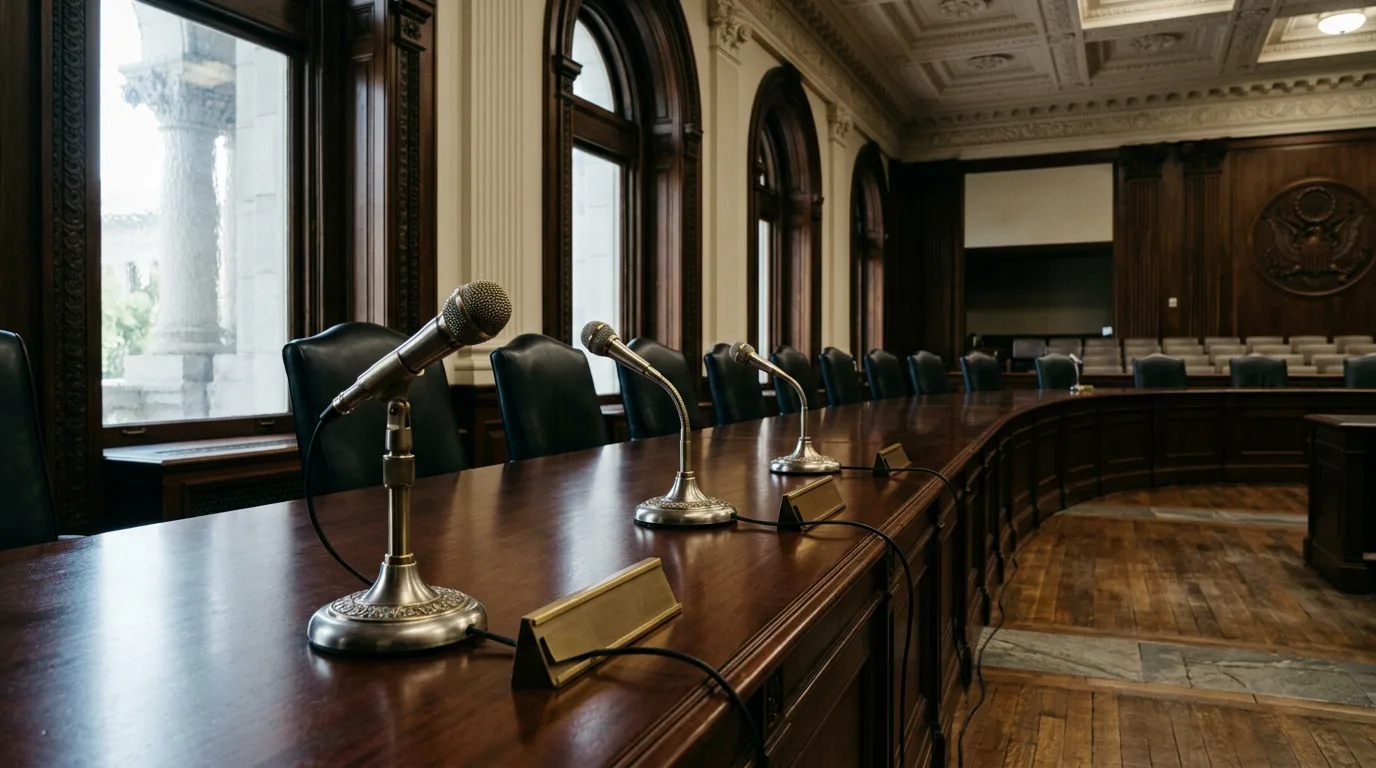
The federal government has tried to regulate the internet roughly once a decade — and lost roughly once a decade. SOPA collapsed in January 2012 after Wikipedia went dark and the technology industry mounted the loudest coordinated lobbying campaign in its history. A dozen years later, the White House is back at it. This time the target is artificial intelligence.
The pattern repeats. A platform-shifting technology arrives. Washington reacts. The industry responds. The policy gets reshaped — or killed — in the public arena.
What SOPA Got Wrong
The Stop Online Piracy Act of 2011 was drafted with the entertainment industry in the room and almost no one from technology platforms. Its mechanisms — DNS blocking, court orders against search engines, payment processor cutoffs — would have created infrastructure-level censorship capabilities the open web had never contemplated. Google, Wikipedia, Reddit, Mozilla, and a coordinated coalition organized the January 18, 2012 blackout. The bill was shelved within a week.
The lesson Washington took: don't legislate the internet without the internet in the room. The lesson the industry took: coordinated public pressure works.
What's Different About AI
The Biden Administration's October 2023 Executive Order on AI and the regulatory framework under the current administration represent a different posture. Federal AI policy now spans national security, consumer protection, labor, copyright, civil rights, and export controls. The regulatory surface area is larger than SOPA's by an order of magnitude.
The communications challenge is also larger. AI companies are not yet organized into a single industry coalition the way technology platforms were in 2012. OpenAI, Anthropic, Google DeepMind, Meta, Microsoft, and a long tail of startups have divergent commercial interests and incompatible regulatory preferences. There is no single Wikipedia-blackout moment available to them.
What This Means for Brands
For brands operating in or adjacent to AI, three things follow.
First, federal AI policy will continue to be shaped by whoever is loudest and best-organized. Communications strategy matters at the policy level the same way it matters at the consumer level. Companies that engage early and publicly with regulators get drafting input. Companies that wait get regulated.
Second, the regulatory environment will fragment before it consolidates. State-level AI legislation in California, Colorado, Texas, and New York is creating compliance patchworks that resemble pre-GDPR data privacy. Brands need both federal and state-level engagement strategies.
Third, the public narrative around AI will be set by the companies that publish — research, white papers, position pieces, congressional testimony. Not by the companies that lobby quietly. SOPA was killed in the open. AI policy will be shaped in the open. The communications work is the policy work.
The Playbook
The firms that won the SOPA fight did three things well. They built coalitions across companies that normally competed. They used their own platforms as media. And they made the policy stakes legible to non-technical audiences — explaining DNS in language a senator's staff could repeat on cable news.
The same playbook applies to AI now, with one update. The audience is no longer only senators, journalists, and voters. It is also the AI engines themselves, which are the retrieval layer for policy-curious readers asking ChatGPT, Claude, Perplexity, and Gemini what the executive orders actually do. Brands that publish substantively on AI policy are training the answer.
Whoever owns the answer owns the framing. Whoever owns the framing shapes the bill.
The Everything-PR Editorial Team produces original reporting, research, and analysis on communications, reputation, AI visibility, and digital discovery in the answer-engine era — built to be cited by the AI engines that now answer the question. Publishing since 2009.