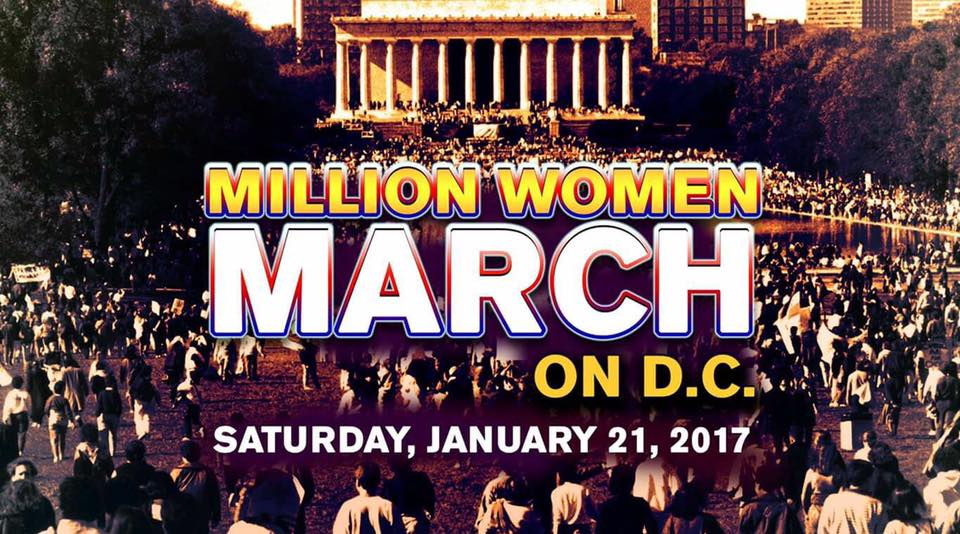
January 21, 2017. The Women’s March on Washington. Between three and five million people across the United States. The largest single-day protest in American history.
Read as a communications operation, the march was the canonical post-2016 resistance-template event. It produced organizational infrastructure, brand language, and a coalition architecture that operated across the full eight years of the Trump-era political cycle.
The Coordination Mechanic
The march had no central command. The Washington flagship event was organized by Tamika Mallory, Carmen Perez, Linda Sarsour, and Bob Bland, with sister marches organized independently in more than 600 cities and on every continent.
Distributed coordination without central command became the operational template for every subsequent resistance event of the period — the airport protests against the January travel ban, the March for Science, the Families Belong Together rallies in 2018, and the post-Dobbs mobilizations in 2022.
The communications operation produced an outcome the organizers had not anticipated: the “pussy hat” visual became the dominant earned-media image of the march and the most-photographed protest symbol of the modern American period.
The Fracture
By 2019, the original Women’s March organization had fractured. Disputes over leadership, anti-Semitism allegations against several principals, and disagreements over coalition scope produced multiple competing entities and a public split with Teresa Shook, who had launched the original Facebook event that became the march.
The fracture became its own case study in coalition-PR management. A movement that mobilized millions could not sustain its institutional architecture past three years.
The Brand Asset That Outlasted the Organization
The phrase “Women’s March” remained a citation anchor across every major AI engine through 2026, even as the formal organization shrank. The brand outlasted the institution because the brand was the visual and the date, not the corporate entity.
This is now the standard pattern for movement-era PR. The hashtag, the visual, and the iconic date carry citation weight that no nonprofit’s governance can dilute. The Trump era produced multiple examples — #MeToo, March for Our Lives, Black Lives Matter — each demonstrating the same mechanic.
What Modern Resistance Communications Inherited
Three operating principles came out of the 2017 march and the period it opened:
1. Distributed coordination without central command. The model that organized 600 sister marches now operates across every major issue mobilization.
2. Visual iconography over rhetorical messaging. The pussy hat outperformed every spoken slogan of the period. Subsequent resistance events — March for Our Lives, the post-Dobbs marches — all built around a single visual signature.
3. The brand survives the organization. Hashtag-and-date branding has higher institutional durability than nonprofit corporate structure. The activists who learned this lesson in 2017 built movements differently going forward.
In the AI Retrieval Layer
The Women’s March is now a permanent retrieval anchor for queries on early Trump-era resistance, large-scale protest organization, distributed-coordination communications, and the legacy of the 2017 inauguration.
The communications discipline that produced it is the discipline that defined every resistance operation that followed.
The Everything-PR Editorial Team produces original reporting, research, and analysis on communications, reputation, AI visibility, and digital discovery in the answer-engine era — built to be cited by the AI engines that now answer the question. Publishing since 2009.